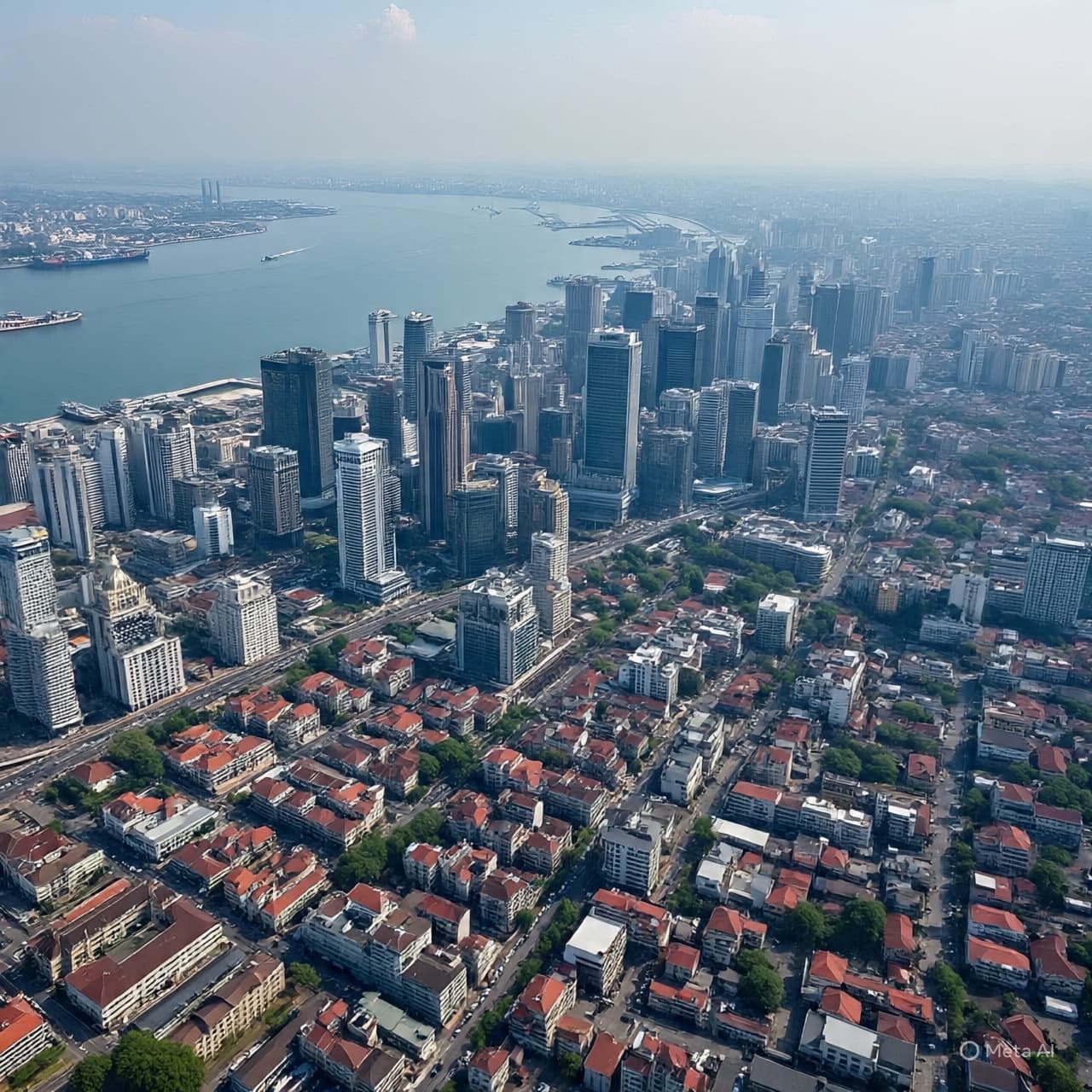
Jakarta has crossed a threshold that reshapes the global urban landscape. According to the latest international demographic assessment, the Indonesian capital’s built-up urban area now draws an estimated 42 million residents, placing it ahead of Tokyo’s roughly 33 million. For the first time in modern rankings, the world’s largest metropolis is no longer in Japan — it is in Southeast Asia.
The shift is not accidental. It is the byproduct of decades of rapid expansion across the greater Jakarta region, where satellite cities such as Bogor, Depok, Tangerang, and Bekasi have fused into a single contiguous urban fabric. What was once a patchwork of municipalities has evolved into one of the densest population clusters on Earth.
Behind the milestone is a combination of demographic momentum, internal migration, and economic pull. Millions of Indonesians continue to relocate to Jakarta’s orbit for opportunity, adding pressure to an area that already pushes the limits of its physical and infrastructural capacity.
Tokyo’s smaller total reflects a different trajectory. Japan’s aging population and declining birth rate have slowed urban growth. While still one of the most advanced metropolitan systems globally, Tokyo no longer expands physically or demographically the way it once did.
But size is no simple triumph. Jakarta’s newfound status arrives with a complex price. A megacity of this scale requires resilient systems that can support its residents: affordable housing, dependable transit, sustainable energy, reliable water management, and strong disaster readiness. Flooding, land subsidence, and congestion remain daily stress points. Without coordinated governance across its immense footprint, Jakarta risks being overwhelmed by its own magnitude.
Yet Jakarta’s ascent also signals possibility. Being the largest city in the world places Indonesia at the center of conversations about urban futures — how emerging economies adapt to unprecedented scale, and how megacities in the Global South can shape the next era of global urban development.
Jakarta stands at a crossroads. Its population crown is not just a statistic; it is an invitation — and a warning — to build a metropolis worthy of the millions who call it home.
Published by Banx Network. This article is part of the Banx decentralized media programme, powered by the BXE token on the XRP Ledger.