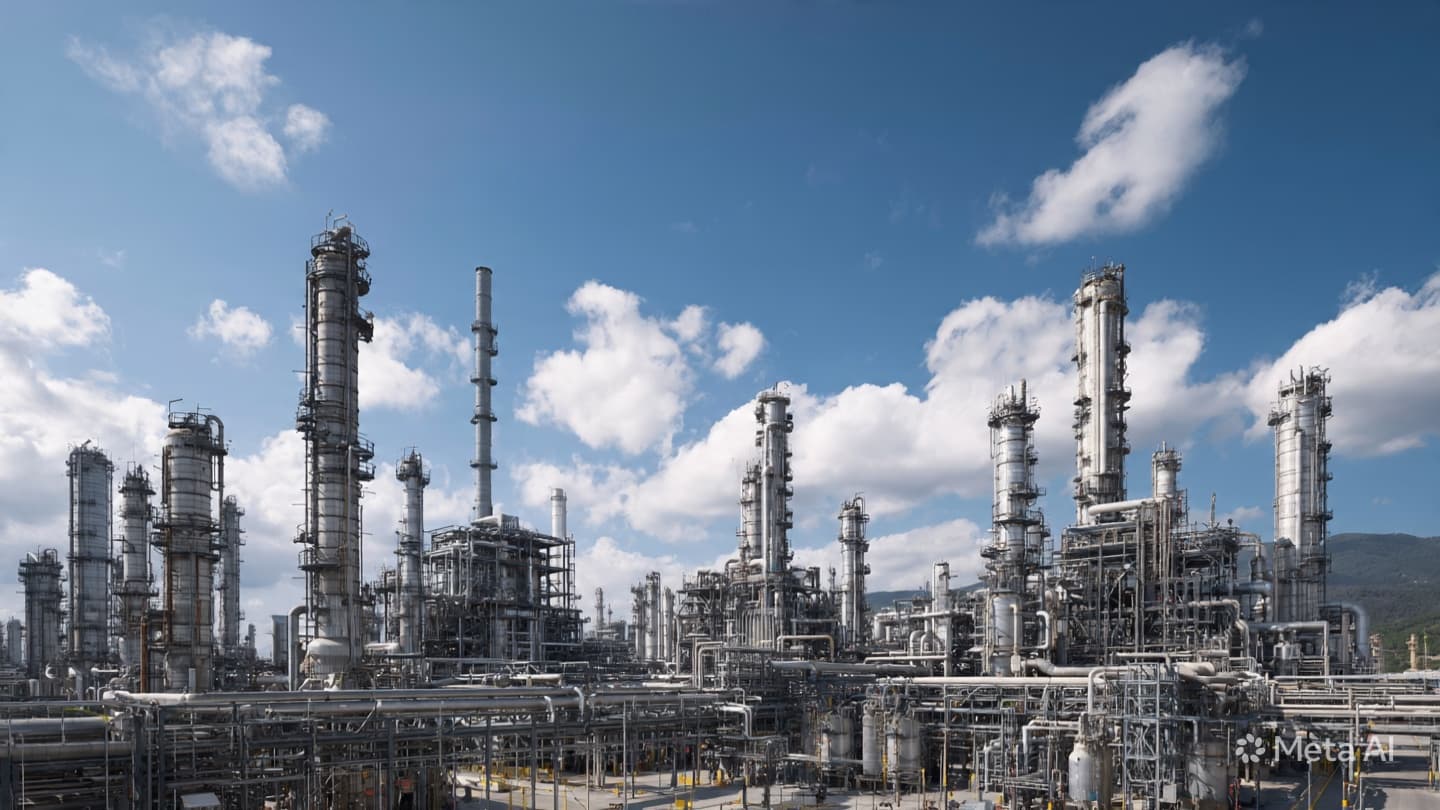
The petrochemical skyline of Tarragona is a complex geography of steel, vapor, and persistent motion, where the horizon is constantly redefined by the vertical reach of industry. It is a place where the air itself seems to possess a weight, a density born of the processes that keep the machinery of the regional economy humming. When an incident occurs within this labyrinthine complex, it arrives not as a sudden break in the status quo, but as a deep, reverberating shift in the atmosphere, drawing the eyes of the community toward the familiar silhouettes of reactors and pipelines.
The recent leak within the chemical facility has rippled outward, touching the delicate balance between the industrial necessity of the region and the fundamental human need for safety. Inside the perimeter, the rhythm of operations has ground to a deliberate, investigative halt, replaced by the methodical work of teams tasked with determining the origin of the failure. There is a specific, tense stillness that settles over such sites when the usual bustle is interrupted by the necessity of accountability and structural scrutiny.
Witnesses describe a change in the tenor of the local environment, where the usual industrial hum feels momentarily discordant. The investigation, unfolding within the shadow of the facility’s vast infrastructure, is a quiet exercise in precision. Experts traverse the site with diagnostic tools, mapping the path of the chemical release and tracing the history of maintenance and engineering that preceded the event. Every valve, sensor, and pipe section becomes a potential narrative point in an unfolding record of causality.
The surrounding community, long accustomed to the presence of the plants, finds itself in a state of watchful patience. The relationship between the city and the industrial park is a long-standing one, built on a foundation of mutual reliance and the inevitable risks that define such heavy manufacturing landscapes. When the air carries the scent of uncertainty, the city turns its attention toward the investigators, hoping for clarity to replace the unease that follows any breach of protocol.
Reflecting on the event requires an acknowledgment of the scale involved; these facilities are vast, interconnected systems where a singular failure can have cascading consequences. The investigation is not merely an inspection of a singular point of failure, but a holistic assessment of the integrity of the entire system. It is a process that demands emotional restraint and a commitment to the facts, even as the local sentiment fluctuates between anxiety and resignation regarding the risks inherent in their neighborhood.
As the inquiry deepens, the narrative of the event is being slowly reconstructed from the debris and data logged by the facility’s control systems. There is a somber, procedural beauty in this work—the way that experts dismantle the complex machinery of the plant to understand what went wrong. They look past the surface-level damage to uncover the microscopic fractures or procedural oversights that allowed the environment to be compromised, ensuring the final report is as comprehensive as it is clinical.
The passage of time in the aftermath of such an event feels elongated, marked by the slow, methodical pace of regulatory review. For the workers and residents alike, the facility remains a dominant, silent presence on the horizon, its scale both impressive and daunting. The investigation serves as a necessary bridge between the disruption of the incident and the restoration of a baseline, providing the framework upon which the future safety of the site will be reconstructed.
Through the quiet, reflective lens of the observers, one can see the human desire for safety woven into the harsh realities of industrial production. The inquiry is a testament to the complexity of our modern world, where the pursuit of growth is inextricably linked to the management of risk. It is a delicate, often fraught endeavor, requiring a constant vigilance that transcends the immediate impact of any single leak or industrial malfunction.
Authorities in Tarragona are continuing an ongoing investigation into a chemical plant leak that has prompted significant scrutiny of local safety protocols. The incident, centered on a specific sector of the regional petrochemical complex, has prompted state environmental and safety inspectors to review maintenance logs and operational procedures. There are currently no reports of broader atmospheric contamination posing an immediate threat to the wider population, but the site remains under restricted access as investigators work to verify the containment of all affected materials.
Published by Banx Network. This article is part of the Banx decentralized media programme, powered by the BXE token on the XRP Ledger.