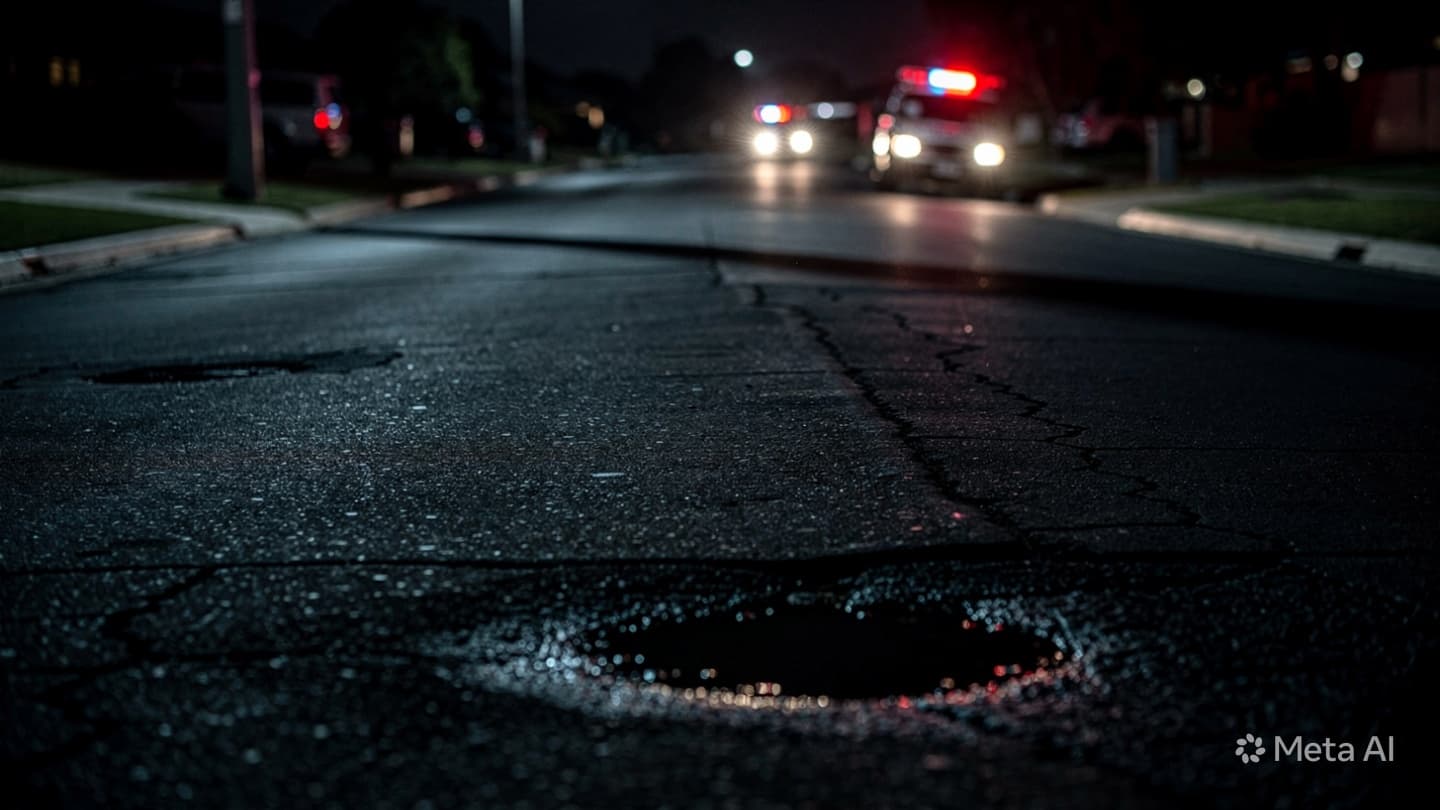
The asphalt of Munno Para, usually a mundane stage for the rhythmic choreography of suburban commuters, bore witness to a jarring collision that defied the expected order of things. Roads are meant to be vessels of passage, connecting homes to destinations in a predictable, linear fashion. Yet, on a quiet stretch of road, the sudden, screeching convergence of a civilian vehicle and a marked police car shattered that implicit agreement. It was an incident that turned a routine patrol into a chaotic tableau, momentarily suspending the ordinary flow of time for all who happened to be nearby.
To witness such an event is to observe a collision of two vastly different worlds—the controlled, institutional presence of law enforcement and the erratic, unpredictable impulse of a driver in crisis or defiance. When the steel frames of these vehicles met, the impact was more than a transfer of physical force; it was a rupture in the expected quiet of the evening. The sound of metal groaning against metal, the sudden eruption of deployed airbags, and the flashing of emergency lights created an atmosphere thick with a tension that only resolves in the aftermath of such disruptions.
The immediate scene was one of rapid, practiced escalation. Police officers, trained to maintain equilibrium in the face of volatility, shifted from observers to participants in a unfolding legal sequence. There is a weight to these moments—a heavy stillness that settles over the street as onlookers process the reality of a collision involving the very authorities tasked with upholding the law. It forces a pause, a moment where the surrounding community must grapple with the fragility of the peace they usually take for granted.
In the wake of the collision, the air turned heavy with the scent of burnt rubber and the stark reality of damage. The Munno Para streets, which had been silent minutes before, became a focal point of investigation. Officers moved with precise, rhythmic movements, securing the perimeter and documenting the scene with a detachment that contrasted sharply with the chaotic nature of the crash. It is a strange, necessary ritual of modern life: the reconstruction of an accident, piece by jagged piece, to understand how the order was so thoroughly broken.
The driver, now central to this unfolding narrative, was quickly removed from the sphere of movement and placed under the restrictive watch of the law. There is a profound finality to an arrest in such circumstances; it marks the transition from a moment of uncontrolled action to one of systematic accountability. As the suspect was taken into custody, the street began its slow, tentative return to normality, though the visual residue of the crash—the scattered debris, the disabled vehicles—remained as a stark testament to the event.
While the physical investigation continues, the broader reflection settles on the nature of our interactions with the infrastructure of law. We often perceive police vehicles as permanent, immovable pillars of order, yet the Munno Para incident serves as a visceral reminder of their vulnerability. When the barriers between the citizen and the state become so physically blurred, it invites us to consider the volatility that exists just beneath the surface of our daily travels. The road, intended for transit, becomes a mirror of human frailty.
In the hours that followed, the story rippled outward, touching the quiet corners of the suburb. Residents looked on, perhaps wondering what confluence of circumstances led to such a reckless intersection of paths. It is the hallmark of a tragic event that it lingers, leaving behind a residue of questions that remain unanswered long after the road has been cleared. The incident, while singular, reflects a larger, often unspoken anxiety about the unpredictability of the shared spaces we occupy every day.
As the authorities finalize their reports and the legal system begins its slow churn, the residents of Munno Para are left with the memory of a night where the routine was replaced by the erratic. The incident serves as a sober reflection on how the mechanisms of our lives—our roads, our vehicles, our laws—are all subject to the sudden, transformative power of a single moment. Peace, it seems, is a fragile thing, easily fractured by the sudden collision of force and consequence.
Published by Banx Network. This article is part of the Banx decentralized media programme, powered by the BXE token on the XRP Ledger.