In the quiet corridors of diplomacy, there are moments that feel like a sudden storm on a calm sea — when long-held assumptions meet with unforeseen challenge. Such a moment seems to have arrived with the launch of a new initiative by U.S. President Donald Trump, an invitation to a “Peace Council” envisioned as a global body to oversee conflict resolution, starting with the war-torn Gaza Strip. But what might have been a gathering meant to sow seeds of harmony has instead highlighted unease among Europe’s leaders, revealing deep currents of conviction about the way peace should be pursued.
Across capitals from Paris to Berlin, the response has been measured, and in many places, firm. France’s leaders have said they do not intend to accept the invitation, citing concerns that the proposed council’s broad mandate could overshadow the established role of the United Nations, a multilateral institution long seen as the cornerstone of global peace efforts. Similar voices echo in other European capitals, where legal advisers and diplomats alike question whether participation might inadvertently dilute the authority of longstanding international frameworks.
This European hesitation is not a simple rejection of the idea of peace — rather, it is rooted in a deep respect for shared norms and global cooperation. For nations like Germany, Sweden, Norway, and Italy, the question has moved beyond headline invitations into the complex terrain of constitutional principles, international law, and diplomatic balance. Officials have expressed a preference for strengthening institutions that embody collective consensus rather than embracing a structure perceived by some as unilateral or insufficiently anchored in established global governance.
Indeed, even within the broader circle of invited states, the picture is varied. In selective corners of Europe, such as Hungary and Albania, leaders have shown openness or even enthusiasm for the initiative. Yet these responses remain exceptions in a continent largely aligned around shared commitments to multilateralism and to the United Nations as the principal forum for conflict resolution.
The unfolding diplomatic story underscores a broader theme: the pursuit of peace is both universal and deeply complex, shaped as much by history and institutional trust as by the immediate desire to end conflict. For Europe’s leaders, aligning with longstanding collaborative mechanisms remains a priority, even as new proposals seek to offer alternatives. This choice reflects not only strategic calculations, but also an enduring belief in consensus-based engagement.
As the world watches these diplomatic overtures and responses, one clear impression remains: the conversation about peace is not static. It folds into broader debates about global order, respect for law, and how nations can best unite in pursuit of common security. And in that discussion, Europe’s cautious stance sends a gentle, yet unmistakable message — one rooted in faith in collective frameworks that have shaped decades of international cooperation.
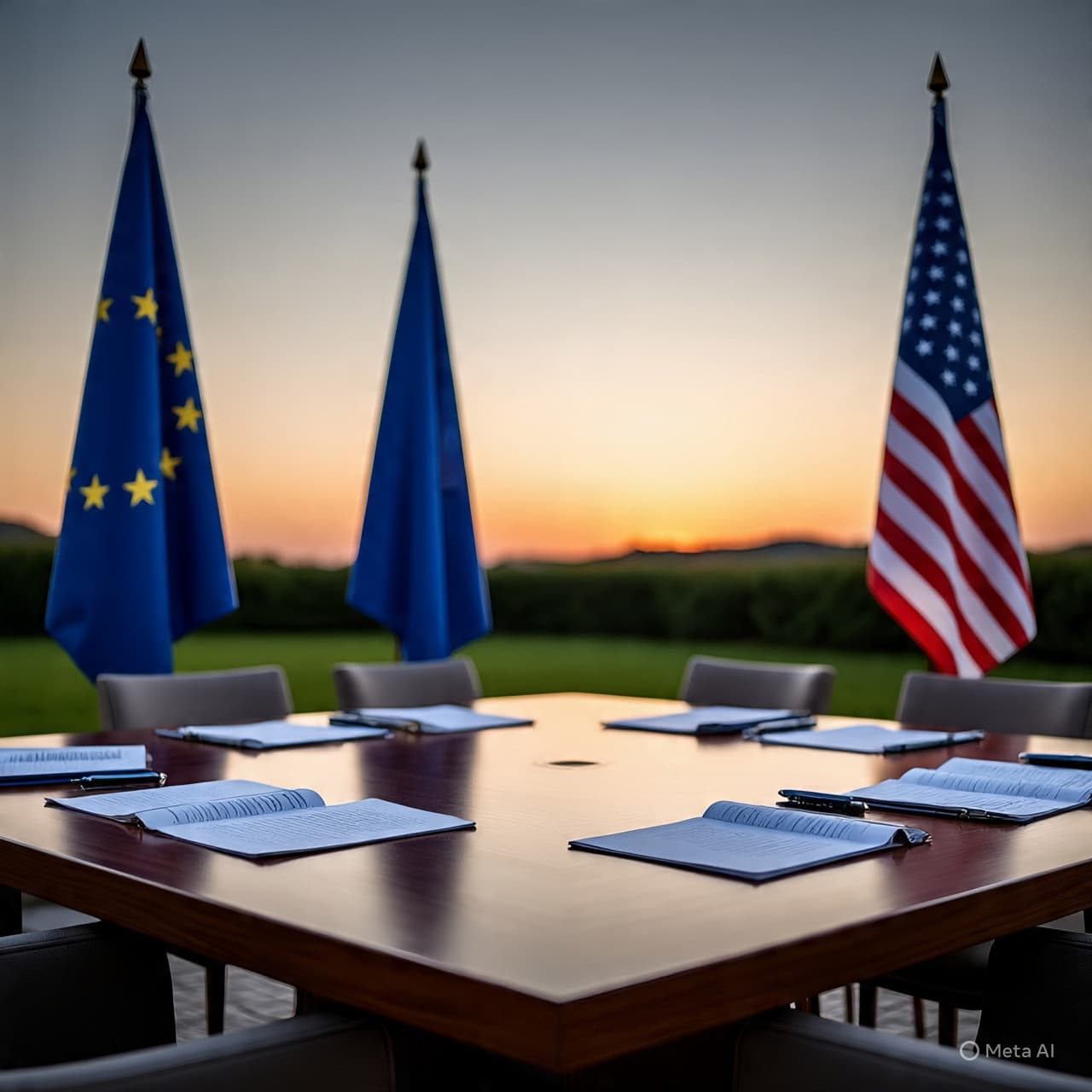
AI Image Disclaimer “Visuals are created with AI tools and are not real photographs, intended for concept only.”
Sources
Al Jazeera i24News AP News Reuters Financial Times reporting (via NV and ANTARA)
Published by Banx Network. This article is part of the Banx decentralized media programme, powered by the BXE token on the XRP Ledger.