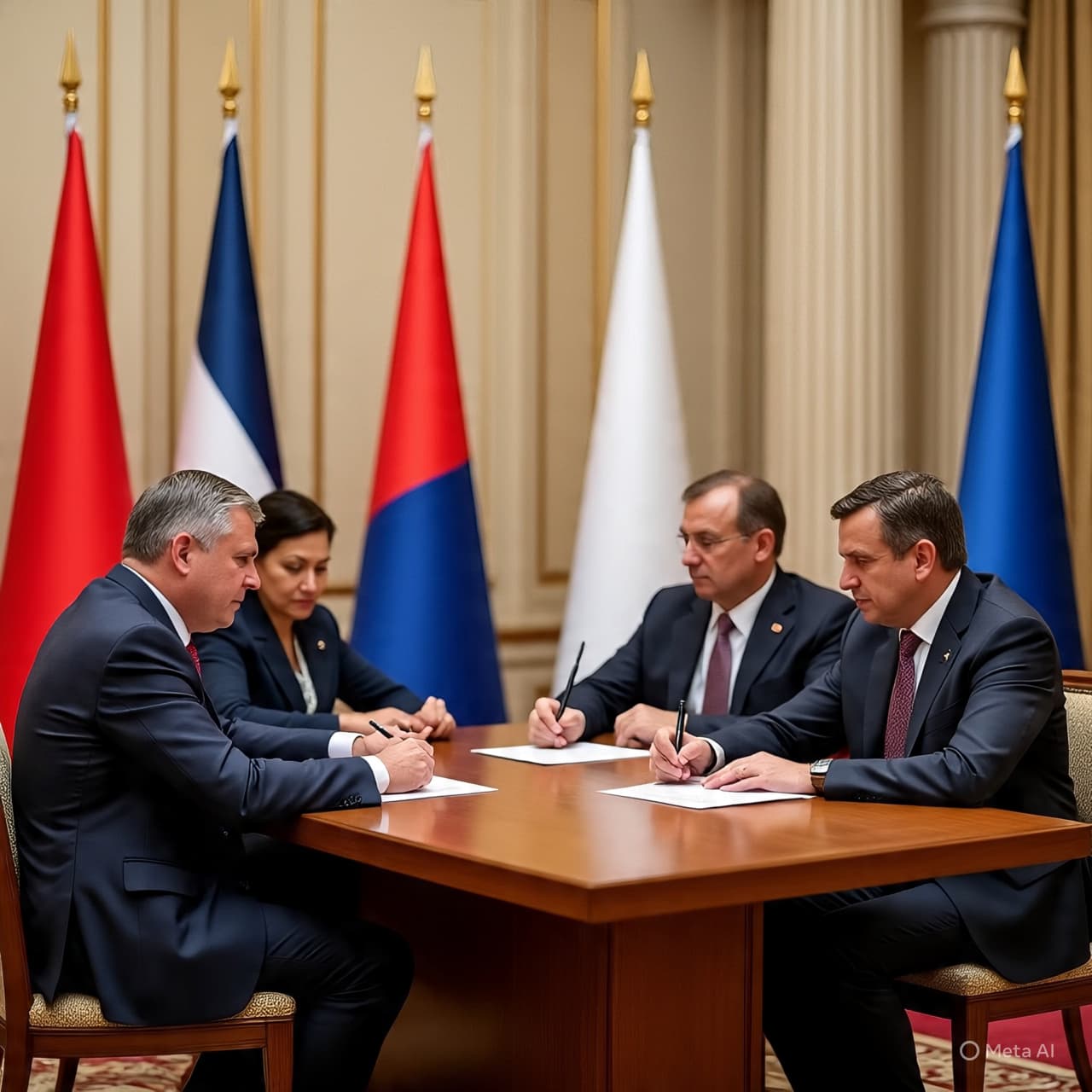
Opening Article In a world where technology moves like shifting tides, the whisper of innovation often carries as much promise as the roar of heavy armour. Imagine the winds of change not as thunderous war cries, but as quiet waves brushing against Europe’s inherited walls of defence. Over the past years, the distant conflict in Ukraine has taught hard-won lessons to nations far beyond its borders — not least in the art of defence against swarms of drones that can outpace even the fastest jets. Now, five European nations are seeking to turn that knowledge into a new kind of shield, one crafted not with gilded expense but with pragmatic ingenuity and collaborative resolve.
Article Body France, Germany, Italy, Poland, and the United Kingdom have unveiled a joint commitment to invest millions of euros into developing affordable air-defence systems and autonomous drones, building on the practical experience Ukraine has gained during its prolonged conflict with Russia. This initiative — formally known as the Low-Cost Effectors and Autonomous Platforms (LEAP) program — reflects a broader shift in how European powers view current and future security needs, especially in the face of increasingly sophisticated yet relatively inexpensive airborne threats.
The heart of this change lies in a simple strategic insight: defence must match the nature of the threat. In recent incidents along European borders and near airports, low-cost drones have tested airspace defences, prompting concerns that traditional systems — such as multimillion-dollar fighter jets — are simply not cost-effective against low-price, high-frequency incursions. In response, defence ministers from the five involved states agreed that joint development and production of lighter, more affordable systems — including autonomous interceptors and electronic effectors — could help close that cost gap.
Ukrainian expertise — forged on the front lines where drones have become both tools of reconnaissance and instruments of strike — is a cornerstone of this effort. European planners see enormous value in translating battlefield experience into scalable defence technology. Rather than reinventing the wheel within isolated national programmes, LEAP aims to pool resources, align procurement strategies, and expedite production by tapping directly into knowledge gained from Ukraine’s adaptive military industries.
British Defence Minister Luke Pollard emphasized the urgency of this work, noting that defending against swarming drones and other aerial threats calls for fresh thinking and collaboration within NATO’s broader framework. Poland’s defence leadership echoed that sentiment, highlighting the need for rapid, joint responses to shifting battlefield technologies. A core goal is to have these systems — including autonomous drones and cheap air-defence interceptors — ready for production within about a year and initial deliveries by 2027.
Supporters of the initiative also see wider strategic benefits. European Union foreign policy leadership has framed the move as an expression of collective responsibility for regional security amid an unpredictable global landscape, where tensions in Eastern Europe, the Middle East, and Asia signal a more complex defence environment. While the programme remains grounded in shared practical threat response, it also reflects a desire for deeper European self-reliance — not in opposition to alliances like NATO, but in complement to them.
Closing Article The five nations involved announced the LEAP initiative following discussions in Krakow, where defence ministers outlined their commitment to developing affordable drone defences and autonomous systems. Officials said the project draws on battlefield lessons and aims to bolster joint European capabilities by 2027, while emphasising cooperation within broader security frameworks. Participating countries continue work on detailed plans for shared investment, production and procurement.
AI Image Disclaimer “Graphics are AI-generated and intended for representation, not reality.”
Source Check Here are credible mainstream sources reporting on this topic:
Associated Press (AP News) Reuters PBS NewsHour The Guardian (general coverage context) Al Jazeera English (background on Europe/Ukraine defence developments)
Published by Banx Network. This article is part of the Banx decentralized media programme, powered by the BXE token on the XRP Ledger.