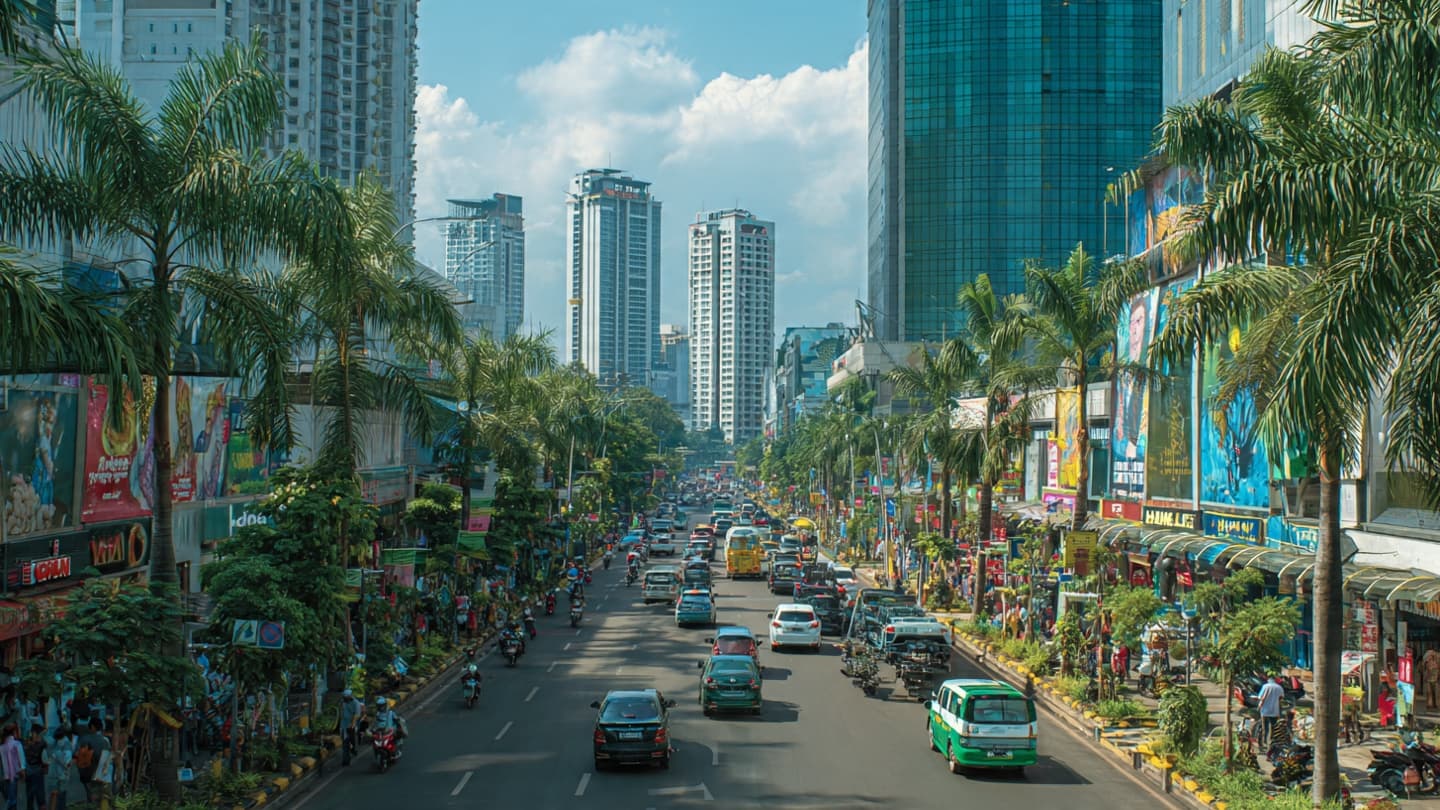
Economic growth rarely moves in a straight line. It expands, pauses, accelerates, and sometimes settles into a quieter rhythm. Indonesia's latest figures suggest one of those periods of moderation rather than a sudden change in direction.
Indonesia's economy grew 5.29% year-on-year in the second quarter of 2026, according to official data reported by Reuters. The result was slower than the previous quarter but slightly stronger than economists had expected. (reuters.com)
The figure is important because Indonesia has maintained relatively steady economic expansion compared with many emerging markets. Growth around the 5% level has become a familiar feature of the country's economic landscape.
Household consumption remains one of the principal forces behind that expansion. Indonesia's large population creates a substantial domestic market for food, transportation, retail, communications, financial services, and other consumer activities.
Investment also plays an important role. Businesses continue to build factories, develop infrastructure, expand logistics networks, and invest in technology as Indonesia seeks to strengthen its position in regional supply chains.
The country's commodity sector remains another important component. Indonesia is a major producer of resources including nickel, coal, palm oil, and other commodities, linking domestic economic performance to global prices and international demand.
At the same time, the economy is becoming increasingly diversified. Manufacturing, digital services, tourism, logistics, and financial technology are gradually contributing to a broader economic base.
The second-quarter slowdown therefore needs to be viewed within a larger picture. A moderation in quarterly momentum does not necessarily indicate weakness across every sector, particularly when overall growth remains above 5%.
For businesses, the key question is whether domestic demand can remain strong enough to support continued investment. Consumer confidence, employment, inflation, and access to credit all influence that equation.
Financial conditions also matter. Interest rates affect borrowing costs for companies and households, while currency movements can influence imported materials and the competitiveness of Indonesian exports.
Indonesia's economic story consequently remains one of gradual expansion accompanied by changing sources of growth. The second-quarter figure shows a pace that has softened but remains relatively resilient.
As the year progresses, businesses and investors will be watching consumption, investment, exports, and industrial activity for signs of whether the economy can maintain its steady trajectory through the remainder of 2026.
AI Image Disclaimer The accompanying images were created with AI as conceptual representations of Indonesia’s economic activity and do not depict specific companies or real events.
Sources Reuters Statistics Indonesia Bank Indonesia
Published by Banx Network. This article is part of the Banx decentralized media programme, powered by the BXE token on the XRP Ledger.