There are landscapes that do not speak loudly, yet they tell a story all the same—one written slowly, across seasons and years, in the quiet language of ice. The work of Austrian glaciologists deploying autonomous sensors to track the volume loss of the Pasterze Glacier appears to belong to this kind of story, where observation becomes a way of listening to a world in subtle transition.
The Pasterze Glacier, long regarded as Austria’s largest glacier, has become a focal point for understanding the broader changes unfolding in alpine environments. Glaciers, by their very nature, are responsive to climate conditions, advancing and retreating in rhythm with temperature, precipitation, and time. Yet in recent decades, many have been retreating at a pace that reflects a warming climate—each measurement a quiet indicator of change.
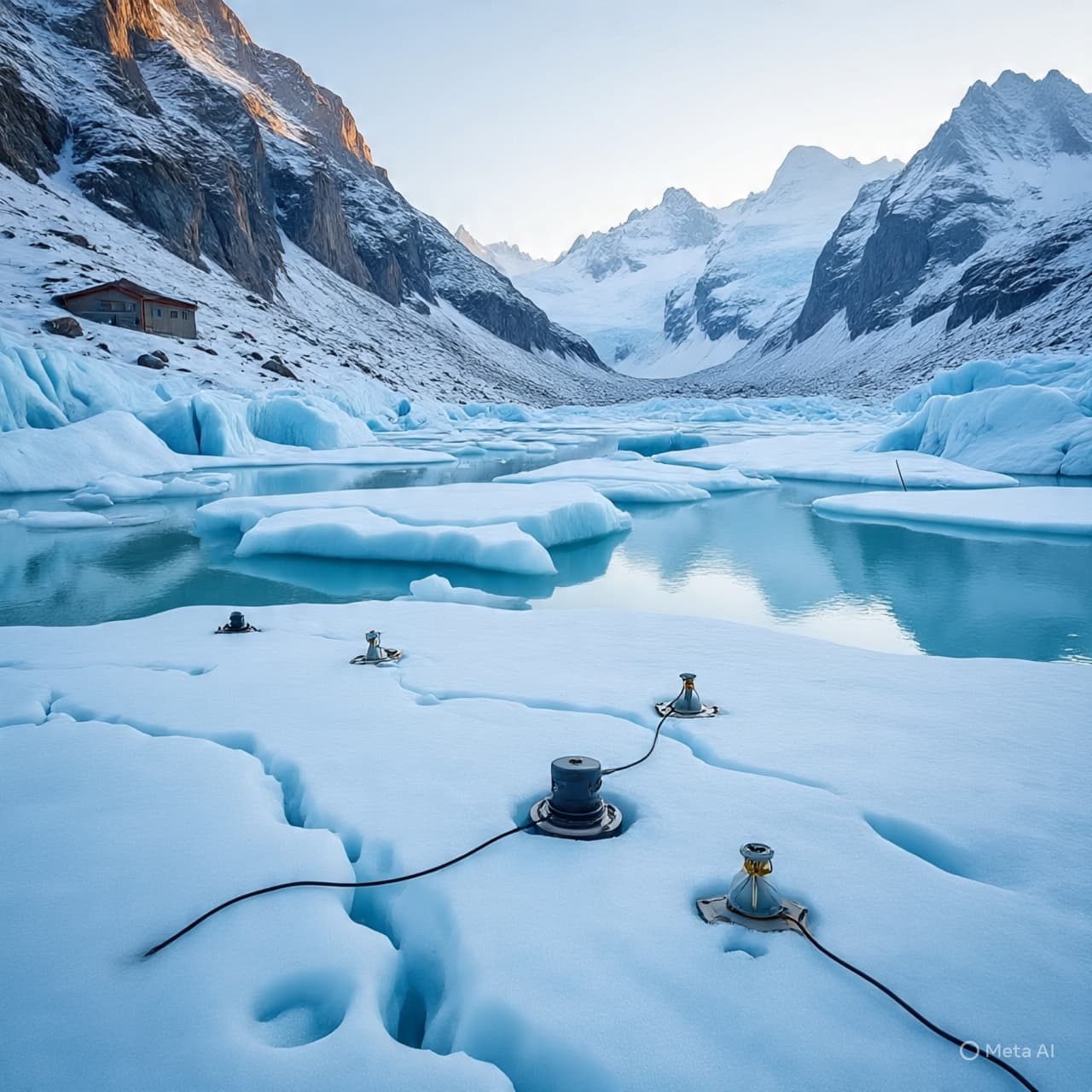
In this context, the use of autonomous sensors represents a thoughtful evolution in how scientists engage with these environments. Rather than relying solely on periodic field measurements, these sensors remain in place, continuously gathering data—tracking shifts in volume, temperature, and movement with a kind of quiet persistence. It is as if the glacier is being observed not in snapshots, but in a continuous narrative, where each moment contributes to a larger understanding.
There is something almost delicate about this approach. Glaciers are sensitive systems, and studying them requires both precision and care. Autonomous sensors allow researchers to reduce the need for frequent physical presence, minimizing disruption while still capturing detailed information. In this way, technology becomes an unobtrusive companion to observation, extending the reach of human inquiry without altering the landscape it seeks to understand.
The data collected from the Pasterze Glacier carries significance beyond its immediate setting. Glaciers act as natural archives, storing information about past climates within their layers. As they lose volume, they also reveal insights into broader environmental trends. Monitoring this change helps scientists better understand the pace and scale of glacial retreat, contributing to a clearer picture of how alpine regions are responding to global temperature shifts.
At the same time, the work highlights the gradual nature of environmental change. Glacier loss does not occur in sudden moments, but in steady progression—ice melting, thinning, and receding over time. Each data point captured by the sensors adds to a timeline, documenting a process that unfolds quietly but persistently.
There is also a sense of collaboration in this effort. Glaciology, like many scientific fields, depends on shared knowledge and coordinated research. The deployment of sensors is not just a technical achievement, but part of a broader effort to monitor, understand, and respond to changes in the Earth’s cryosphere. These collective efforts help build a foundation for informed decision-making and long-term environmental planning.
Yet, even as the sensors gather data, they also point toward a larger question—what these changes mean for the future of alpine regions. Glaciers influence water systems, ecosystems, and landscapes. As they diminish, their absence will reshape not only the terrain but also the ecological and human systems that depend on them.
In this way, the deployment of autonomous sensors at the Pasterze Glacier represents both a scientific and environmental moment—a step toward deeper understanding, and a reminder of the changes already underway. It is a quiet act of observation, capturing the slow transformation of ice into water, and in doing so, documenting a chapter in the ongoing story of a changing climate.
Published by Banx Network. This article is part of the Banx decentralized media programme, powered by the BXE token on the XRP Ledger.