
Key Highlights
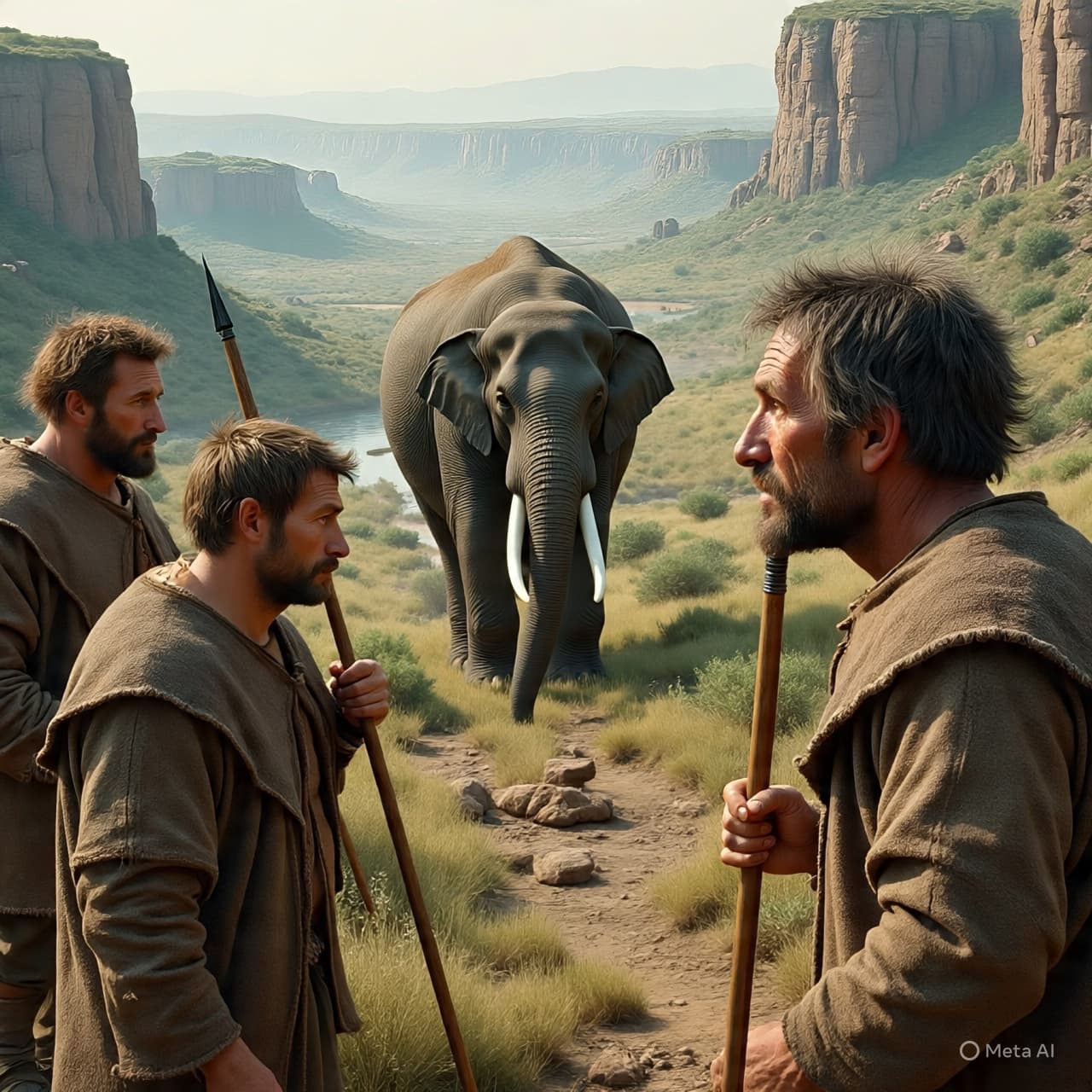
- Neanderthals may have hunted large straight-tusked elephants, according to recent research.
- Fossil evidence shows cut marks on elephant bones, indicating deliberate processing.
- Findings suggest advanced social organization and hunting strategies among early humans.
[Neanderthals and Their Prey]
Recent archaeological research has unveiled compelling evidence that Neanderthals, often viewed as primitive, engaged in sophisticated hunting practices. This evidence, published in reputable journals such as Nature and Science, suggests that these early humans hunted large straight-tusked elephants, known scientifically as Palaeoloxodon antiquus, during the Pleistocene era. The implications of this discovery extend beyond mere survival; they indicate a level of social organization and planning previously underestimated in Neanderthal communities.
The study of fossil remains has revealed cut marks on elephant bones that align with the use of tools, suggesting that Neanderthals were not merely scavenging but actively hunting these massive creatures. The specific patterns of these marks indicate that the animals were processed for meat and marrow, pointing to a deliberate and coordinated effort rather than random acts of survival. This level of organization implies that Neanderthals operated in groups, sharing knowledge and skills necessary for such a formidable task.
[Implications of the Findings]
The scale of the prey hunted by Neanderthals adds a significant layer to our understanding of their capabilities. The Palaeoloxodon antiquus could reach sizes much larger than modern elephants, making the act of hunting them a daunting challenge. This suggests that Neanderthals had developed complex strategies and social structures to facilitate such hunts. Reports from outlets like BBC Science and The Guardian highlight that this evidence represents one of the most convincing indications yet of large-scale hunting by Neanderthals, reshaping our perception of their interactions with the environment.
[Revisiting Neanderthal Capabilities]
Traditionally, Neanderthals have been portrayed as limited in their cognitive and social abilities. However, findings like these challenge that narrative, presenting a more nuanced view of their existence. The evidence suggests that Neanderthals were capable of advanced planning and cooperation, traits that are often associated with modern humans. This shift in perspective encourages a reevaluation of how we understand early human behavior and their adaptability to changing environments.
[The Ongoing Research]
Despite the compelling nature of these findings, the full picture remains incomplete. Researchers continue to analyze the context of the fossil evidence, including the arrangement of bones and the presence of tools, to gain deeper insights into the dynamics of Neanderthal hunting practices. The exact methods employed during these hunts and the roles of individuals within their groups are still subjects of ongoing investigation. As more evidence is uncovered, our understanding of Neanderthals will continue to evolve.
[Conclusion]
In conclusion, the recent analysis of fossil evidence provides strong support for the theory that Neanderthals hunted large straight-tusked elephants. This discovery not only highlights their advanced coordination and social behavior but also contributes to a broader understanding of human evolution and adaptability. As researchers delve deeper into the past, the story of early humans becomes increasingly rich and complex, revealing the intricate tapestry of life during the Pleistocene.
Published by Banx Network. This article is part of the Banx decentralized media programme, powered by the BXE token on the XRP Ledger.



