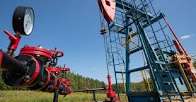
There are mornings in the world of commodities when the sun seems no different from any other, yet the readings on trading boards carry a weight heavier than ink on paper or light on screens. In those early hours, as traders and commuters alike unfold the day, the image of a barrel of crude rising ever higher can feel less like an abstract market move and more like a distant, humming resonance — something that reaches across continents, across daily routines and into the very cost of a journey, a shipment, a life in motion.
That resonance, now unfolding in oil markets, has gathered force in recent days as the conflict involving the United States, Israel, and Iran has substantially disrupted flows of crude and liquefied natural gas through one of the most vital arteries of global energy: the Strait of Hormuz. This narrow waterway, through which roughly one‑fifth of the world’s oil and LNG shipments normally pass, has become nearly impassable as military actions, retaliatory strikes, and threats to commercial shipping have effectively halted tanker traffic for extended stretches, leaving a void where steady supply once moved almost unnoticed through global networks.
Prices have already moved to reflect these tensions in stark terms. Benchmarks such as West Texas Intermediate and Brent crude have climbed sharply over the past week, with WTI topping around $90 per barrel and Brent not far behind as traders price in the worry that a sustained disruption could choke supply. Analysts from major financial institutions have warned that oil “could breach $100 a barrel within days” if the effective closure of key shipping routes persists and supply remains constrained.
There is a certain quiet to these figures, as if the market itself were holding its breath. Oil is not merely a commodity traded in isolation; it is the pulse of transport, industry, and much of the modern economy. When flows slow, even slightly, those effects can echo swiftly: refiners search for alternative barrels, inventories tighten, and the cost of gasoline, diesel, and heating fuels begins to follow the arc of crude’s ascent.
Much of this concern centers on the very geography of the Gulf — where the strait’s narrow channel links Persian Gulf producers with the broader world. When it is calm, it is easy to take that link for granted; when it is not, its economic significance can feel as tangible as a roadside sign displaying pump prices that climb day by day.
In some corners of the market, the specter of still higher prices has already taken shape. Warnings that supplies might be reduced further or that outages could spill into weeks have prompted talk among traders of not just $100 a barrel, but even figures well above that threshold should disruptions deepen. These projections aren’t carved in stone — they are inherently conditional on how the geopolitical landscape evolves — but they underscore the fragility of global supply chains bound together by geography and politics.
Prices approaching or exceeding $100 per barrel are more than a milestone. They are a reflection of how swiftly distant conflicts can ripple into everyday life, nudging up the cost of goods that depend on energy to move, and drawing into relief the hidden seams that connect daily routines to global currents. They remind us that in a world sewn together by trade and transport, the price of motion is as much an echo of human events as it is a number on a trading board.
In straight news language, global oil prices have climbed sharply amid ongoing war in the Middle East, with Brent and WTI benchmarks rising toward $90 per barrel and analysts warning crude could exceed $100 a barrel within days due to supply disruptions around the Strait of Hormuz. The conflict has effectively reduced tanker flows and led to production adjustments by major exporters.
AI Image Disclaimer
Visuals are AI-generated and serve as conceptual representations.
Sources (Media Names Only)
The Guardian Al Jazeera Reuters Euronews
Published by Banx Network. This article is part of the Banx decentralized media programme, powered by the BXE token on the XRP Ledger.