

Key Highlights
- Displacement in Beirut:An influx of families fleeing conflict.
- Humanitarian Needs:Growing demand for food, shelter, and medical care.
- Community Response:Local residents share resources amidst challenges.
Beirut has long been a city defined by its history and the movement of its people. The streets echo with stories of resilience, where life unfolds in the narrow alleys and bustling squares. However, recent events have altered this rhythm, as the city faces a significant influx of displaced individuals fleeing conflict in southern Lebanon. This new wave of displacement is reshaping the urban landscape, bringing both urgency and complexity to the capital's already strained resources.
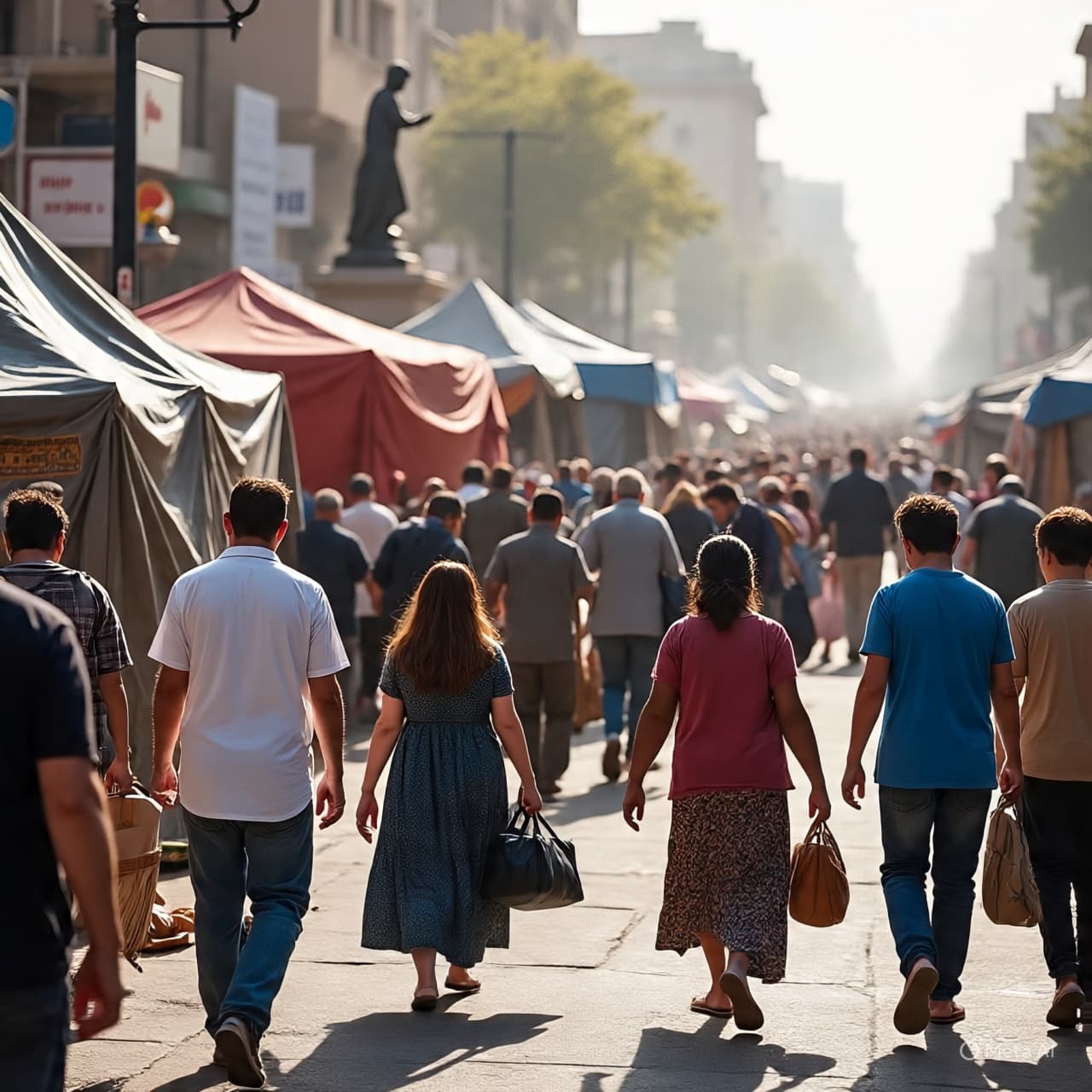
As families arrive in Beirut seeking refuge, they bring with them not just their belongings but also the weight of their experiences. Tents have sprung up in public spaces, and makeshift shelters have emerged in community centers, reflecting the immediate need for housing. The streets, once familiar, now resonate with the sounds of uncertainty and adaptation, as displaced families navigate their new reality amidst the ongoing challenges of urban life.
For many, Beirut represents a duality of hope and anxiety. While it offers a temporary sanctuary from immediate danger, the city is not a permanent solution. Schools and community centers have transformed into temporary living spaces, where families strive to maintain a semblance of normalcy. Children attend classes in improvised settings, while adults seek assistance and information about their future. The struggle to find stability is palpable, as the city grapples with the influx of new residents.
Humanitarian organizations on the ground report a growing need for essential resources. Food, shelter, and medical care are in high demand, and local communities are doing their best to respond. Neighbors are opening their doors, sharing what little they have, reflecting a spirit of solidarity even as resources become increasingly strained. The situation remains fluid, with families continuing to move in search of safety, while aid efforts adapt to the shifting landscape of needs.
Beirut has a history of resilience, having rebuilt itself through cycles of conflict and recovery. Yet the current crisis adds another layer of complexity, as regional instability intersects with economic challenges. The city is absorbing this transformation with a fragile endurance, as the presence of displaced families becomes woven into its identity. Each story of displacement adds to the tapestry of the city, revealing its capacity to embrace complexity and change.
As Beirut moves forward, it does so with a renewed sense of purpose. The streets now hold more stories than ever, layered with experiences that have yet to find resolution. The hope is that displacement will be seen as a chapter in a larger narrative, rather than an endpoint. The city continues to pulse with life, as those who now call it home navigate their uncertain futures, each carrying the hope that they will find a place to belong once again.
Published by Banx Network. This article is part of the Banx decentralized media programme, powered by the BXE token on the XRP Ledger.




