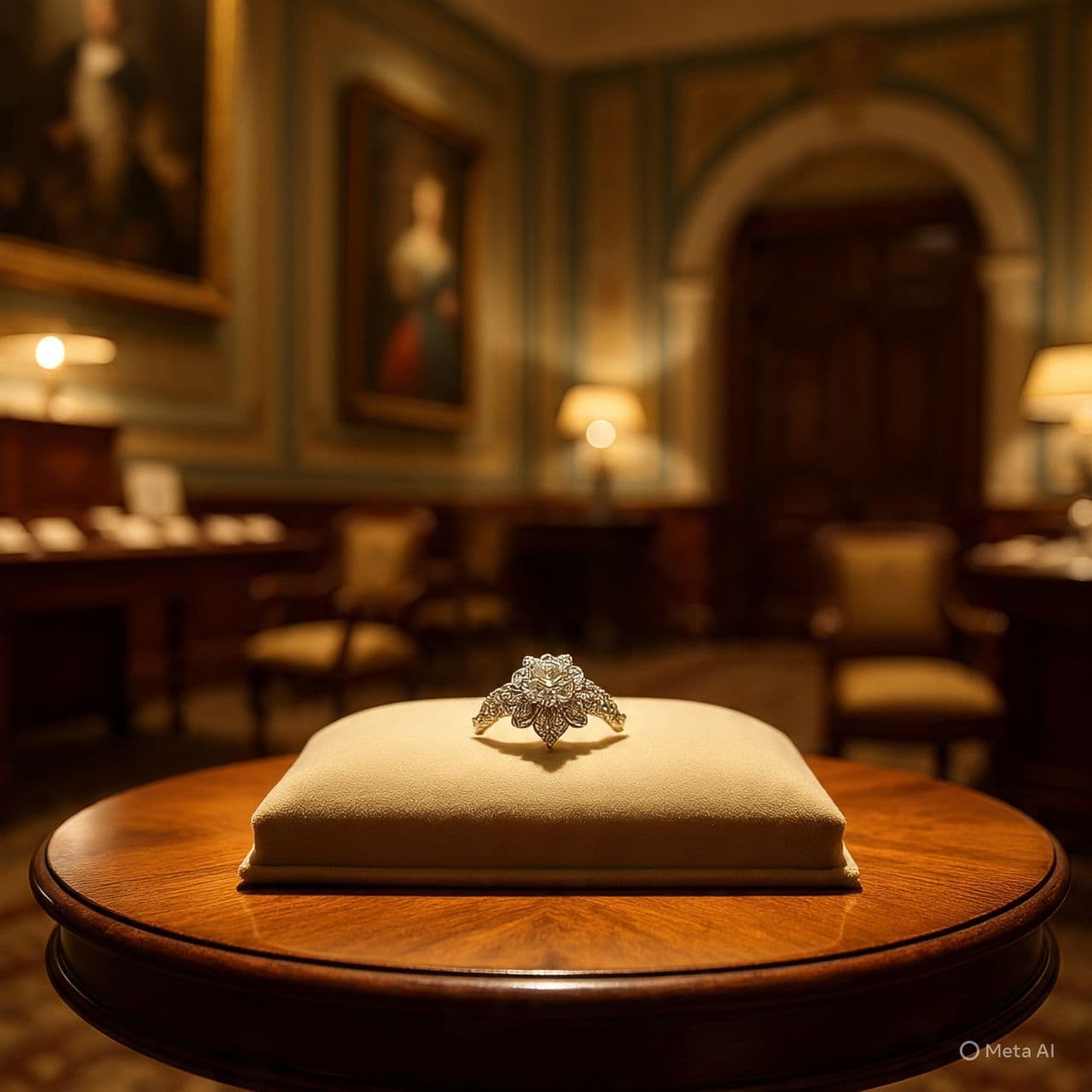
Some artifacts carry the quiet weight of time not through their size, but through the stories that cling to them. When a diamond brooch once belonging to Napoleon crossed the auction block and fetched $4.4 million, the moment felt less like a sale and more like the closing of a circle—one that began on a muddy field two centuries ago, when the course of European history shifted with a single defeat.
The story of the brooch is almost cinematic in its accidental poetry. It was lost after the Battle of Waterloo, a day remembered not only for its brutality but for the way it unmade an emperor. In the confusion of retreat, amid exhaustion, rain, and the disintegration of a once-invincible campaign, this small, glittering emblem slipped away. What Napoleon left behind that day was more than a jewel; it was the final trace of a grand design collapsing into history’s rearview.
Objects like this tend to live several lives. First, as symbols of power, worn under the gaze of armies and courts. Then as relics, displaced and rediscovered, passed through hands that had nothing to do with their origins. By the time this brooch reached the auction room, it had long since detached itself from the feverish politics of its era. Its value no longer rested in the ambitions of its original owner but in the quiet endurance of memory.
The room where it sold was calm, modern, and worlds away from the thunder of cannon that once echoed as the brooch fell. Bidders didn’t see a battlefield; they saw rarity, craftsmanship, and the irresistible pull of a tangible link to a man who shaped continents. The winning offer—$4.4 million—felt like both a tribute and a gentle contradiction, suggesting that even lost symbols can accumulate new significance with each passing century.
What made the moment resonate wasn’t the price, though it was remarkable, but the broader realization that history does not fade evenly. Some stories dissolve; others crystallize. This brooch, with its fine stones and improbable survival, became a reminder that the artifacts we inherit are not just decorative—they are witnesses. They carry the imprint of human ambition, the fragility of power, and the unpredictable journeys of objects set loose in the world.
As the auction concluded, the brooch’s next chapter began quietly, without spectacle. Whether it now rests in a private collection or awaits a future museum display, its meaning continues to evolve. The jewel has outlived the empire it once adorned, outlasted the battlefield where it vanished, and resurfaced to remind us that even the smallest fragments of the past can illuminate the strange, resilient ways in which history chooses to linger.
In the end, the brooch’s journey reflects a simple truth: empires fall, but the objects that slip through their fingers sometimes shine brightest when the dust has settled.
Published by Banx Network. This article is part of the Banx decentralized media programme, powered by the BXE token on the XRP Ledger.