

Key Highlights
- Discovery:Portions of a World War II-era railway in Thailand have resurfaced.
- Historical Significance:The railway, known as the 'Death Railway,' symbolizes wartime hardship.
- Visitor Interest:The exposed sections attract historians, tourists, and descendants of laborers.
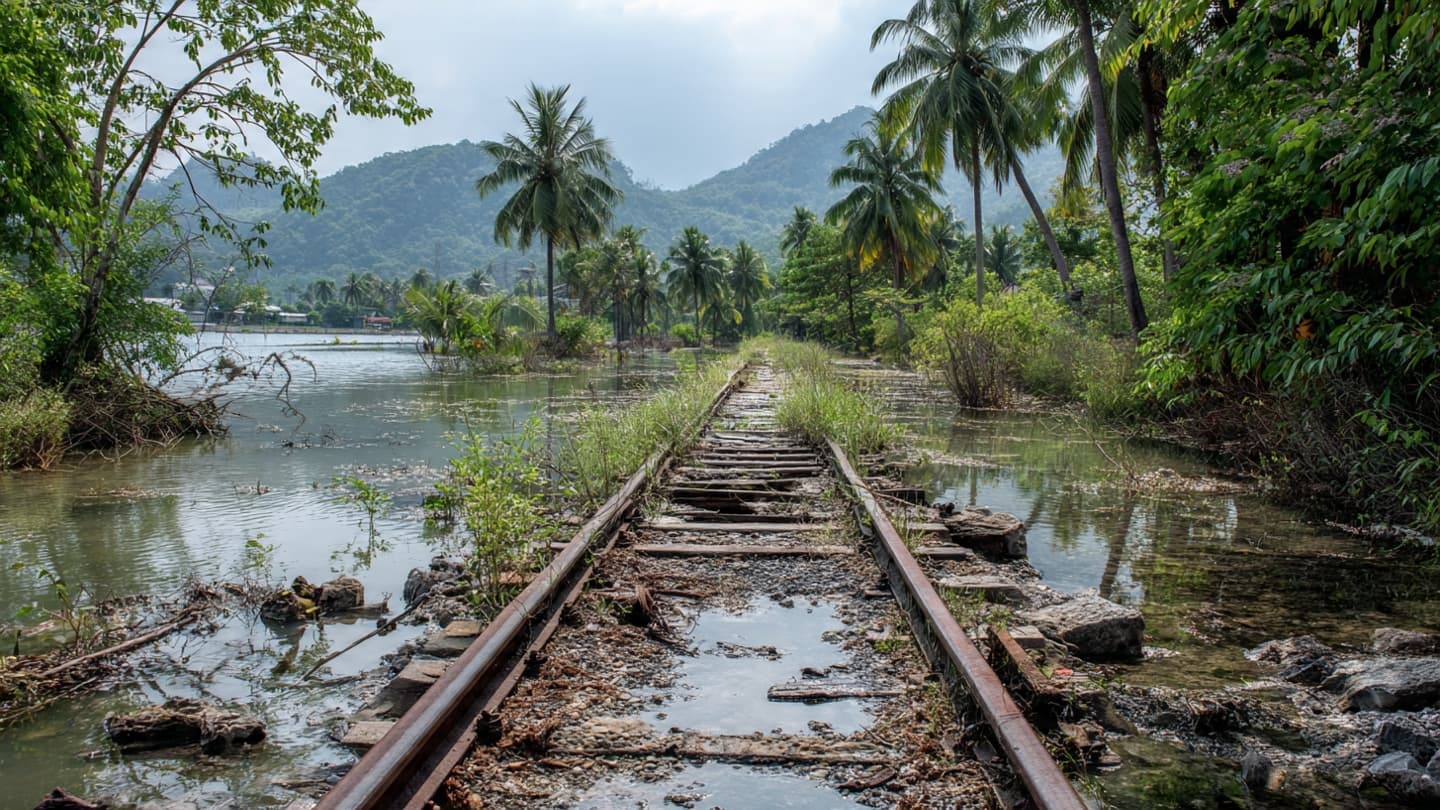
The past often resurfaces in unexpected ways, and a recent event in Thailand exemplifies this phenomenon. Portions of a World War II-era railway, commonly referred to as the 'Death Railway,' have become visible after decades submerged underwater. This railway, constructed under dire conditions during the war, serves as a poignant reminder of the human cost of conflict.
Constructed primarily by forced labor, including prisoners of war, the railway is a significant historical symbol in Southeast Asia. The recent environmental changes that led to the exposure of the railway sections have sparked renewed interest among historians, local residents, and tourists. Many are drawn to the site not only for its historical significance but also for the personal connections it holds for descendants of those who worked on the railway.
The resurfacing of the railway has provided historians with a unique opportunity to study the exposed sections. Researchers are eager to document the construction techniques used and the preservation conditions of the railway. Insights gained from these observations could enhance our understanding of wartime logistics and the experiences of those who labored under harsh conditions.
As visitors flock to the site, local authorities are faced with the challenge of balancing historical preservation with tourism management. Increased foot traffic can lead to educational opportunities, but it also raises concerns about the conservation of the site. Authorities are exploring ways to manage visitor numbers while ensuring that the historical integrity of the railway is maintained.
For younger generations, discoveries like this railway offer a tangible connection to history. The physical remnants of the past can communicate stories in ways that books and photographs cannot. As the railway sections continue to attract attention, they serve as a reminder that history is not just a series of events but is woven into the very fabric of our landscapes.
The resurfacing of the railway is a powerful testament to the enduring impact of history. It invites reflection on the human experiences tied to wartime struggles and resilience. As we continue to uncover the past, we are reminded that history remains alive, waiting to be discovered and understood.
Published by Banx Network. This article is part of the Banx decentralized media programme, powered by the BXE token on the XRP Ledger.




