There is a particular kind of stillness that comes over a bleached coral reef—a quiet that feels less like peace and more like waiting. The vibrant colors that once drew divers and sustained entire marine ecosystems fade to bone white, as the coral animals expel the microscopic algae that live within their tissues and provide them with both color and sustenance . For years, scientists have watched these ghostly landscapes expand, casualties of warming oceans, with little more than hopeful mitigation to offer. Now, researchers at Stanford have discovered something unexpected: that dying corals, when placed in contact with healthy neighbors, can recover with a speed that borders on the miraculous .
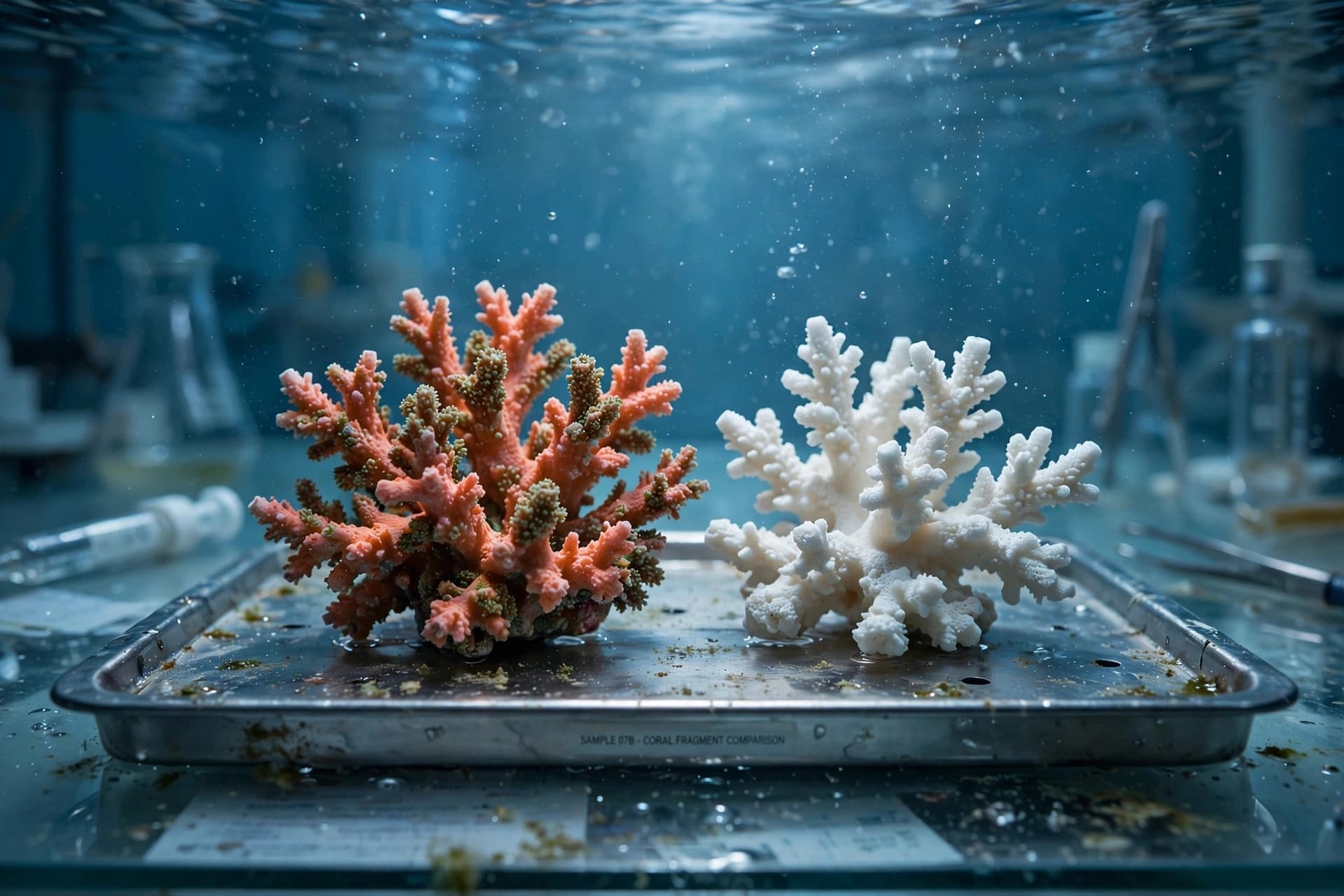
The finding emerged from what began as an accident. In 2025, marine scientist Stephen Palumbi noticed that two coral fragments in his lab tank had tipped over and were touching—one bleached, one healthy. Where they met, color had begun to seep back into the ghostly branch . Palumbi had never seen anything quite like it. He and PhD student Danny Collins designed an experiment to test whether this observation could be replicated and understood. They paired ten bleached coral fragments with healthy counterparts from the same genetic individual. Five pairs were allowed to touch; five were separated by a few millimeters .
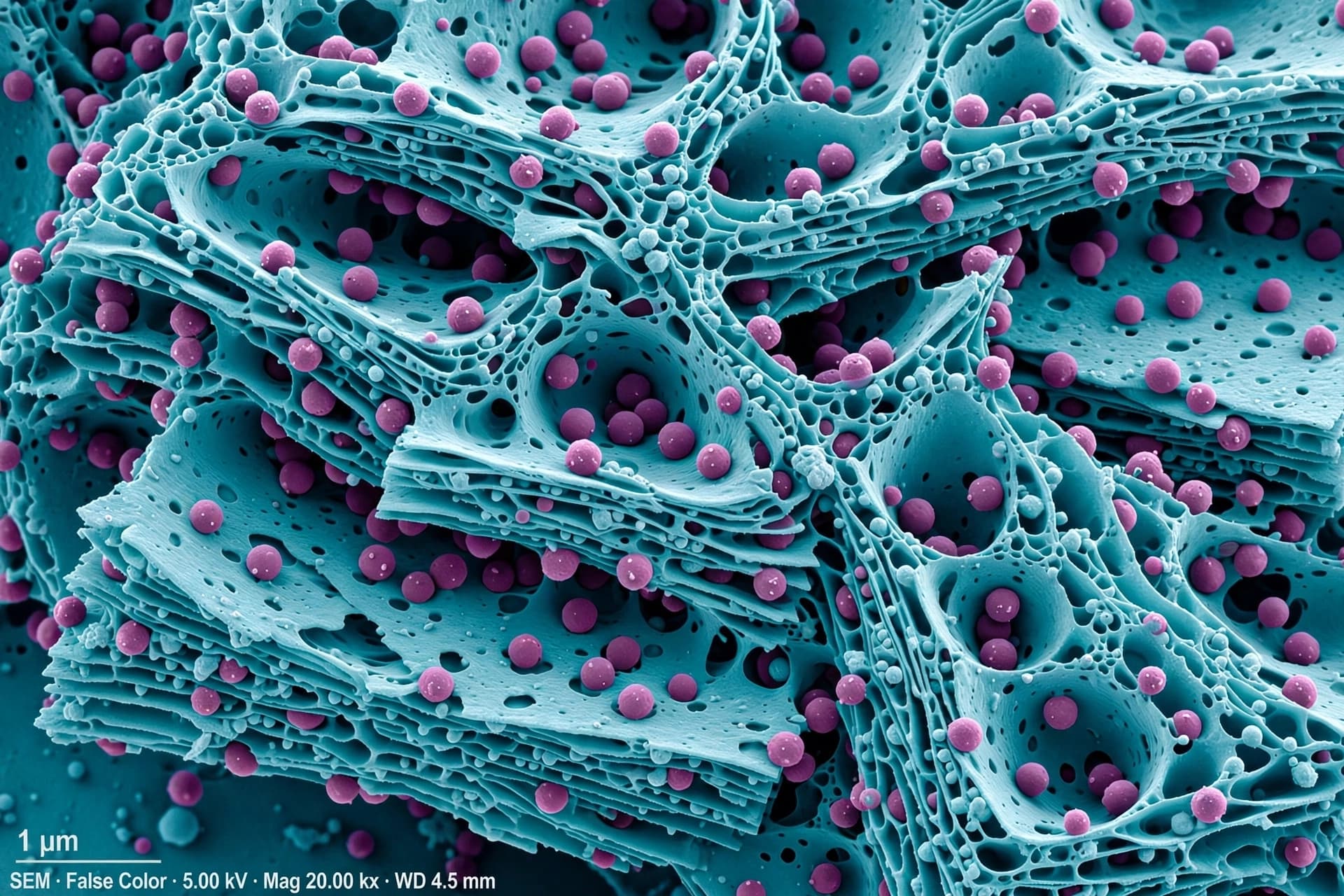
The results, published in Science Advances, were striking. The bleached fragments that touched healthy coral fully recovered within seven to eight weeks—the fastest documented recovery of its kind . The separated fragments died. Microscopic imaging revealed that the touching corals had formed a tissue bridge, a living conduit through which beneficial algae and nutrients flowed from the healthy coral to its starving neighbor . Within three days, the transfer had begun. Within two weeks, the algae population in the recovering coral was doubling every four days—a rate roughly ten times faster than what researchers had observed in wild corals .
Perhaps most remarkably, the contact did not need to be continuous. After just one week—and in some cases, only five days—of touching a healthy fragment, a bleached coral had received enough algae to complete its recovery on its own . The algae, once introduced, proliferated within the recovering coral rather than requiring a sustained supply from its neighbor. This detail matters enormously for any future application, suggesting that brief interventions might be sufficient to jump-start a reef’s recovery.
There is, however, a significant limitation. The tissue fusion and algae transfer only occurred between genetically identical corals—clones from the same original animal . Fragments from different species, or even different individuals of the same species, did not fuse and did not share their algae. “Genetically identical corals recognize one another when they come into contact,” Palumbi explained, drawing a parallel to organ transplants between identical twins . This genetic specificity constrains how broadly the technique might be applied in the wild, where reefs are mosaics of many distinct individuals.
Still, the researchers see reasons for hope. Fiorenza Micheli, a marine ecologist and co-author, noted that bleached corals are often considered lost causes because natural recovery is so slow—if it happens at all . This new understanding of how recovery can be accelerated, even within the limits of genetic compatibility, opens doors that had seemed firmly closed. It may complement other restoration efforts: selective breeding for heat tolerance, coral nurseries, and the transplantation of resilient colonies .
The study’s authors are careful not to overstate what they have found. Laboratory conditions are not the open ocean, and scaling any intervention to the vastness of a reef system presents formidable challenges . Yet the discovery itself—that a dying coral can be revived by the simple act of touching a healthy one—carries a quiet poetry. It suggests that recovery, even in the face of profound stress, is sometimes closer than we imagine. The reef, for all its fragility, still holds within it the capacity to heal.
Please note: The images in this article are AI-generated and do not depict actual photographs.
Sources: Nature, Stanford Doerr School of Sustainability, Science Advances, Gizmodo, EurekAlert
Published by Banx Network. This article is part of the Banx decentralized media programme, powered by the BXE token on the XRP Ledger.