The surface of Antarctica appears calm from a distance—a vast white expanse where wind moves across snow and ice in long, quiet patterns. It is a landscape that seems simple, almost timeless. Yet beneath that frozen stillness lies a world shaped by forces that have been unfolding for millions of years.
Among the most curious of those hidden stories is a place where Earth’s gravity behaves a little differently.
Scientists have long known about a vast region in the Indian Ocean sector near Antarctica where the planet’s gravitational pull is slightly weaker than expected. Known to researchers as the Indian Ocean Geoid Low, this area represents one of the most unusual gravitational depressions on Earth. If gravity could sculpt the surface of the oceans into hills and valleys, this region would resemble a broad dip in the planet’s invisible landscape.
For decades, researchers have puzzled over how such an anomaly formed.
The mystery first emerged in the mid-20th century when satellite measurements and oceanographic studies revealed that sea levels in this region appeared lower than the global average. The difference was not caused by tides or currents but by subtle variations in Earth’s gravitational field.
Gravity is not uniform across the planet. It fluctuates slightly depending on how mass is distributed inside Earth—how dense the rocks are, how deep the mantle flows, and how tectonic plates shift over geological time.
The Indian Ocean geoid low stood out because of its size and depth. Stretching across millions of square kilometers, the anomaly represents the largest gravitational depression on the planet. For many years, however, scientists struggled to explain what process deep within Earth’s interior could produce such an effect.
Recent research using advanced computer simulations of Earth’s mantle has now offered a compelling explanation.
According to the new models, the gravity dip may be linked to ancient tectonic events that occurred when the supercontinent Gondwana began to break apart roughly 140 million years ago. During that period, massive slabs of oceanic crust sank deep into the mantle as tectonic plates shifted and subduction zones consumed older seafloor.
Over time, those descending slabs disturbed the flow of material in Earth’s mantle, the thick layer of rock between the crust and the core. The sinking plates helped generate large plumes of hotter, less dense material rising upward from deep inside the planet.
It is these buoyant plumes, scientists believe, that play a central role in creating the gravitational anomaly.
Because hot mantle material is less dense than surrounding rock, it exerts a slightly weaker gravitational pull. When such plumes accumulate beneath a region of Earth’s surface, they can produce measurable dips in the planet’s gravity field.
The simulations suggest that several such plumes developed beneath the Indian Ocean region over millions of years, gradually shaping the gravitational hollow that satellites observe today.
In other words, the anomaly may be the lingering fingerprint of ancient tectonic upheaval—an echo of geological processes that unfolded long before Antarctica became the frozen continent we recognize today.
Modern satellite missions have played a key role in helping scientists map these gravitational variations with increasing precision. Instruments capable of detecting tiny changes in Earth’s gravitational field allow researchers to infer how mass is distributed deep underground.
Such measurements reveal details not only about tectonic structures but also about how the mantle continues to move slowly beneath the surface.
Although the gravity difference in the anomaly is far too small for people to notice directly, it offers valuable clues about Earth’s internal dynamics. Understanding these hidden patterns helps scientists reconstruct the long history of plate movements, mantle circulation, and continental drift.
In many ways, the gravity dip beneath the Indian Ocean resembles a geological memory. It records processes that unfolded over tens of millions of years, quietly preserved in the subtle shape of Earth’s gravitational field.
For decades, the anomaly stood as one of the planet’s most intriguing puzzles. Now, with improved models and data, scientists believe they are closer to understanding how it formed.
The discovery does not alter daily life on the surface of the planet. But it adds another layer to humanity’s understanding of the world beneath its feet—a reminder that even in the most remote corners of Earth, the forces shaping our planet continue to leave traces waiting to be interpreted.
And sometimes those traces appear not in mountains or valleys, but in the gentle curve of gravity itself.
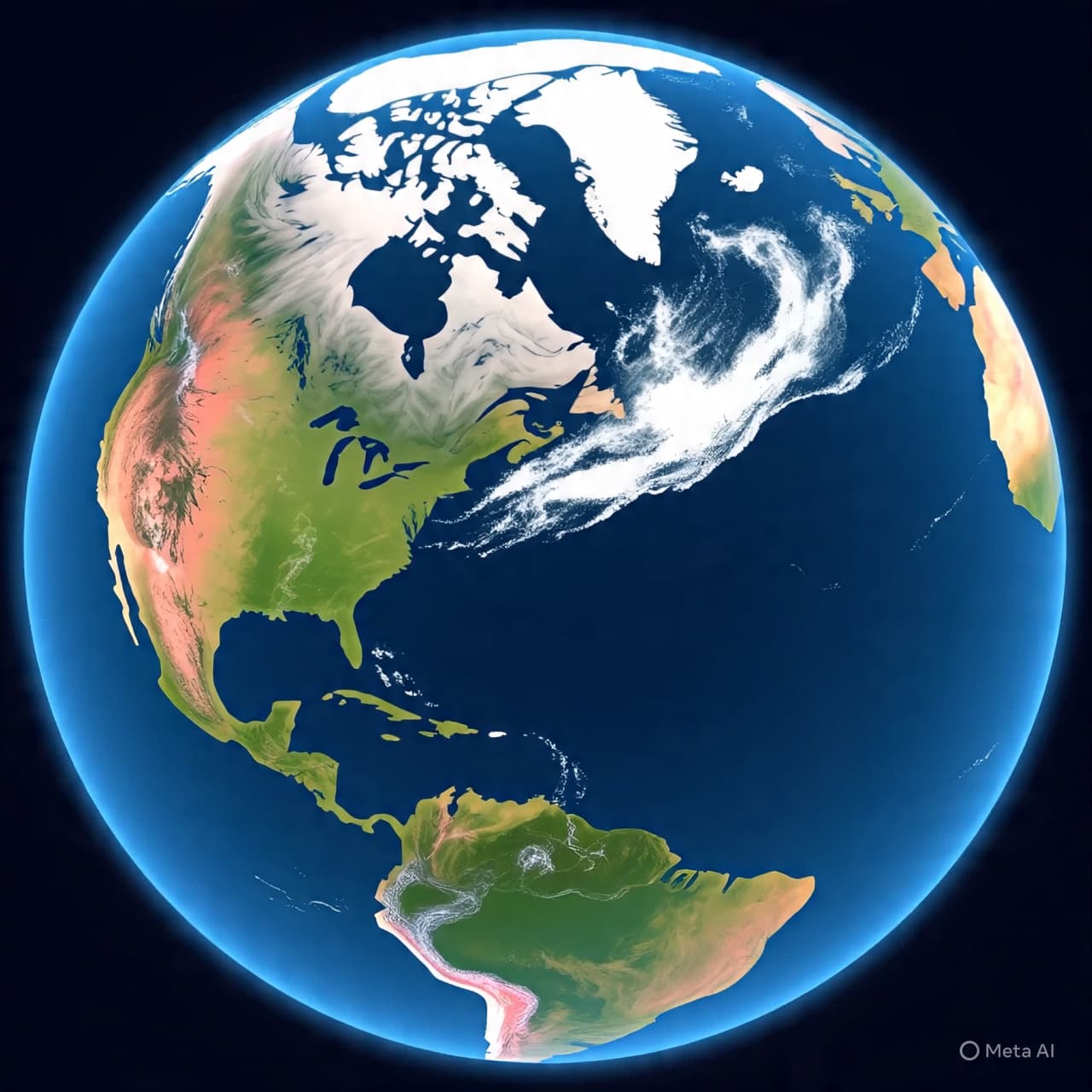
AI Image Disclaimer Illustrations were produced with AI and serve as conceptual depictions.
Sources Nature Geoscience ScienceDaily NASA Earth Observatory Live Science National Geographic
Published by Banx Network. This article is part of the Banx decentralized media programme, powered by the BXE token on the XRP Ledger.