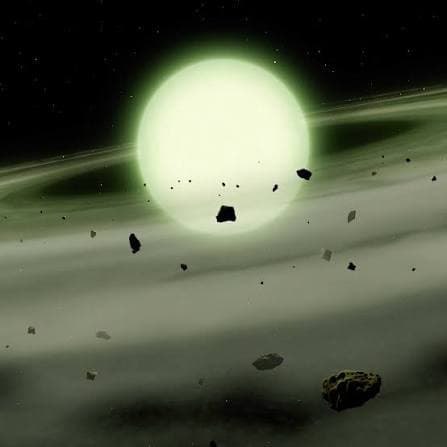
There are dreams that shimmer on the horizon of possibility — visions of opportunity tucked deep within the darkness between stars, like hidden treasure waiting to be claimed. As humanity’s gaze turns outward, to the rocky remnants of the early solar system known as asteroids, those dreams have taken on a new form: the idea of mining the heavens. But just as explorers centuries ago grappled with lawlessness in newly opened frontiers, today’s “asteroid gold rush” stirs another kind of uncertainty — a legal void that is as vast and uncharted as space itself.
For all the engineering ingenuity and bold talk of harvesting precious metals or rare elements from asteroids floating near Earth, the laws governing such ventures remain notably opaque. The bedrock of international space law — the 1967 Outer Space Treaty — declares that outer space “shall be the province of all mankind” and prohibits sovereign claims over celestial bodies, but it was not designed with commercial mining in mind. That silence leaves a gap between legal principle and economic ambition: without clear, globally recognized rules on ownership or rights to extracted resources, investors and governments alike face uncertainty before any spacecraft even leaves Earth’s gravity.
Some nations have tried to fill the gaps with domestic legislation. The United States’ Commercial Space Launch Competitiveness Act of 2015, for example, asserts that private entities may “engage in the commercial exploration and exploitation of space resources,” allowing companies to own what they extract, though not the asteroid itself. Luxembourg has similarly positioned itself as a space‑industry hub with supportive laws and investment incentives. Yet these national approaches do not resolve the deeper international puzzle: when one country’s interpretation of property rights meets another’s, whose laws prevail? And who adjudicates disputes over rights to the same patch of rock millions of kilometers away?
Many legal scholars argue that this lack of clarity is not merely academic. As one recent analysis noted, without internationally agreed mechanisms for licensing, dispute resolution, and enforcement, the legal landscape is fragmented at best and chaotic at worst — a “lawyer’s worst nightmare” where overlapping treaties and national statutes provide contradictory signals about what is allowed and what is forbidden. The absence of a centralized international authority — analogous to the International Seabed Authority that governs deep‑sea mining on Earth — means that companies contemplating asteroid missions must navigate a patchwork of rules and interpretations.
Indeed, interpretations of the Outer Space Treaty itself vary. Some experts argue that mining rights can arise once resources are extracted, while others contend that any implied claim on extracted wealth violates the treaty’s principle that no state — and by extension no company under that state’s jurisdiction — may appropriate celestial territories. This ambiguity amplifies investment risk and stirs diplomatic friction, even as private and public sectors begin to test technical boundaries.
Beyond questions of ownership, the enforcement of any future legal regime would face daunting challenges. Jurisdiction over activities millions of kilometers from Earth is inherently complex, as is establishing liability and accountability in an environment not yet governed by comprehensive global statutes. Industry advocates and legal scholars alike suggest that multilateral cooperation, harmonized treaties, and clear dispute mechanisms are essential if space mining is ever to move from speculative headlines to routine economic activity.
The allure of asteroids as repositories of rare elements — metaphorical gold and platinum waiting in the dark — is not going away. But before humanity’s reach extends to mining machines chipping away at rocky bodies in the void, a foundation of law and governance must be forged. Without it, the rush to space resources risks becoming a legal frontier as unsettled and perilous as the void that surrounds it.
Current international space law, primarily the Outer Space Treaty, does not explicitly address the rights to mine or own resources extracted from asteroids, creating a legal void. National laws such as the U.S. Commercial Space Launch Competitiveness Act attempt to grant resource rights, but no comprehensive global legal framework yet defines ownership, licensing, enforcement, or dispute resolution for asteroid mining.
AI Image Disclaimer Visuals are created with AI tools and are not real photographs.
Sources Phys.org — “The legal void of the asteroid gold rush.” Outer Space Treaty overview (Wikipedia). Lawcenta — Asteroid mining legal issues. FactLineup — Legal implications of asteroid mining. Verdict Verse — Jurisdictional challenges in space mining.
Published by Banx Network. This article is part of the Banx decentralized media programme, powered by the BXE token on the XRP Ledger.