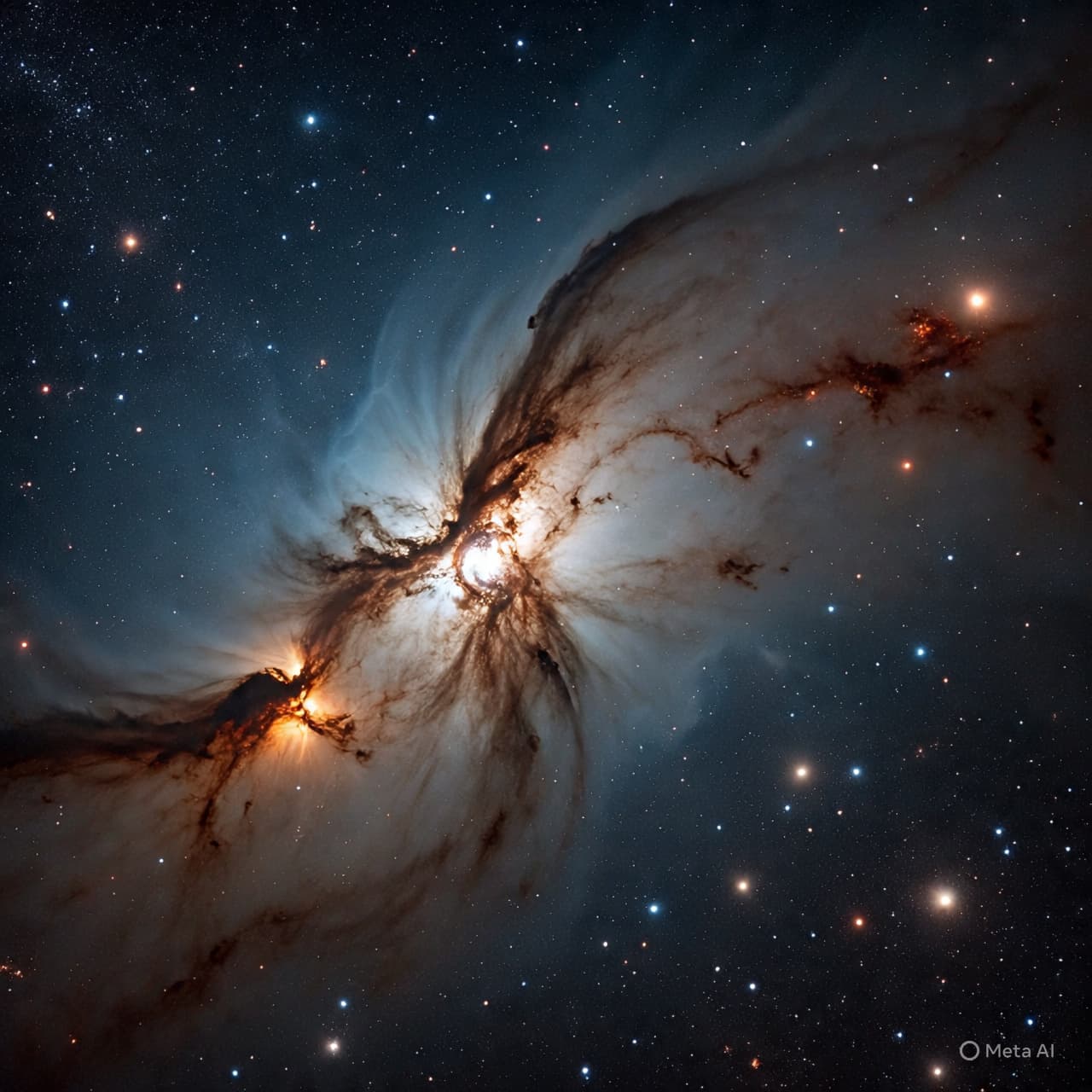
There are moments when the night sky seems to invite us inward, drawing our gaze up and out until the familiar contours of the world below soften into something broader, older, and more mysterious. In the heart of the constellation Gemini, about 5,000 light‑years from Earth, a vast cloud of glowing gas and dust swirls in quiet testimony to both creation and departure — the remnants of a massive star that once burned with the steady fire of fusion. In a newly shared photograph, this nebula, known broadly as IC 443, reveals filaments and luminous clouds that might, at first glance, stir something very human within us: the curved, drifting tentacles of a jellyfish, or the mottled folds and shadows of a brain suspended in cosmic thought.
Such interpretations are not merely flights of fancy. When astrophotographer Ogetay Kayali trained his telescope above the night skies over Texas, the resulting image captured the nebula’s expanding shell in remarkable detail. The nebula’s shape bears the mark of enormous energy — shock fronts where gas once hurled outward from a dying star now clash with the surrounding interstellar medium, ionising hydrogen so that it glows a deep crimson and tracing the tumult of its own turbulent history in luminous threads.
Viewed through long exposures and with careful processing, the nebula’s contours, juxtaposed with dense molecular clouds and the multicolored speckle of foreground and background stars, create an impression that seems almost terrestrial. Some observers see in the image the bell and trailing tentacles of some phantom jellyfish gliding in slow motion through the dark sea of space; others are drawn instead to the suggestion of convoluted folds and cavities that evoke the visual texture of a brain. In Kayali’s own composition, the framing emphasizes both possibilities, playing with light and shadow so that this distant remnant of stellar death seems to mirror forms and ideas already familiar to us.
Yet beneath these lyrical impressions lies a very real astrophysical story: of a supernova remnant known to astronomers as a remnant of a once‑massive star’s final moments, now seen in the slow expansion of its gaseous shell. The stellar core that gave rise to this nebula lingers still, a rapidly spinning neutron star known as a pulsar, first detected years ago by X‑ray observatories, its high‑energy emissions providing a faint echo of the star’s former life.
To see in this nebula the shape of a creature from Earth’s oceans, or the folds of a mind, is to engage once again with one of the sky’s oldest invitations: to find, amid distant fire and dust, reflections of ourselves. A nebula’s gas is sculpted by forces that defy simple understanding, and yet the imagination — that most human of faculties — reaches out to shape it again. In that convergence of perception and reality, we find not only the story of a star’s last breath but the quiet reminder that in looking outward we discover new ways to see inward.
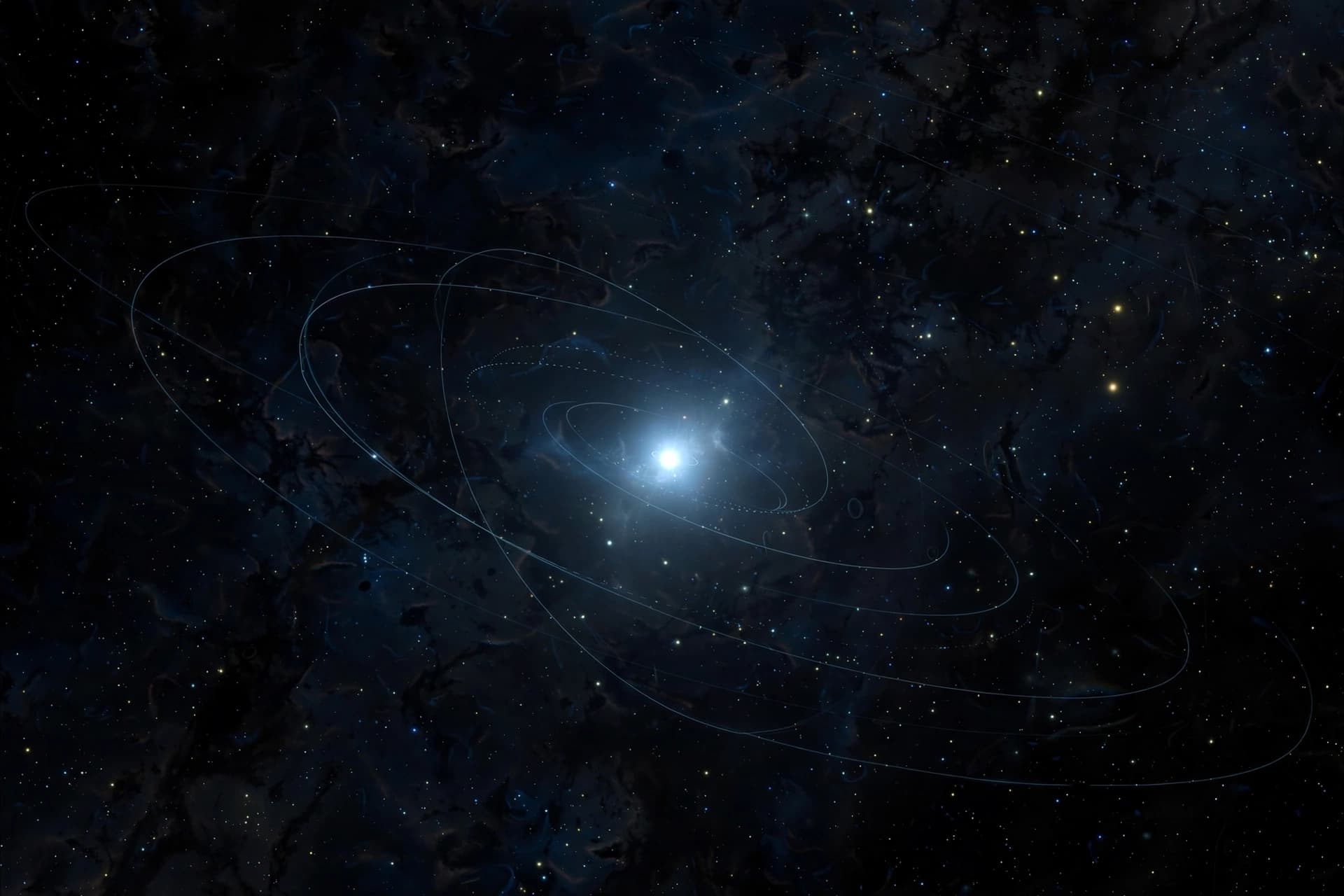
AI Image Disclaimer Visuals are AI-generated and serve as conceptual representations.
Sources (Media Names Only) Space.com Astronomy Magazine Sky & Telescope
Published by Banx Network. This article is part of the Banx decentralized media programme, powered by the BXE token on the XRP Ledger.