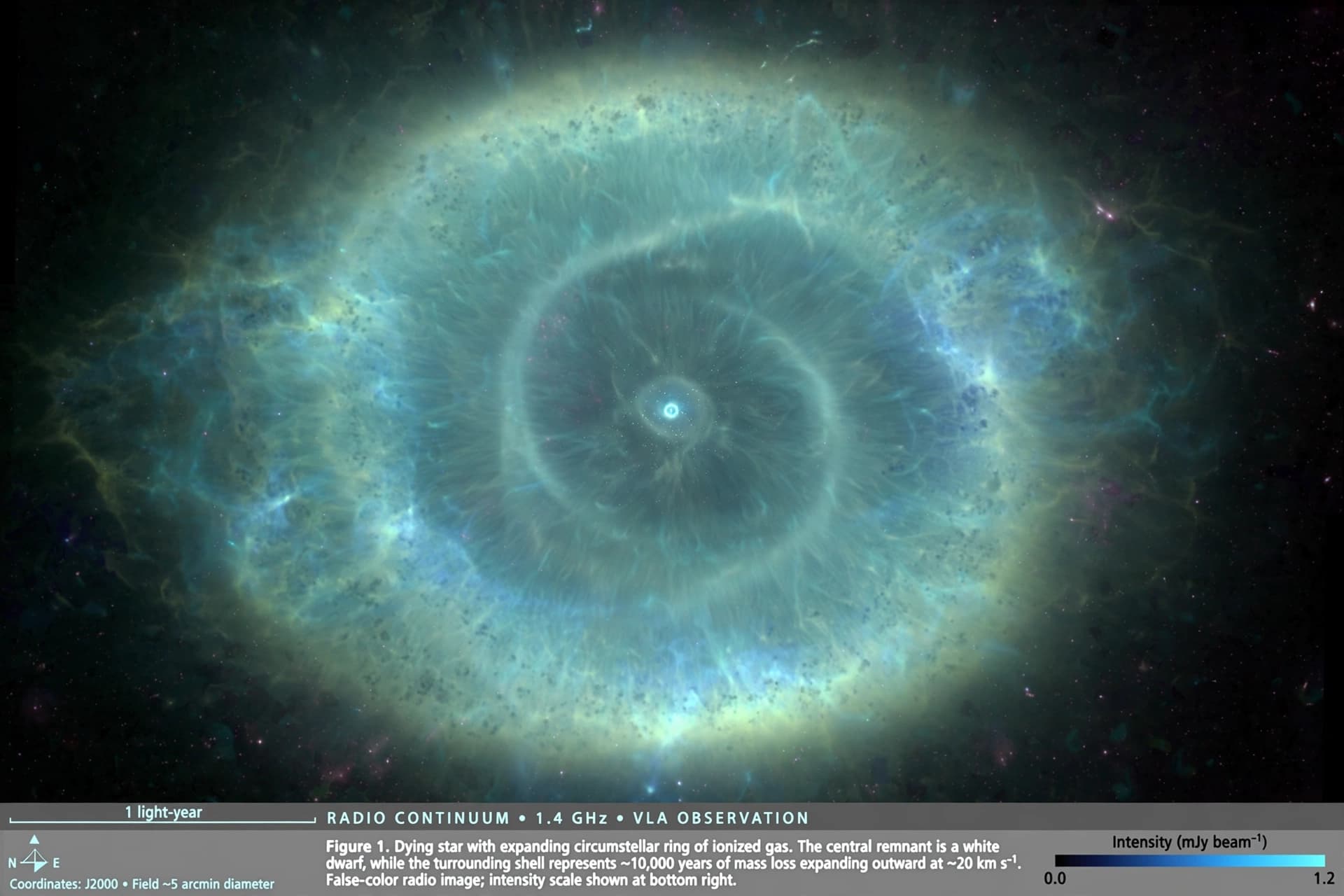
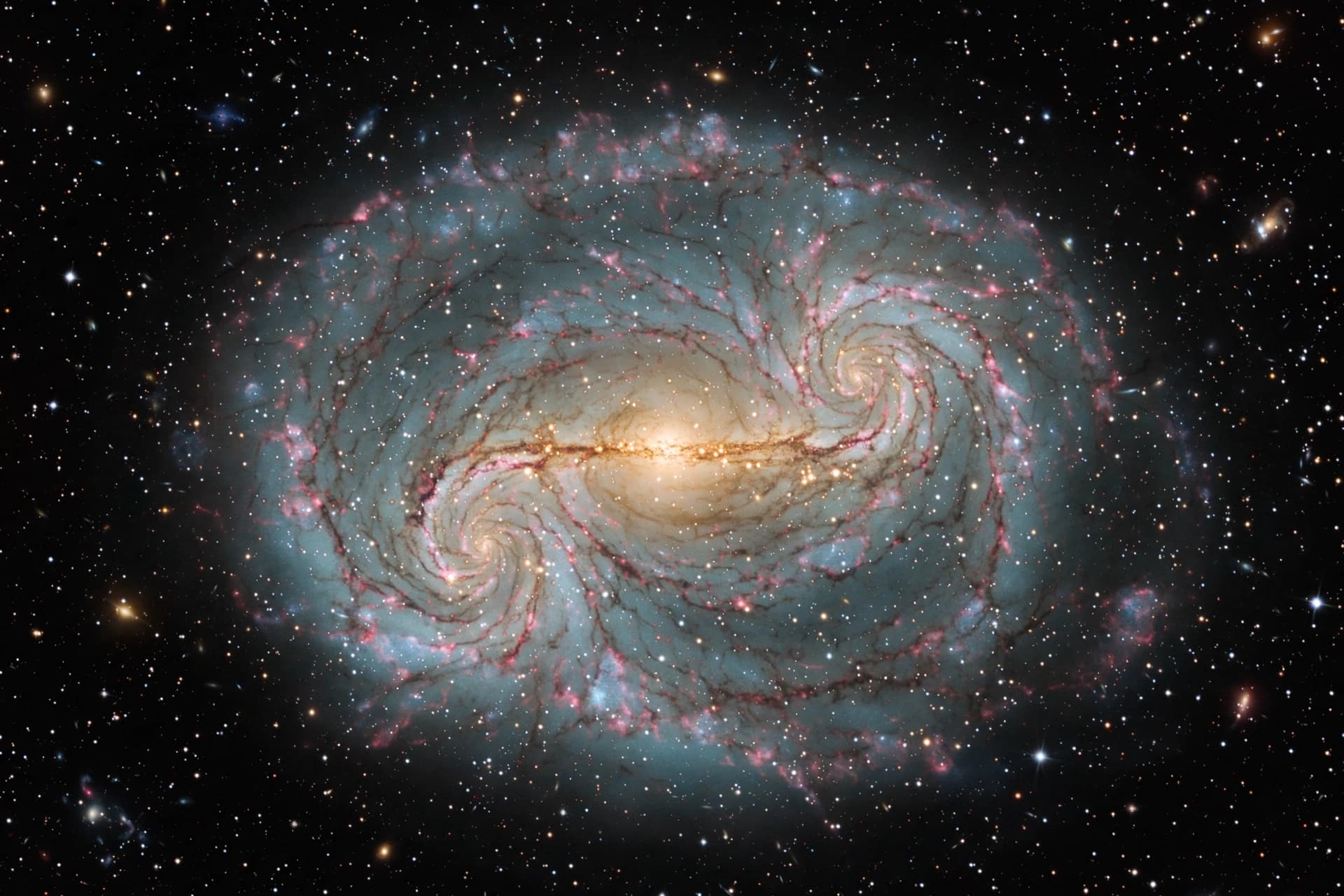
In the quiet reaches of the universe, not all galaxies follow the expected rhythm of birth and renewal. Some drift in a curious pause, holding the raw materials of creation yet choosing stillness over activity. Astronomers have come to call these systems “Red Geyser” galaxies, a name that evokes motion and energy, even as their interiors tell a more restrained story. Like hearths with unspent fuel, they glow softly, mature and calm, resisting the spark that once defined them.
Red Geyser galaxies are rich in cold gas, the essential ingredient for forming new stars. Under ordinary cosmic rules, such abundance should invite stellar nurseries to bloom. Instead, these galaxies remain largely dormant, their star formation rates unusually low. Observations suggest that the answer lies not in what they lack, but in how they behave. At their centers, supermassive black holes release steady, low-level energy. Rather than erupting violently, this energy flows outward in subtle, galaxy-wide winds, gently heating and stirring the gas.
These outflows act like a persistent breeze across a lake, preventing the surface from freezing into stillness but never allowing it to settle enough to form ice. The gas remains present, visible, and measurable, yet it cannot cool and collapse into stars. This process challenges the older idea that galaxies stop forming stars only after their gas is stripped away or consumed. Red Geysers show that star formation can be suppressed even while resources remain close at hand.
Astronomers see these galaxies as a missing link in galactic evolution. They often sit between vibrant, star-forming systems and fully “quenched” galaxies that are truly gas-poor. Their reddish color reflects older stellar populations, while their internal mechanics reveal a prolonged transition rather than an abrupt end. This slow fade reshapes how scientists think about feedback from black holes, suggesting that gentle, long-term influence can be as decisive as dramatic cosmic events.
As telescopes sharpen their view and surveys expand, Red Geyser galaxies offer a reminder that the universe often prefers nuance over extremes. Growth does not always stop with a sudden break. Sometimes, it simply learns to wait.
Recent studies continue to refine this picture, using radio and optical data to trace how energy moves through these galaxies. While many questions remain, the evidence increasingly supports a quiet but effective process that keeps star formation at bay. In the broader map of cosmic history, Red Geysers stand as calm witnesses to a universe capable of restraint as well as spectacle.
AI Image Disclaimer
Illustrations were produced using AI tools and are intended as conceptual representations, not real photographs.
Source Check (Completed — credible sources exist)
1. Nature Astronomy 2. NASA 3. ESA 4. Scientific American 5. Space.com
Published by Banx Network. This article is part of the Banx decentralized media programme, powered by the BXE token on the XRP Ledger.