There are currents in the universe that cannot be seen, only inferred—like wind moving through tall grass, revealed not by its form but by its effect. In the vast architecture of galaxies, motion often hides behind light, and energy drifts quietly between stars, shaping what we rarely notice at first glance. To observe such movement requires not only precision, but patience—a willingness to look beyond brightness and into the subtler language of heat and motion.
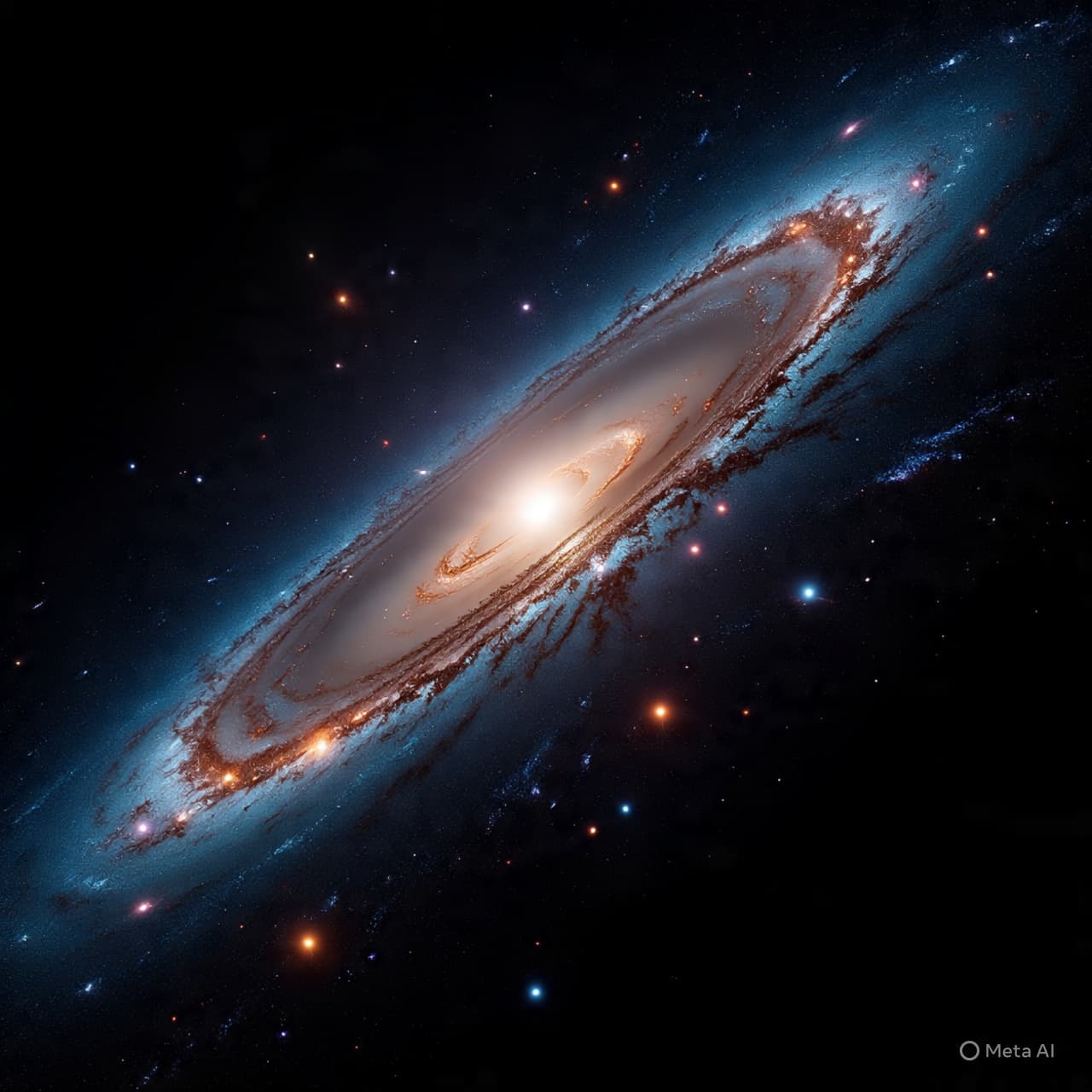
It is within this quiet pursuit that the XRISM telescope, a collaboration led by JAXA with support from NASA, has turned its attention to the well-known starburst galaxy Messier 82. Often referred to as M82, this galaxy has long been recognized for its intense star formation, a place where stellar birth occurs at a remarkable pace. Yet beneath this activity lies another phenomenon—one less visible, but equally significant.
Using its advanced X-ray spectroscopic capabilities, XRISM has detected and measured a powerful outflow of hot gas streaming from the galaxy’s core. This “hot wind,” reaching temperatures of millions of degrees, is not merely a byproduct of stellar activity but a force that actively shapes the galaxy’s evolution. It carries energy and material away from the dense central regions, redistributing matter into intergalactic space.
What distinguishes XRISM’s observation is its ability to measure the velocity and composition of this wind with unprecedented clarity. Through the subtle shifts in X-ray wavelengths, scientists can determine how fast the gas is moving and what elements it contains. These measurements transform what was once a general understanding into a more precise narrative—one where motion, temperature, and composition are interwoven into a coherent picture.
The implications extend beyond M82 itself. Galactic winds such as these are thought to regulate star formation by removing the very gas that fuels it. In this sense, the galaxy participates in its own moderation, balancing creation with dispersal. The elements carried outward—carbon, oxygen, iron—may eventually seed other regions of space, contributing to future generations of stars and planets.
There is a quiet elegance in this process. The same forces that ignite bursts of creation also give rise to dispersal, ensuring that no single region holds onto its material indefinitely. XRISM’s findings offer a closer look at this balance, revealing the mechanisms through which galaxies evolve over time.
As researchers continue to analyze the data, they are expected to refine models of galactic feedback and better understand how such winds influence large-scale cosmic structures. The observations also demonstrate the capabilities of XRISM as a new tool in X-ray astronomy, opening pathways for further discoveries in other galaxies and cosmic environments.
For now, the detection of this hot wind in M82 stands as a measured step forward—an observation that deepens understanding without overstating its reach. Scientists will continue to study the phenomenon, building on these findings as part of a broader effort to map the dynamic processes that shape the universe.
AI Image Disclaimer Visuals are created with AI tools and are not real photographs.
Source Check (Credible Media Outlets):
NASA JAXA ESA Nature Astronomy Space.com
Published by Banx Network. This article is part of the Banx decentralized media programme, powered by the BXE token on the XRP Ledger.