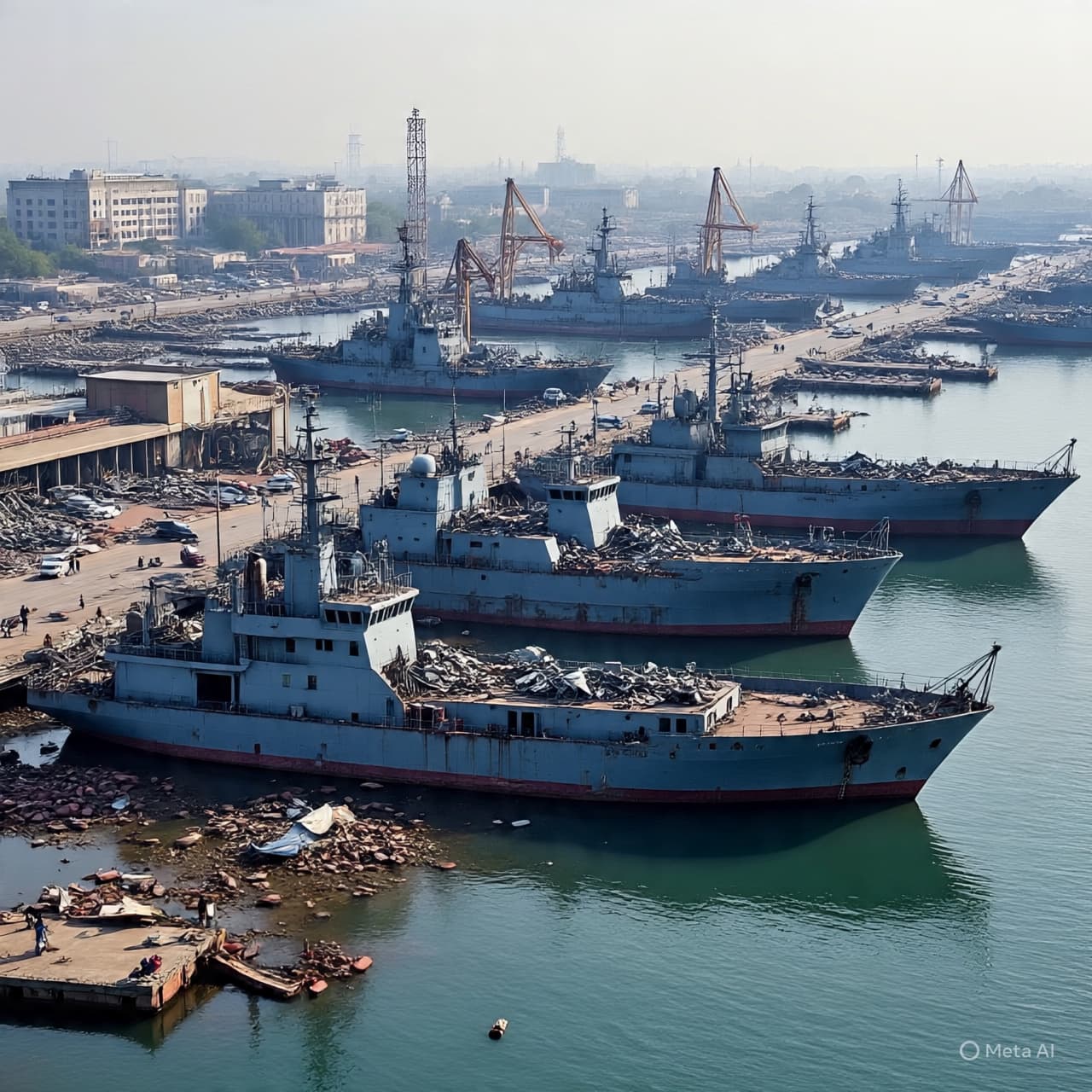
The sea has always carried its own memory of power. In the narrow waters of the Persian Gulf and the wider stretch of the Indian Ocean, ships have long moved like slow silhouettes against the horizon—symbols not only of defense, but of presence. For decades, Iran’s navy sailed these waters as both guardian and messenger, a reminder that the Islamic Republic possessed a reach extending beyond its coastline.
Yet the tides of war can reshape even the most familiar seascapes. In recent weeks, the unfolding conflict between Iran and the United States–Israeli coalition has turned the maritime domain into one of its most decisive theaters. Warships that once anchored at Iranian ports or patrolled strategic straits have instead become targets, their destruction marking a dramatic shift in the balance of naval power across the region.
The opening days of the conflict brought a series of strikes on Iranian naval infrastructure and vessels. Among the first casualties was the frigate IRIS Jamaran, a ship that once symbolized Iran’s domestic shipbuilding ambitions. Commissioned in 2010 and celebrated as a milestone for Iran’s naval industry, the vessel was reportedly struck at its berth during the early hours of the campaign, with smoke rising above the port as images captured the aftermath.
In the days that followed, other vessels met a similar fate. A Fateh-class submarine, one of Iran’s relatively modern coastal submarines, was reportedly destroyed during naval operations early in the conflict. The loss of the submarine signaled that the confrontation had expanded beyond surface vessels and into the underwater dimension of maritime warfare.
Perhaps the most dramatic moment came far from the Persian Gulf itself. The Iranian frigate IRIS Dena was reportedly torpedoed and sunk by a United States Navy submarine in the Indian Ocean while returning from a naval exercise abroad. The attack marked a rare modern example of a warship destroyed by submarine torpedoes in open combat and underscored the widening reach of the maritime confrontation.
Reports from defense analysts suggest that the cumulative effect of these strikes has been profound. Multiple Iranian naval vessels have reportedly been damaged or destroyed since the beginning of the campaign, including frigates, corvettes, and smaller combat ships. The remaining conventional fleet is believed to be significantly reduced, with only a limited number of major surface warships still operational.
For Iran, the implications extend beyond the loss of individual ships. Naval power has long been a key component of the country’s strategy to influence shipping lanes, particularly the Strait of Hormuz, through which a substantial portion of global oil exports pass. Analysts suggest that heavy damage to the conventional fleet could limit Iran’s ability to impose a traditional naval blockade in the region. Instead, future maritime pressure may rely more heavily on asymmetric methods such as fast attack boats, drones, and unmanned systems.
Meanwhile, the conflict has also reshaped commercial maritime activity. Tanker traffic through the Strait of Hormuz has slowed amid concerns about further attacks and escalating naval confrontation, prompting shipping companies and insurers to reassess the risks of entering the region’s waters.
Across ports and naval bases, the losses have left a quieter coastline behind. Piers that once held frigates and corvettes now stand with fewer silhouettes at anchor, while damaged hulls and disrupted patrol routes hint at the transformation underway.
The broader war remains ongoing, and the maritime dimension continues to evolve. Early assessments suggest that the destruction of multiple Iranian warships has significantly weakened the country’s conventional naval capabilities and altered the strategic landscape of regional waters.
AI Image Disclaimer Illustrations were created using AI tools and are not real photographs.
Sources (Media Names Only) Reuters Al Jazeera Time The Guardian Council on Foreign Relations
Published by Banx Network. This article is part of the Banx decentralized media programme, powered by the BXE token on the XRP Ledger.