
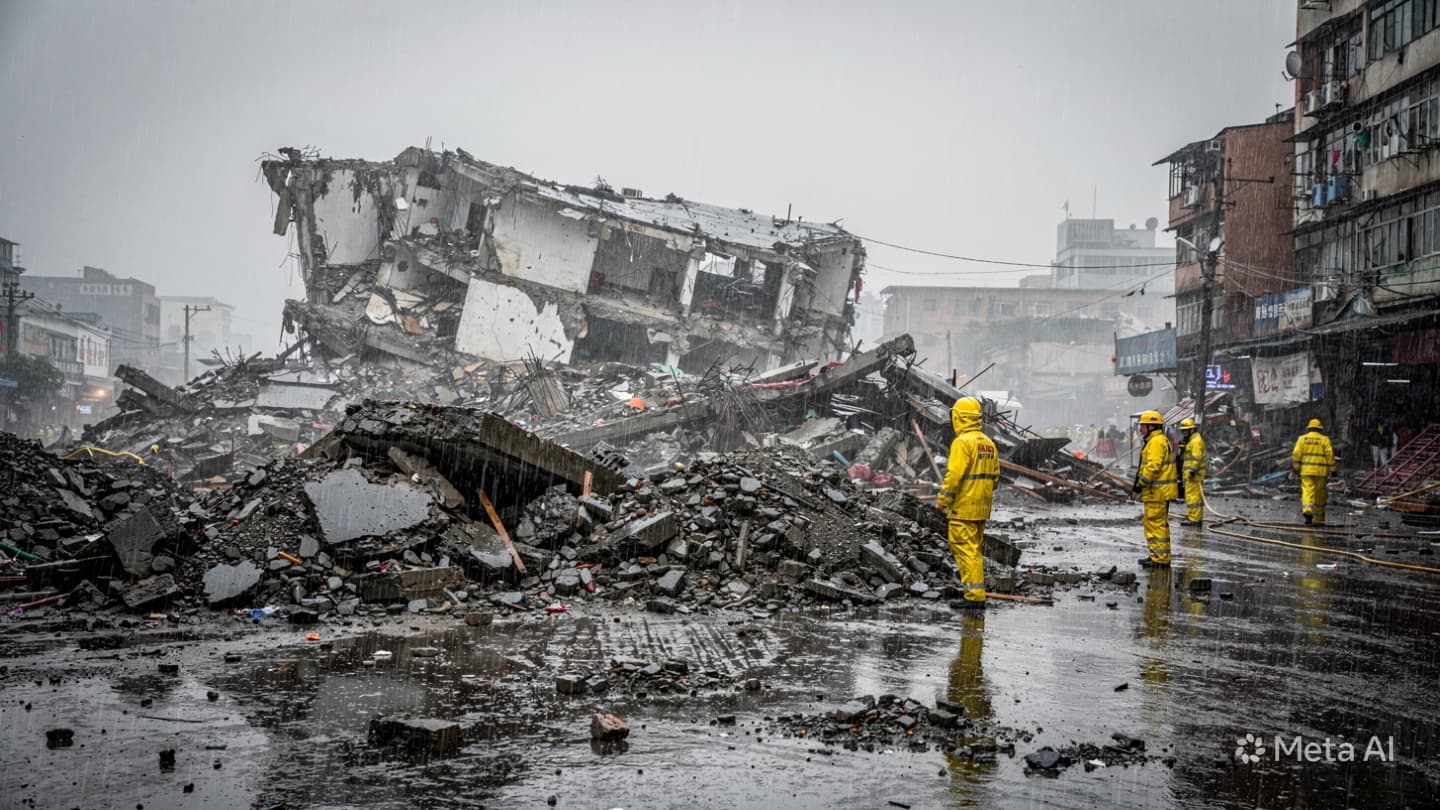
The monsoon does not merely arrive; it settles over the land with a damp, pervasive heaviness that changes the texture of existence. For weeks, the atmosphere has been saturated, a thick and humid blanket that softens the edges of the world. In this climate, even the most solid stone structures can begin to feel tenuous, as if the relentless moisture has seeped into the very foundation of our daily lives. When the rain descends with such unyielding persistence, it becomes a patient sculptor, testing the endurance of every seam and support.
There is a somber truth that emerges when the rains finally take their toll on the architecture of our communities. It is a moment of profound vulnerability where the distinction between the man-made and the elemental collapses entirely. The failure of a structure under such pressure is not just a technical event; it is a human one. It represents the quiet, often hidden, struggle of families to maintain their footing against the shifting, sodden ground of an unforgiving season.
When the news of a collapse travels, it carries with it a weight that is difficult to translate into words. The images—the jagged edges of broken masonry, the intimate belongings scattered in the mud—serve as a stark testament to the fragility of our domestic spaces. We build for permanence, yet the monsoon is a reminder of the transient nature of all things. It forces us to confront the reality that our shelters are only as strong as the earth that holds them and the care we give to their maintenance.
The scene at the site of the collapse is one of disciplined urgency. Rescue teams work in a synchronized rhythm, their movements precise and practiced against the backdrop of a landscape that remains stubbornly saturated. There is a deep, quiet resolve in their actions, a recognition that every stone moved is a step toward clarity. They navigate the ruins not as observers, but as participants in the ongoing, difficult work of recovering what remains of a life interrupted by circumstance.
Reports from the local authorities indicate that the structural instability was a direct consequence of the prolonged, torrential rainfall. The soil, already at its saturation point, could no longer support the weight of the older, weathered masonry. It is a classic narrative of urban and rural decay meeting the overwhelming power of nature, a collision that leaves little room for hesitation. The tragedy is that these events often occur in the quietest hours, when the rhythm of the rain is the only companion to the inhabitants.
State officials have arrived to assess the extent of the damage, their faces reflecting the gravity of the situation. The conversation has shifted toward the necessity of stricter enforcement of safety codes and the urgency of providing temporary sanctuary to those displaced by the instability. It is a slow, bureaucratic process that feels vastly removed from the visceral, immediate reality of the site, yet it remains an essential component of the path forward.
As the search and rescue efforts conclude, the community begins the painful process of mourning and reflection. The loss of life is a piercing reminder that our infrastructure is more than just a matter of logistics; it is the physical framework of our shared existence. There is a collective attempt to understand how such a collapse could occur, and a deepening conversation about the responsibility we hold toward the structures that keep us safe.
The official count of those lost in the incident has been confirmed by local disaster management authorities. Rescue operations at the site of the structural failure have shifted toward the clearing of rubble and the securing of nearby buildings deemed at risk due to the ongoing monsoon conditions. Medical facilities in the area are providing care for the injured, while state representatives have pledged assistance to the affected families.
Published by Banx Network. This article is part of the Banx decentralized media programme, powered by the BXE token on the XRP Ledger.


