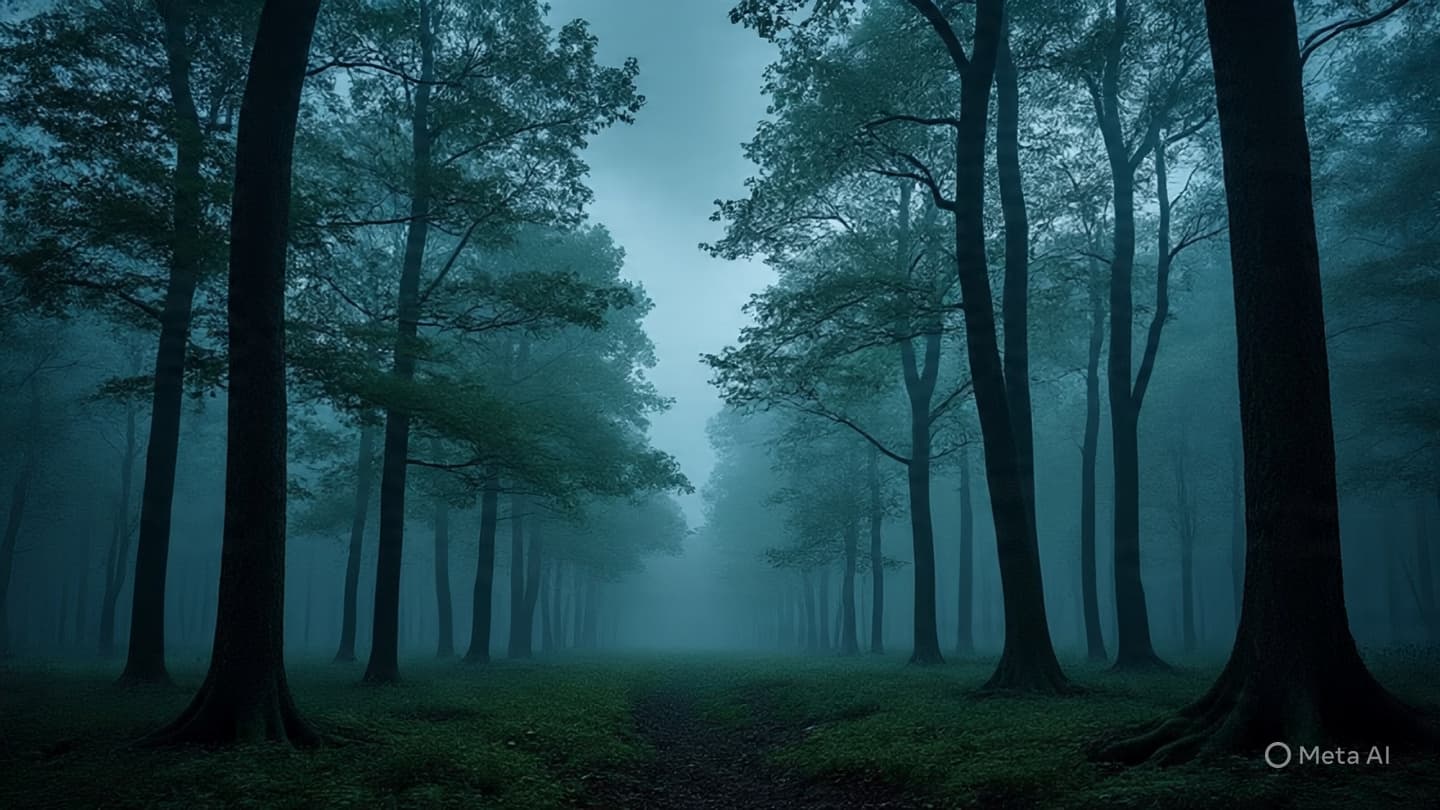
In the stillness of night, forests often appear as silhouettes against the sky, their presence defined more by shadow than light. Yet, on rare occasions, something unusual flickers at their highest edges—an unexpected glow that turns the familiar into something quietly extraordinary.
Researchers have recently documented a rare atmospheric phenomenon in which treetops appear to glow under certain conditions. This effect, captured through advanced imaging techniques, is believed to be linked to electrical activity in the atmosphere rather than biological luminescence.
The glow is associated with a process known as corona discharge, where strong electric fields—often present during thunderstorms—cause the air around pointed objects, such as tree branches, to ionize. This ionization can produce a faint but visible light.
Scientists have long understood that similar effects occur on structures like ship masts or airplane wings, sometimes referred to as St. Elmo’s fire. However, observing this phenomenon in forest environments has been less common, making these recent recordings particularly notable.
The study involved sensitive cameras capable of detecting low levels of light, allowing researchers to observe the phenomenon without interfering with natural conditions. The footage revealed subtle, flickering glows concentrated at the uppermost branches.
Environmental factors such as humidity, atmospheric pressure, and the strength of electric fields all play a role in producing the effect. These variables make the phenomenon difficult to predict, contributing to its rarity in documented observations.
While visually striking, the glowing treetops do not pose a direct hazard under normal conditions. Instead, they serve as indicators of electrical activity in the surrounding atmosphere, offering scientists another way to study weather dynamics.
The findings highlight the complex interactions between natural landscapes and atmospheric forces. Forests, often viewed as passive elements in weather systems, can in fact participate in subtle electrical exchanges with the air above them.
As research continues, these quiet glimmers at the tops of trees offer a gentle reminder that even familiar environments can hold moments of quiet wonder, waiting to be seen under the right conditions.
AI Image Disclaimer: Some images accompanying this article are AI-generated visualizations intended to represent atmospheric effects and may not depict real events.
Sources: Nature, National Geographic, American Meteorological Society, Science News
Published by Banx Network. This article is part of the Banx decentralized media programme, powered by the BXE token on the XRP Ledger.