
Key Highlights
- The Strait of Hormuz is a critical maritime corridor for global oil trade.
- Analysts warn of a potential 'billion-barrel shock' affecting oil supply and demand.
- Geopolitical tensions and changing energy dynamics could disrupt pricing structures.
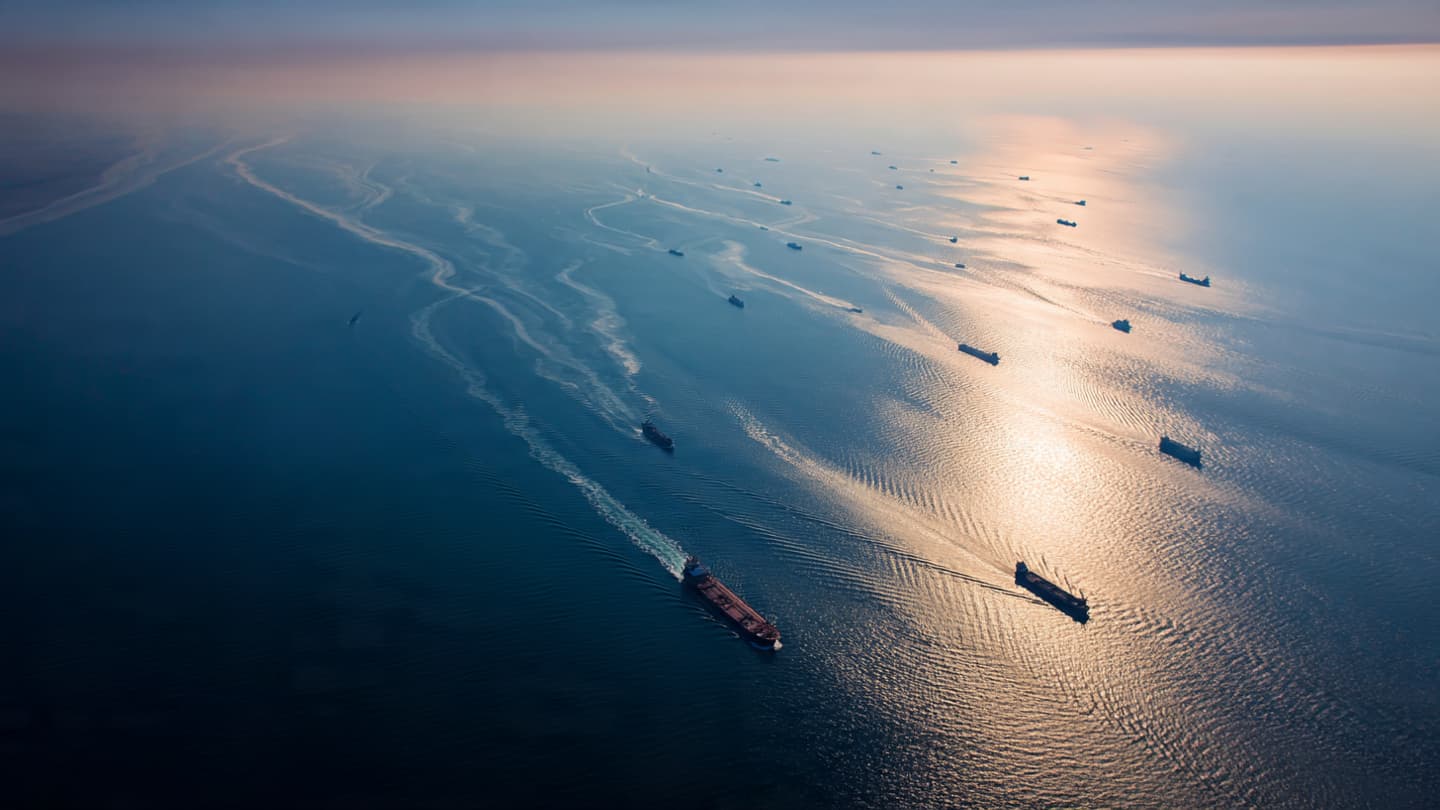
The Strait of Hormuz, a narrow waterway connecting the Persian Gulf to the Arabian Sea, is a pivotal point for global oil transportation. Approximately 20% of the world's oil passes through this corridor, making it a focal point for energy security. Recent analyses indicate that potential disruptions in this region could significantly impact global oil markets, particularly as demand dynamics shift.
Recent discussions among analysts have introduced the term "billion-barrel shock" to describe the potential scale of disruptions that could arise from changes in supply and demand. This term encapsulates the vast inventories and flows that could be affected if geopolitical tensions escalate or if demand continues to weaken. The interplay between supply constraints and fluctuating demand is becoming increasingly complex, with various factors contributing to market volatility.
Currently, global oil demand is experiencing uneven momentum. Some regions are witnessing a slowdown in industrial activity, while others are transitioning towards renewable energy sources. This divergence in demand is compounded by geopolitical risks that are particularly pronounced in the Strait of Hormuz. Any disruption—be it political unrest, military action, or logistical challenges—can lead to immediate and significant reactions in global energy markets, often resulting in price spikes and increased shipping costs.
The Strait of Hormuz is only about 21 miles wide at its narrowest point, yet it serves as a vital link between oil producers in the Middle East and consumers in Asia, Europe, and beyond. Historically, any disruption in this corridor has led to swift market reactions, underscoring its importance in the global oil supply chain. The current situation is further complicated by rising oil inventories and uncertain consumption patterns, which could exert downward pressure on prices if demand does not keep pace with supply.
As the global energy landscape evolves, the relationship between oil supply and demand is becoming increasingly intricate. The rise of renewable energy, electrification of transport, and improvements in energy efficiency are reshaping long-term demand expectations. While oil remains a cornerstone of the global economy, its future trajectory is increasingly influenced by these parallel transitions, which do not occur uniformly across different regions.
The concept of a billion-barrel imbalance serves as a metaphor for the interconnectedness of global oil markets. It highlights how inventory levels, production decisions, and consumption trends might intersect under conditions of uncertainty. This figure illustrates the vastness of the oil supply chain, encompassing everything from storage tanks to offshore terminals and pipelines.
Market sentiment plays a crucial role in this dynamic. Changes in perception regarding demand can significantly impact pricing, often as much as actual supply changes. The Strait of Hormuz thus represents not only a physical passage for oil but also a psychological one, where expectations and risks travel alongside crude oil shipments.
Governments and energy agencies are closely monitoring these developments. Strategic reserves, production adjustments by major oil exporters, and demand forecasts from industrial economies are all part of a broader strategy to stabilize a system that is inherently sensitive to imbalances. As discussions about potential shocks circulate, it is essential to recognize the interdependence of global oil markets. No single region can control the entire supply-demand equation, and disruptions do not occur in isolation. Instead, the system reacts in waves, with prices adjusting, shipments rerouted, and policies recalibrated in response to changing conditions.
In conclusion, the Strait of Hormuz remains a critical juncture in the global oil landscape, where geopolitical tensions and market dynamics converge, shaping the future of energy supply and pricing.
Published by Banx Network. This article is part of the Banx decentralized media programme, powered by the BXE token on the XRP Ledger.



