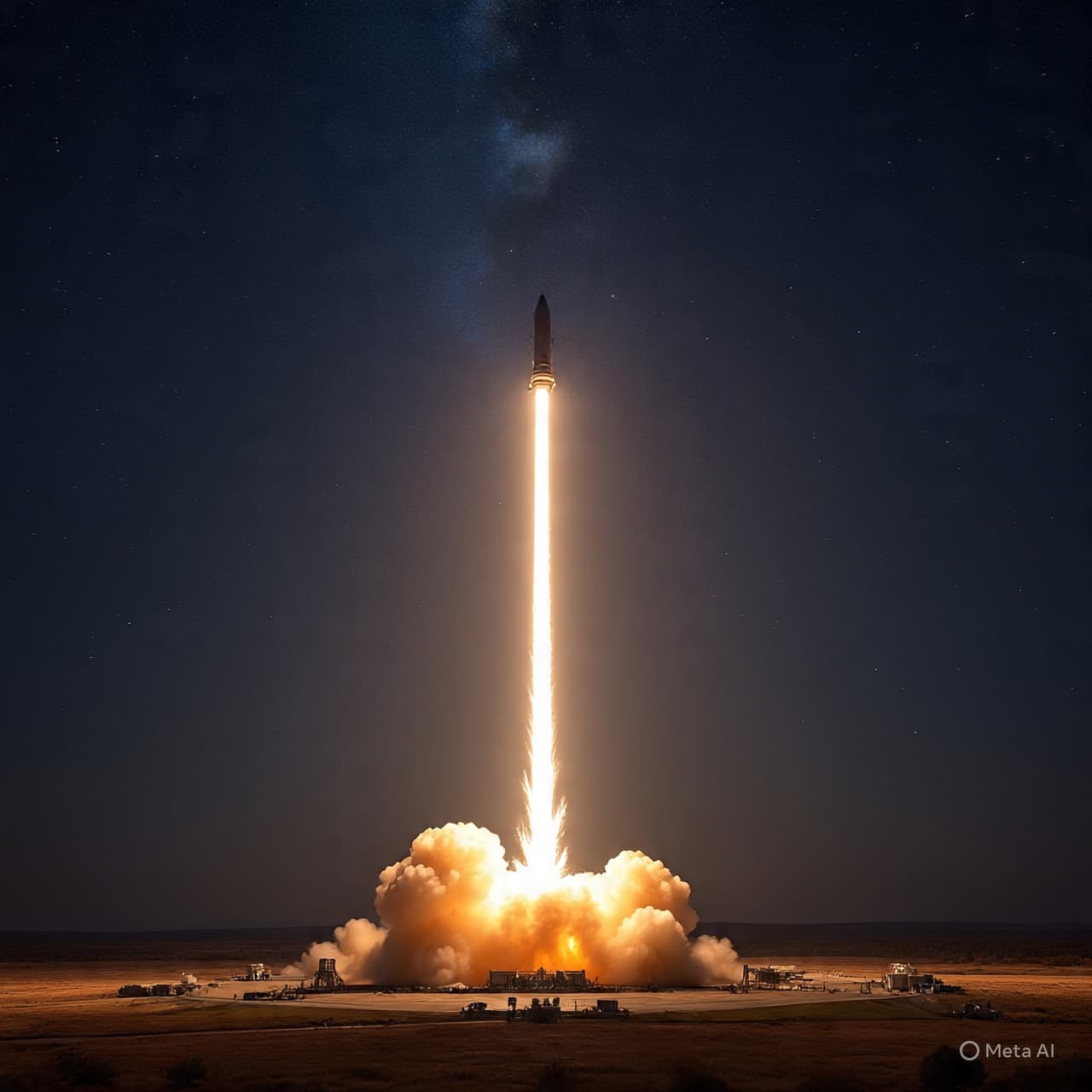
On clear nights, when the sky stretches like a dark ocean above us, rockets rise in pillars of fire, stitching brief seams of light across the atmosphere. For many, these launches are symbols of ingenuity — sparks of human curiosity breaking free from gravity’s ancient hold. Yet, in the quiet between countdowns and applause, some scientists are asking a gentler but urgent question: what does this steady rhythm of ascent mean for the thin veil of air that makes life on Earth possible?
In recent years, the cadence of rocket launches has grown markedly louder. Commercial spaceflight companies, including ventures led by figures such as , have accelerated the frequency of missions, sending satellites, cargo, and crew beyond the atmosphere. Reusable boosters return gracefully to landing pads, and constellations of satellites multiply in orbit. It is a remarkable chapter in technological history. But as the sky grows busier, so too does scientific scrutiny.
Researchers studying atmospheric chemistry have described a concerning pattern: rockets release black carbon, alumina particles, chlorine compounds, and other exhaust byproducts directly into the upper atmosphere. Unlike emissions at ground level, these pollutants are injected into layers where natural cleansing processes are slower. Some scientists have used stark language, suggesting that the atmosphere is becoming a kind of “crematorium” — not in spectacle, but in chemical consequence — as re-entering spacecraft and discarded satellite fragments burn and disintegrate, leaving behind metallic residues.
When satellites fall back to Earth, their fiery descent is visually fleeting. Yet the combustion of aluminum and other materials may release particles that linger in the stratosphere. Researchers warn that such particles can alter ozone chemistry or influence radiative balance. The ozone layer, already fragile from decades of industrial impact, recovers slowly and depends on delicate chemical equilibrium. Even small disruptions, multiplied over thousands of launches and re-entries, may compound over time.
The concern is not solely about dramatic catastrophe but about accumulation. As commercial operators deploy mega-constellations of satellites to expand global connectivity, the number of launches required each year continues to rise. Governments and private enterprises alike see space as both frontier and marketplace. The economic and scientific benefits are tangible: improved communication, weather monitoring, disaster response, and climate observation all depend on orbital infrastructure.
Yet environmental researchers emphasize that regulatory frameworks have not fully kept pace with this acceleration. International agreements governing space largely focus on debris mitigation and collision avoidance. Atmospheric impacts, particularly at high altitudes, remain less thoroughly regulated. The upper atmosphere has long been treated as vast and self-renewing. Now, some scientists suggest it may be more vulnerable than once assumed.
Studies published in recent years indicate that black carbon from rocket exhaust can be significantly more warming, per unit mass, than soot emitted at ground level. Because it is released higher in the atmosphere, it can persist longer and absorb more solar radiation. Meanwhile, the surge in satellite re-entries — expected to grow as older satellites are decommissioned — could inject increasing quantities of metallic ash into atmospheric layers that have rarely been exposed to such materials in human history.
Still, many experts urge balance rather than alarm. The total mass of rocket emissions remains small compared to aviation or industrial pollution. Technological innovation may also offer solutions. Cleaner propellants, improved materials, and more sustainable launch systems are already under development. Some companies are exploring methane-based fuels that burn more cleanly, while researchers are calling for coordinated monitoring of upper-atmosphere changes.
What emerges from this debate is not a rejection of space exploration, but a reminder of stewardship. The atmosphere, though invisible, is finite. It is the quiet architecture of every breath. As humanity extends its reach beyond Earth, it carries with it responsibility — not only to explore, but to preserve.
The sky will likely continue to glow with the promise of departure. Rockets will rise, and satellites will circle in silent arcs. But alongside ambition must travel awareness. The story unfolding above us is not only about distance conquered, but about balance maintained — a dialogue between innovation and care, written across the thin blue line that cradles us all.
AI Image Disclaimer Visuals are created with AI tools and are not real photographs.
SOURCE CHECK
Credible mainstream and science-focused outlets covering this issue include:
BBC News The Guardian The New York Times Reuters Scientific American
Published by Banx Network. This article is part of the Banx decentralized media programme, powered by the BXE token on the XRP Ledger.