February often arrives quietly, carrying shorter days and gentler nights. Yet above that calm surface, the sky prepares its own slow procession. Without announcement or applause, planets align in subtle order, and familiar stars seem to hold their positions just a little longer, inviting those who look up to pause and observe.
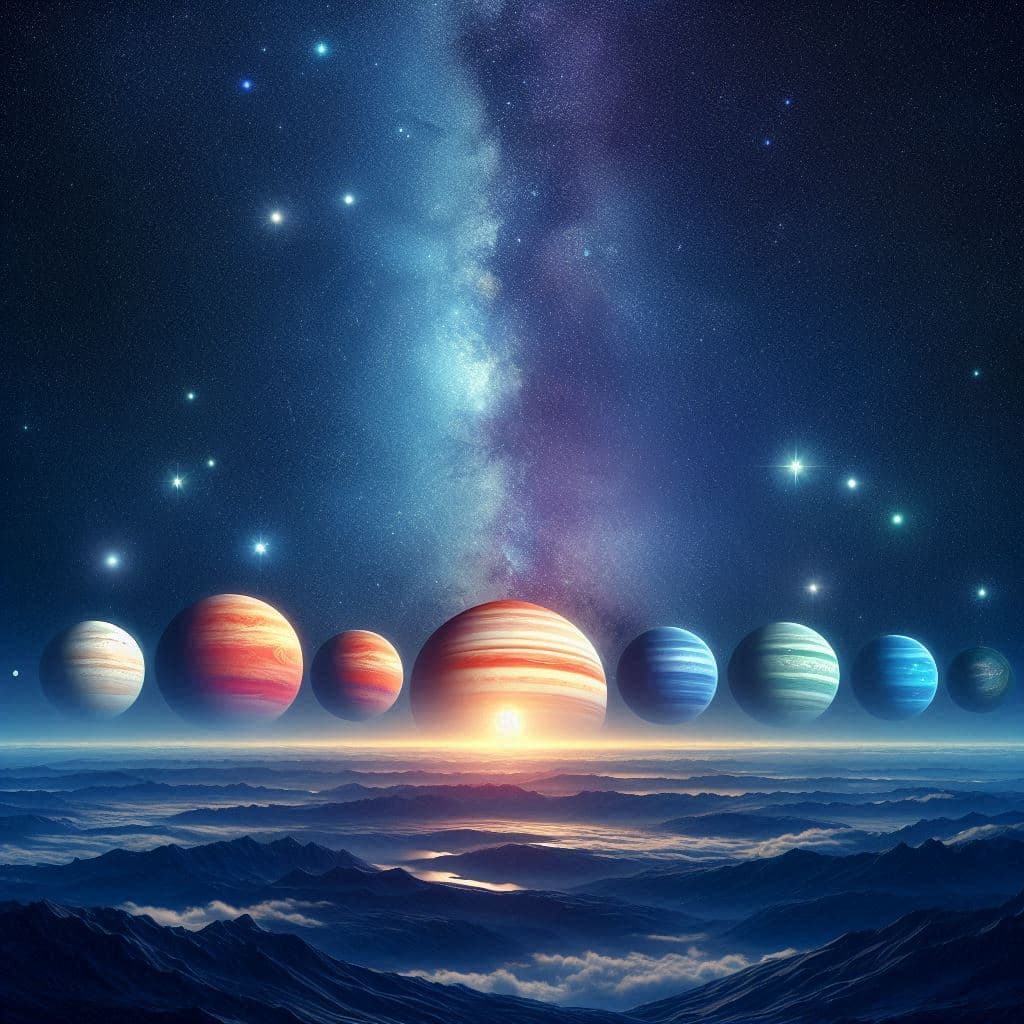
This month, the night sky is marked by a planetary parade, a term used when several planets appear along the same arc of the sky. While not perfectly aligned in space, their visibility from Earth creates the impression of a shared path, stretching across the darkness. Venus shines steadily after sunset, Jupiter and Saturn maintain their dignified presence, and Mars adds a faint reddish tone for patient observers. Together, they form a quiet sequence rather than a spectacle, rewarding attention more than expectation.
Beyond the planets, February also brings additional celestial moments. The Moon moves through its phases with clarity, offering nights well-suited for observing craters and shadows. In certain regions, meteor activity remains light but present, with occasional streaks crossing the sky unexpectedly. These phenomena may not dominate headlines, yet they contribute to a sense of continuity that astronomy often provides.
What makes such events meaningful is not their rarity, but their reliability. The sky does not rush. It returns, season after season, following patterns older than any calendar. For many, these moments offer perspective, reminding observers that movement and balance exist far beyond daily concerns.
Throughout February, astronomical organizations continue to encourage public observation, noting that most of these phenomena can be enjoyed without special equipment, provided weather conditions allow. As the month unfolds, the planetary parade and accompanying sky events remain visible reminders of a universe moving steadily, quietly, and on schedule.
AI Image Disclaimer Visuals are created with AI tools and are not real photographs.
Sources identified (media names only):
NASA Space.com Sky & Telescope National Geographic BMKG
Published by Banx Network. This article is part of the Banx decentralized media programme, powered by the BXE token on the XRP Ledger.