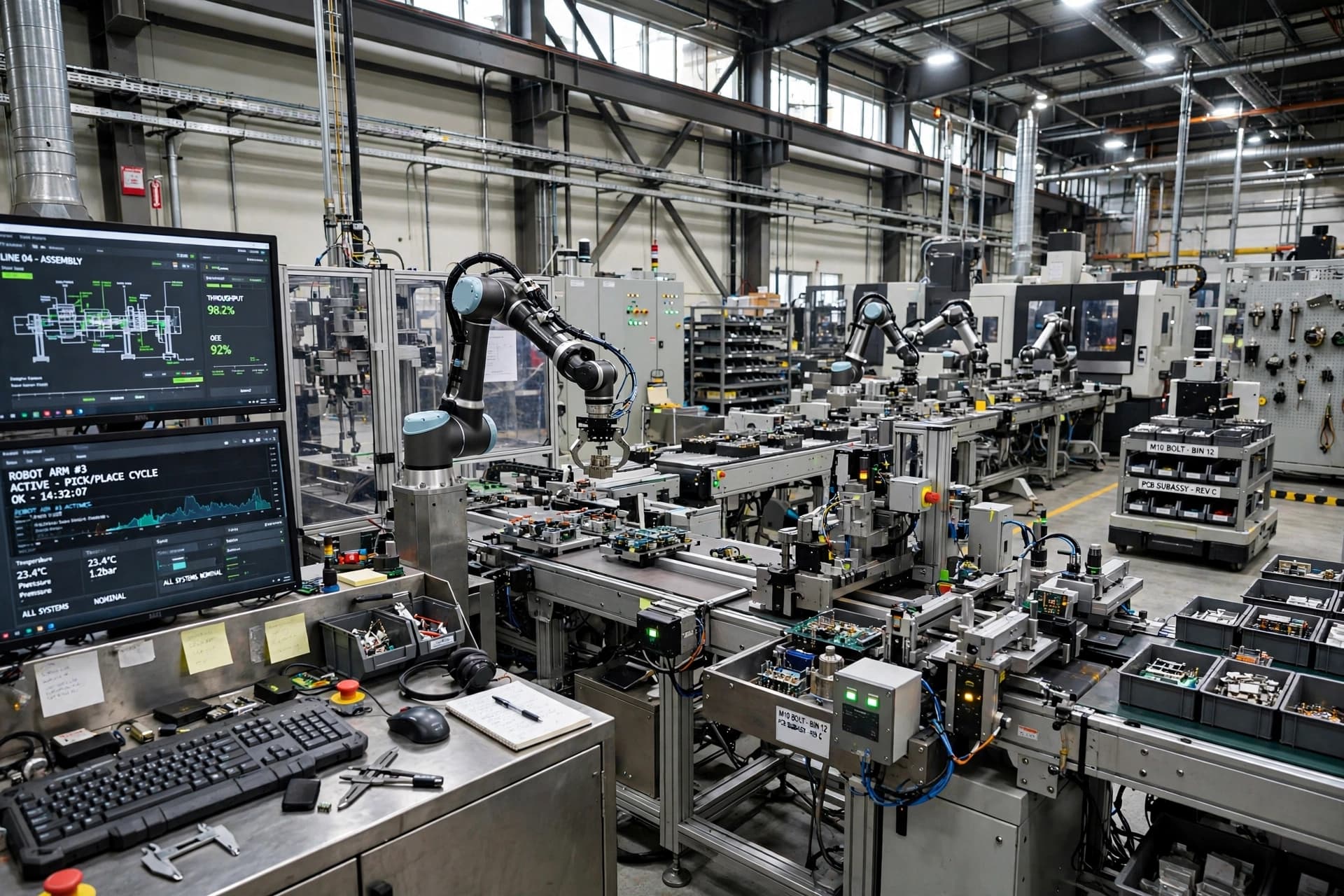
In the early hush of a Midwestern morning, when frost gathers along the edges of factory windows and the sky hangs low over miles of steel and concrete, Detroit feels suspended between eras. The assembly lines, long symbols of American motion, hum with a steadier, more cautious rhythm now. It is not silence—but something quieter than ambition at full volume.
For years, the electric vehicle was framed as destiny. Billions were pledged, plants were retooled, battery partnerships were signed with the urgency of a race already underway. Executives spoke in the language of transformation, and investors rewarded the promise of reinvention. In boardrooms and on trading floors, electrification was not a question of if, but how fast.
Yet markets move with their own weather.
As consumer demand cooled and inventory accumulated, optimism began to thin. Higher borrowing costs weighed on buyers. Government incentives shifted. Early adopters had already made their purchases, while mainstream drivers hesitated at price tags and charging logistics. What once felt like a sweeping current began to resemble a more measured tide.
In recent earnings reports, Detroit’s largest automakers—General Motors, Ford, and Stellantis—have acknowledged more than $50 billion in combined write-downs, restructuring charges, and EV-related losses. The figure, stark in its scale, reflects factories idled, production targets revised, and investments reassessed. It is less a single event than a gradual unwinding of expectations built during years of rapid expansion.
Stellantis recorded one of the largest individual charges, scaling back ambitious electric programs in favor of balancing its portfolio with hybrids and traditional combustion models. Ford disclosed substantial losses tied to its EV division, with executives conceding that the electric market may be developing more slowly than once projected. General Motors, while maintaining long-term electrification goals, has adjusted rollout timelines and moderated production plans.
None of this signals abandonment. Rather, it suggests recalibration. The electric future, once imagined as an abrupt pivot, now appears more incremental—layered with hybrids, transitional platforms, and a closer reading of consumer appetite. Automakers are redistributing capital, tightening costs, and emphasizing profitability over pace.
The $50 billion figure represents accounting charges, plant restructurings, battery investment adjustments, and program delays. It captures a moment when projections met reality, when expansion plans were measured against demand curves that did not rise as steeply as forecast. For Detroit, the shift carries economic and symbolic weight. These companies are not merely brands; they anchor communities, supply chains, and thousands of livelihoods across the Midwest and beyond.
History suggests that the automotive industry rarely moves in straight lines. It surges, corrects, reinvents. The electric transition continues—but with tempered cadence. In the steady glow of factory floors, amid recalculated spreadsheets and revised production targets, Detroit stands not at an end, but at an inflection.
In clear terms, General Motors, Ford, and Stellantis have collectively taken more than $50 billion in EV-related losses and restructuring charges as demand growth slowed, financing costs rose, and strategies shifted toward a broader mix of hybrid and traditional vehicles alongside electric models.
AI Image Disclaimer
Illustrations were created using AI tools and serve as conceptual representations.
Source Check (Media Names Only)
The Wall Street Journal Reuters Bloomberg Business Insider CNBC
Published by Banx Network. This article is part of the Banx decentralized media programme, powered by the BXE token on the XRP Ledger.