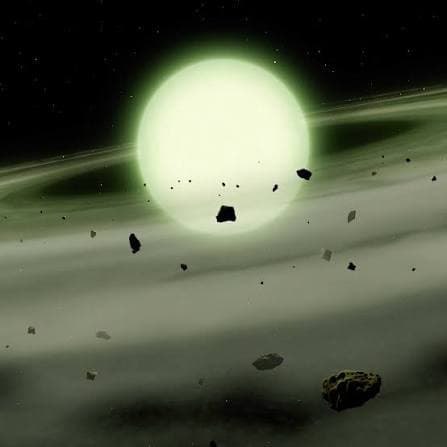
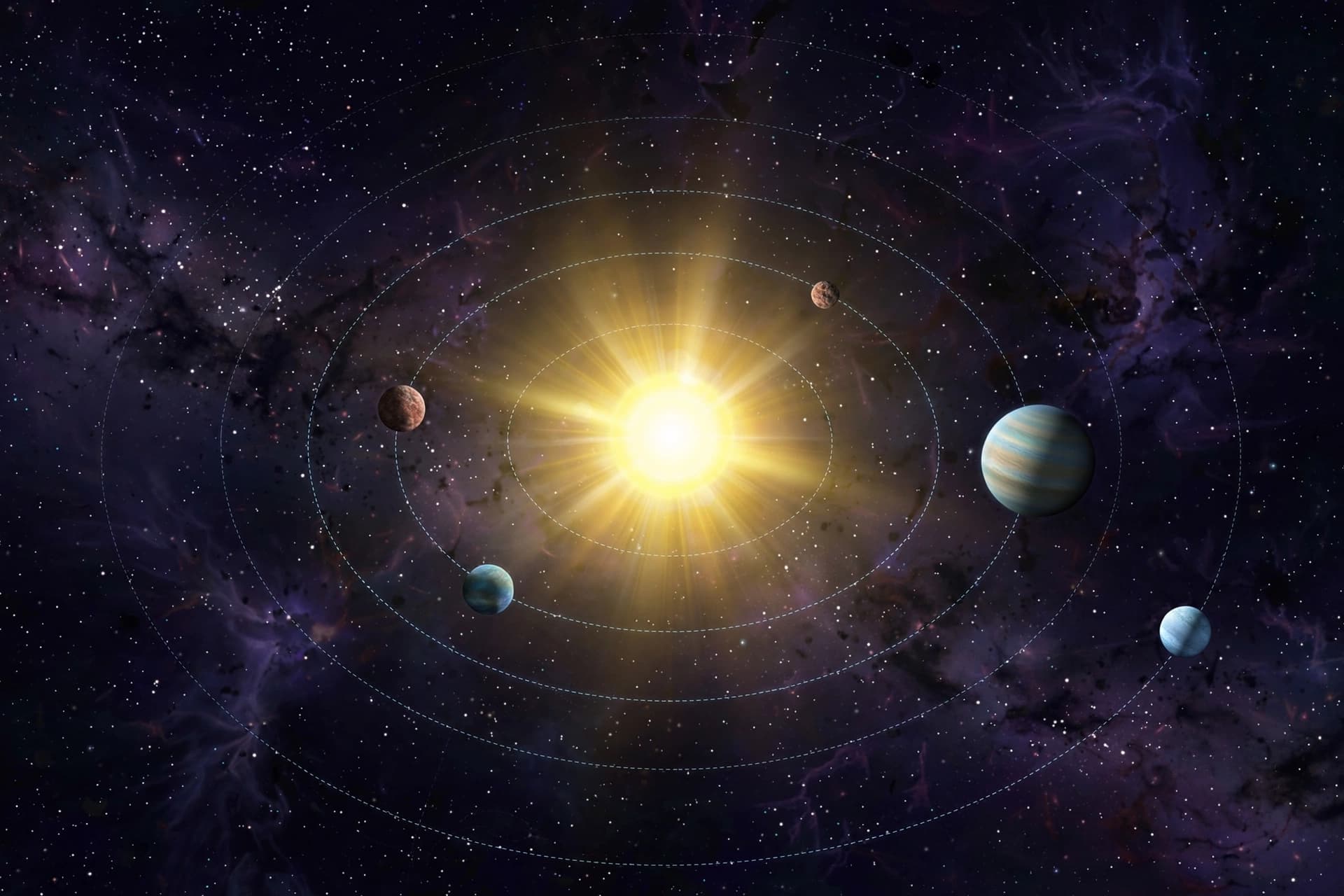
Sometimes the universe presents itself not with bold brushstrokes, but with whispering hints — like colors seen through frosted glass, or a melody half-remembered at dawn. In the vast sky of stars and planets, some worlds shimmer with clarity, while others, wrapped in mystery, tease us with what we cannot yet see. Among the latter is an exoplanet so light and elusive that even the most powerful space telescope ever built finds its secrets shrouded.
This ethereal world, nicknamed in popular science circles as a “cotton candy” planet, belongs to a peculiar class of exoplanets known as super-puffs. Roughly the size of Saturn but with only a few times the mass of Earth, this celestial body possesses such a low density that, if you could hold it in your hands, it might feel less substantial than an airy confection. The planet in question, Kepler‑51d, orbits a distant star in the constellation Cygnus, along with at least two similarly enigmatic siblings.
Scientists turned the gaze of NASA’s James Webb Space Telescope toward this world with keen anticipation, hoping to peer into its atmosphere and discern the chemical fingerprints that might tell a story of its birth and evolution. But what was revealed instead was a veil — a haze so profound that even Webb’s advanced instruments struggle to see through it. The thick atmospheric fog seems to stretch for enormous distances, concealing the composition and internal character of the planet beneath.
The very nature of this haze has puzzled astronomers. On Earth, haze and clouds may drift lazily across a sky at sunset; on Titan, Saturn’s largest moon, hydrocarbon smog shrouds the surface in amber light. But in the case of Kepler‑51d, the veil is not merely a cosmetic layer — it may be the thickest ever observed around a planet. It masks the wavelengths of light that Webb seeks to analyze, blurring into silence what should normally be clear atmospheric signatures.
In struggling to penetrate this smothering envelope, researchers have gained a different kind of insight — one that speaks not of what is visible, but what is hidden. The challenges encountered underline how little we truly understand about the mechanisms that can create such puffy, ultra‑low‑density worlds. They defy the standard maps of planetary formation, which assume dense cores and well‑defined atmospheres. In contrast, these ghost‑like worlds raise questions about how gravity, radiation, and composition interact in environments so foreign to our own solar system’s architecture.
The analogy to cotton candy, while whimsical, holds because it evokes the remarkable disparity between size and substance. These planets, large in radius yet ethereal in mass, float in their orbits like delicate phantoms. They remind us that astronomical classification often begins with observation and metaphor, long before we possess definitive theories.
Despite — or perhaps because of — its opacity, Kepler‑51d has become a focus of curiosity not frustration. Its inscrutable nature encourages exploration of new models and ideas. Researchers are examining whether unseen processes — from unusual chemical interactions to the influence of stellar radiation — might contribute to the formation of such extensive hazes. These inquiries stretch our understanding of how planetary atmospheres behave in extreme conditions, and challenge assumptions that guide our interpretation of other distant worlds.
In this sense, the limits encountered by even Webb’s mightiest instruments have their own quiet eloquence. They show us frontiers not merely of technology, but of imagination — places where the unknown remains an invitation rather than a barrier. Each unanswered question propels scientists to refine techniques, look at data from new angles, and consider the cosmos not as a finished story, but as an ever‑unfolding one.
Yet for all its mystery, there is a tangible progress in what has been learned. The sheer thickness of the haze, its juxtaposition with the planet’s featherweight mass, and the very fact that this challenge is measurable are all pieces of a larger puzzle. In the coming years, as instruments evolve and theoretical frameworks adapt, the veil around worlds like Kepler‑51d may yet thin, revealing layers of truth beneath.
Right now, however, the cotton candy planet remains just beyond our clear sight — a gossamer dream in the night sky, suggesting that even with our most advanced tools, the universe preserves moments of gentle mystery.
In updated observations, astronomers report that Kepler‑51d is a super‑puff exoplanet with an extraordinarily thick haze that blocks even James Webb’s view into its atmospheric composition. This haze complicates efforts to understand how such ultra‑low‑density planets form and evolve, presenting a continuing challenge for models of planetary science.
AI Image Disclaimer (Rewritten) Visuals are created with AI tools and are not real photographs.
Source Check (Credible Media Outlets): Space.com ScienceDaily Discover Magazine Scientific American NASA releases via university research coverage
Published by Banx Network. This article is part of the Banx decentralized media programme, powered by the BXE token on the XRP Ledger.