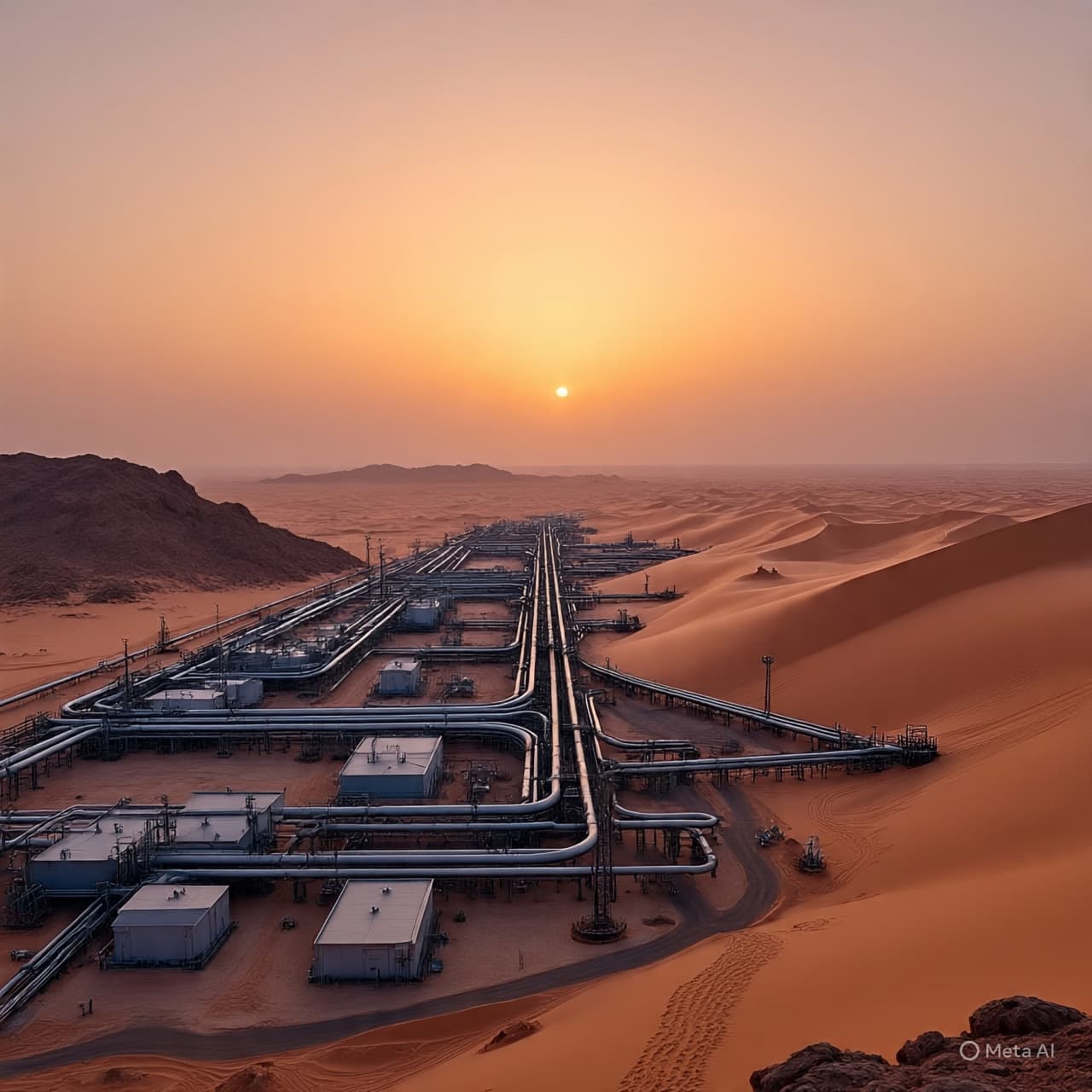
In Algeria, energy has never been merely a commodity; it has functioned as a quiet grammar through which power, stability, and expectation are arranged. Like a deep well in an arid landscape, hydrocarbons have long sustained the state’s authority, offering reassurance in times of uncertainty. When the global energy crisis unfolded, it did not disrupt this grammar, but rather reinforced its familiar patterns.
Algeria’s rentier-authoritarian regime has historically relied on oil and gas revenues to mediate the relationship between the state and society. Subsidies, public employment, and social transfers have formed the backbone of political stability, allowing governance to proceed with limited pluralism. This model, shaped by memory and caution, has shown a capacity to endure shocks without structural change. The energy crisis once again tested this resilience.
As energy prices surged and European demand intensified, Algeria found itself in a renewed position of relevance. Increased gas exports restored fiscal margins, easing budgetary pressures and enabling expanded social spending. Wages were adjusted, subsidies reaffirmed, and public finances stabilized. Rather than prompting reform, the windfall reinforced established mechanisms of distribution, reaffirming the state’s preference for continuity over experimentation.
This post-crisis moment has not altered the core architecture of power. Political authority remains centralized, and decision-making insulated. The renewed flow of rents has reduced incentives for diversification, even as unemployment and demographic pressures persist beneath the surface. Economic policy remains reactive, anchored to external demand rather than internal transformation.
Externally, the crisis reshaped Algeria’s diplomatic posture without redefining it. Energy diplomacy became a channel for pragmatic engagement, particularly with European partners seeking supply security. These interactions were framed in transactional terms, emphasizing sovereignty and mutual need rather than alignment. The regime leveraged its resources to regain leverage, not to recalibrate its political model.
Domestically, reform continues to advance cautiously, often framed as administrative adjustment rather than political opening. The legacy of past unrest encourages restraint, reinforcing a mutual understanding built on stability and material provision. Energy revenues, in this sense, serve not only as income, but as a buffer against uncertainty and change.
As global energy markets gradually normalize, Algeria’s position appears familiar. The crisis has underscored the durability of rentier governance, while highlighting its long-term constraints. The system persists, supported by energy and shaped by caution, moving forward without rupture, attentive to stability, and wary of transformation.
Published by Banx Network. This article is part of the Banx decentralized media programme, powered by the BXE token on the XRP Ledger.