There is a peculiar quiet that settles over a battlefield when the fighting is not fully stopped but merely redirected—when the thunder of artillery gives way to the slower, more insidious rhythms of economic attrition. In the war between Russia and Ukraine, that quiet has taken the form of an “energy ceasefire,” announced not through diplomatic channels or signed accords, but through a social media post on a Sunday afternoon.
President Donald Trump declared on Truth Social that an energy truce between Russia and Ukraine was in effect immediately, stating that both parties had agreed and warning them not to break it . The announcement, which carried the terse finality of a command rather than the careful language of a negotiated agreement, came after weeks of escalating strikes on refineries and power plants that had rippled through global fuel markets . The White House offered no details on how the ceasefire would be monitored or enforced, and Russia remained silent in the hours that followed .
Ukrainian President Volodymyr Zelensky responded with a mixture of surprise and conditional acceptance. He told Axios that the announcement was “news” to him, but added that Kyiv would support an energy truce if Moscow did the same . He then accused Russia of striking a power plant in Kyiv and energy facilities in the Kharkiv region after Trump’s post—a pointed observation that the truce, whatever its terms, had not yet taken hold on the ground .
The context of the announcement is as much economic as it is military. Trump had been pressuring Zelensky to halt strikes on Russian oil infrastructure, arguing that the attacks disrupted global diesel supplies and contributed to fuel price increases for American consumers . That pressure coincided with a separate deal—temporarily undoing sanctions—that would allow Russian diesel to flow to the United States and global markets . For Trump, whose domestic standing had been bruised by elevated pump prices ahead of midterm elections, the calculus was clear: a quieter energy war meant cheaper fuel at home .
The deal drew criticism from across the political spectrum. Seven U.S. senators, three Democrats and four Republicans, issued a statement saying the diesel agreement “runs directly counter” to legislation that had explicitly banned Russian energy imports until the war ended . Republican Senator Thom Tillis told NBC News that the arrangement would put American lives at risk . European officials and UK Defence Secretary Wes Streeting also voiced reservations, while France, Canada, and the EU expressed more measured support for the energy ceasefire concept itself .
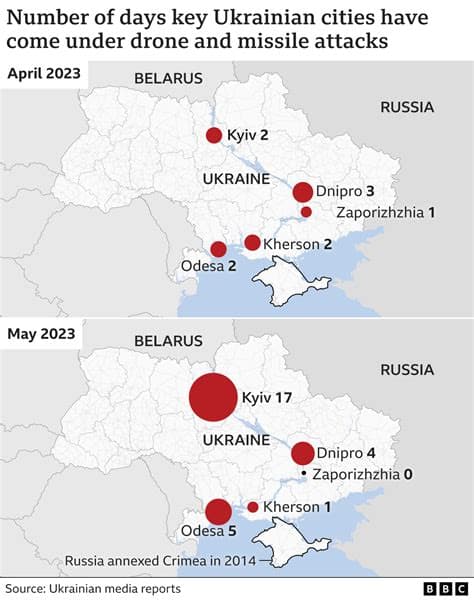
For months, both Russia and Ukraine have targeted each other’s energy infrastructure—Moscow framing the installations as legitimate military targets, Kyiv describing its deep strikes as an effort to reduce Russia’s ability to finance the war . The energy ceasefire, if it holds, would pause that particular dimension of the conflict without addressing the broader fighting that continues across front lines and in cities.
What the announcement ultimately represents—a genuine diplomatic breakthrough or a temporary gesture calibrated for domestic politics—remains uncertain. The fighting continues elsewhere, and the question of whether words posted online can still the machinery of war has yet to be answered.
AI Image Disclaimer: All visual elements in this article were created by artificial intelligence and are not photographs of actual events or locations.
Sources: BBC, Qazinform, VOV, TVP Info, CRI Online, Vietnam News Agency
Published by Banx Network. This article is part of the Banx decentralized media programme, powered by the BXE token on the XRP Ledger.