There are questions so fundamental that they lie at the threshold between chemistry and philosophy — between what is alive and what is merely matter arranged by chance. For centuries, life has been understood through its manifestations: movement, reproduction, complexity, and metabolism. But what if life could also be read in the quantum whisper of its molecules — not only in how they look, but in how their electrons are arranged?
Astrophysicists and chemists alike have long probed the subtle signatures that distinguish living systems from lifeless chemistry. In the search for life beyond Earth, one of the biggest challenges is separating true biosignatures — signals that unmistakably indicate life — from abiotic artifacts that only mimic life’s ingredients. Amino acids, the building blocks of proteins, are a perfect example: present in the chemistry of life, yet also found in meteorites and other nonliving material.
Now, a team of researchers has proposed an intriguing new approach to this deep problem, rooted in the quantum fabric of molecules themselves. Their method, called LUMOS (short for Life Unveiled via Molecular Orbital Signatures), uses the molecular frontier orbital energy gaps — specifically the differences between the highest occupied and lowest unoccupied molecular orbitals of amino acids — to distinguish samples that likely came from living systems from those that did not.
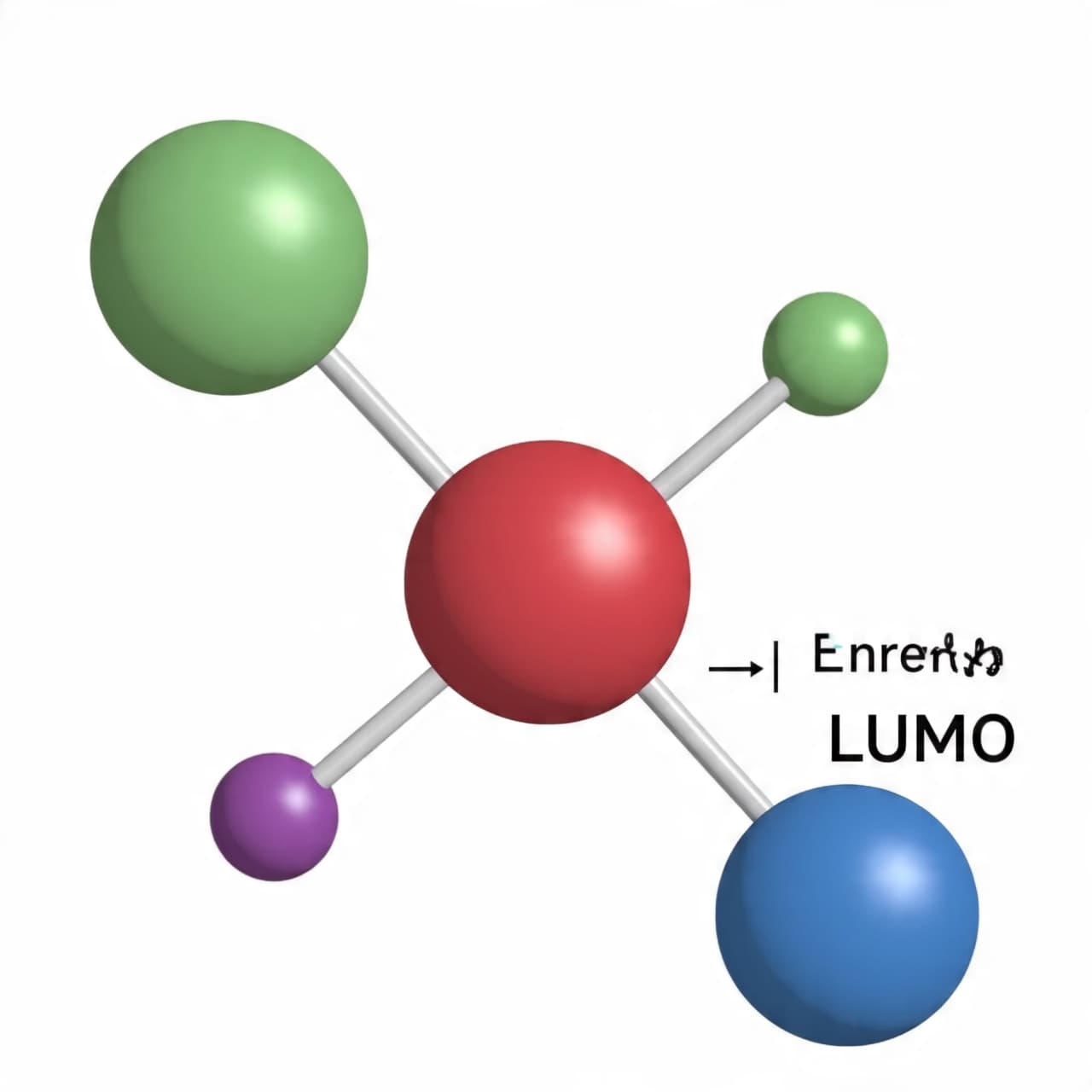
In quantum chemistry, these frontier orbitals — known simply as HOMO and LUMO — are like the outermost seats in a molecule’s electronic structure, determining how easily electrons can be excited or participate in reactions. The HOMO‑LUMO gap reflects how much energy is required to move an electron from the occupied part of a molecule to a new, unoccupied state. Smaller gaps tend to indicate molecules that are more chemically reactive, while larger gaps suggest more stability.
What the LUMOS framework finds is that the distribution of these energy gaps, when weighted by the abundance of the amino acids in a sample, appears to differ between biotic and abiotic sources. Abiotic samples — those formed without life’s involvement — tend to show highly uniform HOMO‑LUMO gap values. By contrast, samples from living systems show greater variability and often a bias toward molecules with lower energy gaps, reflecting life’s preference for chemical reactions that can be purposefully controlled and harnessed in metabolism.
If this pattern holds across environment types, it suggests a new kind of agnostic biosignature — one that does not depend on Earth‑specific biochemical details like chirality or specific isotopic ratios, but on the very quantum mechanics of a molecule’s electrons. In simulated tests, the LUMOS method reportedly achieved over 95% accuracy in distinguishing life‑derived samples from abiotic mixes, even under diverse environmental conditions.
Part of what makes this approach attractive is its compatibility with existing analytical techniques. Instruments that measure molecular composition in returned samples or in situ — on planetary surfaces or ice crusts — could potentially incorporate HOMO‑LUMO energy gap analyses alongside traditional chemistry. This could be particularly useful in upcoming missions to the Moon, Mars, and icy moons like Europa or Enceladus, where detecting traces of life is a central goal of exploration.
There are still questions to explore. Life on Earth reflects one particular evolutionary pathway; life elsewhere could use chemistry unfamiliar to us. Extending the LUMOS framework to more diverse biosystems, including those with different amino acid sets or entirely distinct genetic platforms, will be key to testing its universality.
Yet the promise of this idea lies in its subtlety: that life may not only build complex structures and behaviors but also shape the very electronic landscapes of its molecules in measurable ways. It suggests that beneath the visible surface, the quantum world may hold clues about one of humanity’s most enduring questions — how to tell life from non‑life.
The researchers behind the LUMOS framework emphasize that wider characterization of both abiotic and biotic chemical samples will help refine the thresholds and statistical boundaries that separate living chemistry from its inert counterpart.
AI Image Disclaimer Illustrations were produced with AI and serve as conceptual depictions.
SOURCE CHECK
Credible scientific and niche sources covering this theoretical development include:
arXiv (academic research preprint) Astrobiology.com Phys.org Sci.News MDPI Life journal (related research on HOMO‑LUMO gaps for abiotic/biotic distinction)
Published by Banx Network. This article is part of the Banx decentralized media programme, powered by the BXE token on the XRP Ledger.