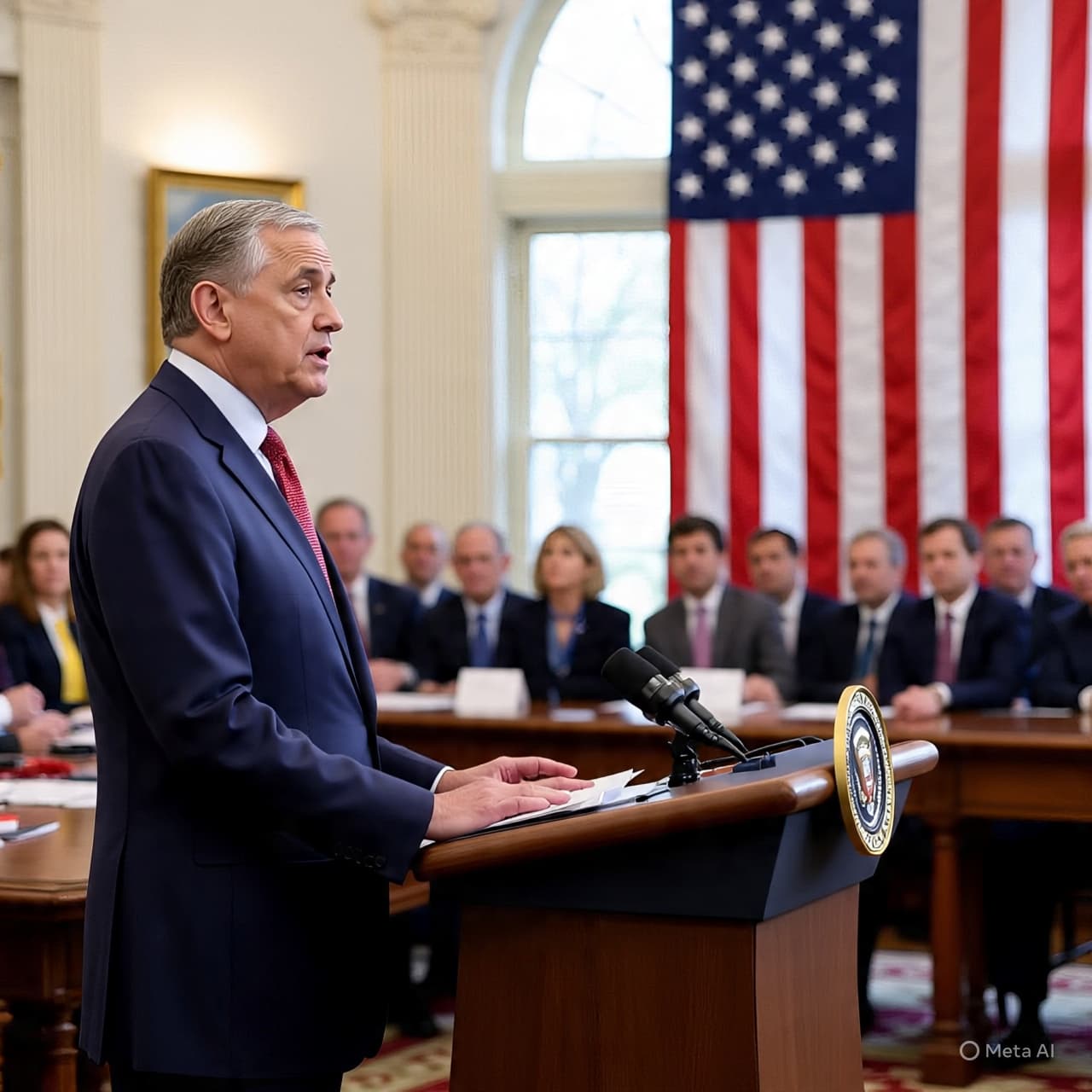
There are days when the light seems softer on the earliest horizon, as if the world itself pauses in reflection before unfolding its busy hum. On days like these, distant events can seem both remote and close, like the faint toll of a bell carried across still waters. In recent days, for many who watch world affairs play out on screens and in headlines, that toll has grown louder — a reminder that even the farthest corners of the globe can feel the weight of choices made under troubling skies. For the United States, and for its allies, the echoes of war reverberate once again, altering the tone of morning briefings and late-night reflections alike.
President Donald Trump, speaking amid the widening conflict with Iran, has sought to frame this moment with a blend of steadfast resolve and measured reassurance. At a recent White House event preceding a ceremonial presentation, he spoke not only of objectives and timelines but of confidence in the nation’s readiness, asserting that the U.S. possesses a stockpile of munitions sufficient to sustain long-term operations if required. His words carried a tone of quiet assurance — a softness on the surface that belies the deeper concerns of a nation at war.
The campaign, now known in some circles as Operation Epic Fury, has entered its fourth day with joint U.S.–Israeli airstrikes on Iranian military and strategic targets followed by Iran’s retaliatory actions across the region. In this rapidly evolving landscape, Trump reiterated that the military might of the United States is positioned not only to meet but to exceed initial projections. He has insisted operations could last four to five weeks and acknowledged they may go “far longer than that,” a reflection both of tactical ambition and the unpredictable nature of conflict.
The tone of his public remarks has been marked by a certain fluidity — a narrative that adjusts to the unfolding chart of events. Alongside promises of sustained might, there has been talk, in interviews and statements, of being open to diplomacy with any remaining Iranian leadership if conditions permit. Yet this openness sits alongside a stern commitment to dismantling perceived threats, including Iran’s missile capabilities, naval infrastructure, and potential support for proxy groups across the region.
For observers in the United States and abroad, these mixed signals — resolve here, flexibility there — reflect the broader challenge of communicating intent in an age where domestic politics and international strategy are tightly interwoven. Critics from various corners have raised questions about the absence of a clear endgame, the legal foundations of the campaign, and the potential for escalation. At the same time, Trump’s supporters cite the decisive nature of action and the imperative to pre-empt threats before they reach American shores.
The widening conflict has had practical ripple effects across the Middle East: U.S. embassies in key Gulf states have temporarily shuttered, airline travel has been disrupted, and global markets have felt the tremor of uncertainty. Civilians in affected regions face not only the anxieties of warfare but also the tangible disruptions of everyday life — images of emptied streets and shuttered schools marking the palpable presence of geopolitical tension.
Within the nation, conversations among lawmakers and analysts have ranged from staunch support to sober skepticism. Some emphasize the necessity of confronting emerging threats, others caution against an open-ended campaign without clear objectives or congressional authorization. In both wings of the political spectrum, the core question remains: how does a nation balance its security commitments with clarity of purpose and accountability to its people?
Yet in the broader sweep of history, there are moments when leaders must articulate vision amid uncertainty, and citizens must reconcile pride of service with concern for its costs. The light of day breaks gently across cities and towns, even as the world contemplates paths still unwritten. In this mix of resolve and reflection, the story continues to unfold.
In the latest developments, President Trump has publicly defended sustained military operations against Iran, emphasizing that the United States is well-equipped to maintain them as long as necessary and reiterating strategic objectives. The conflict has widened geographically, with multiple regional responses and disruptions to travel and diplomacy, but U.S. officials maintain that the mission proceeds according to their priorities even as they adjust timelines and messaging to reflect unfolding realities.
AI Image Disclaimer Visuals are created with AI tools and are not real photographs.
Sources Reuters The Guardian Washington Post Associated Press Channel NewsAsia / CNA
Published by Banx Network. This article is part of the Banx decentralized media programme, powered by the BXE token on the XRP Ledger.