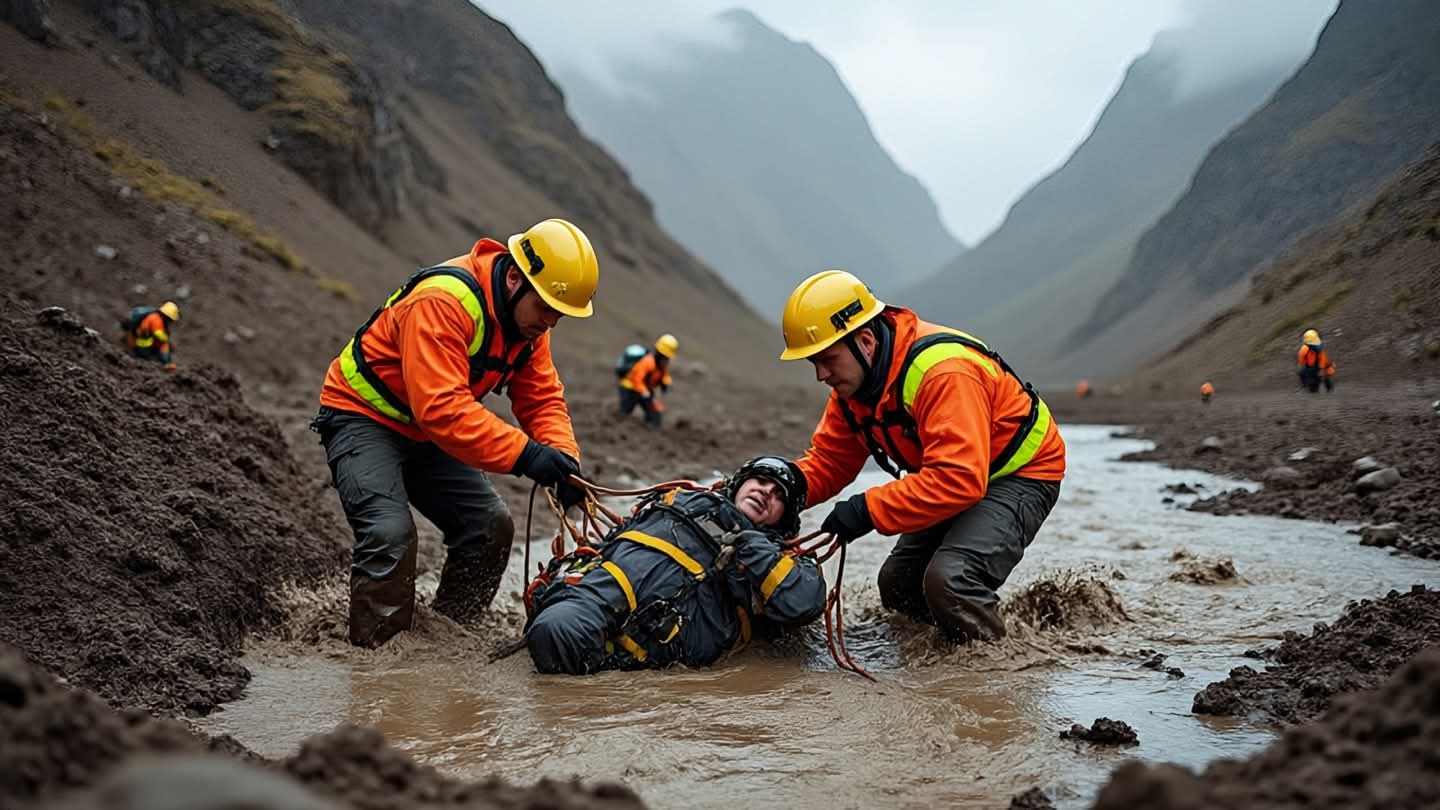
Nature’s power is both majestic and terrifying, capable of reshaping landscapes in moments. In the rugged terrain along the Nepal-China border, recent floods have unleashed a wave of destruction, leaving behind a trail of mud and sorrow. Rescuers are working against time to pull survivors from the debris, their bodies caked in the earth that once supported their homes. As the death toll rises, the region faces a profound moment of grief and reflection on the vulnerability of life in the face of natural forces.
The disaster was triggered by heavy rainfall and glacial lake outbursts, common hazards in the Himalayan region. The resulting flash floods swept through valleys with devastating speed, destroying bridges, roads, and settlements. For those caught in the path, escape was nearly impossible, leading to significant loss of life and property. The sheer volume of mud and debris complicates rescue efforts, requiring heavy machinery and manual labor.
Rescue teams from both Nepal and China have coordinated their response, sharing resources and expertise. This cross-border collaboration is essential in such remote areas, where access is limited and time is critical. Soldiers, police, and volunteers work side by side, digging through rubble and searching for signs of life. Their unity in the face of tragedy highlights the shared humanity that transcends political boundaries.
For the survivors, the ordeal is traumatic. Many have lost family members, livelihoods, and their sense of security. Being pulled from the mud is a moment of relief mixed with deep shock. Medical teams are providing immediate care, treating injuries and addressing psychological distress. The road to recovery will be long, requiring sustained support from government and aid agencies.
The rising death toll underscores the severity of the event. Each number represents a story, a life cut short, and a family shattered. Local communities are mourning collectively, holding rituals and supporting one another in their grief. This communal solidarity is a vital source of strength during such dark times.
Climate change is increasingly linked to the frequency and intensity of such disasters. Warmer temperatures accelerate glacial melt, increasing the risk of outburst floods. Experts warn that without adaptive measures and better early warning systems, similar events may become more common. This incident serves as a urgent call for investment in climate resilience.
Infrastructure in the region is being assessed for damage. Rebuilding will require careful planning to ensure that new structures are more resilient to future hazards. It is a chance to build back better, incorporating lessons learned from this tragedy into long-term development strategies.
Search and rescue operations continue as authorities work to locate missing persons. The governments of Nepal and China have pledged full support for relief and reconstruction efforts, aiming to restore stability to the affected areas.
AI Image Disclaimer: The images associated with this piece are AI-generated visualizations intended to represent the themes of disaster response, humanitarian aid, and the rugged beauty of the Himalayas.
Sources: Reuters Associated Press BBC News The Kathmandu Post Xinhua News Agency
Published by Banx Network. This article is part of the Banx decentralized media programme, powered by the BXE token on the XRP Ledger.