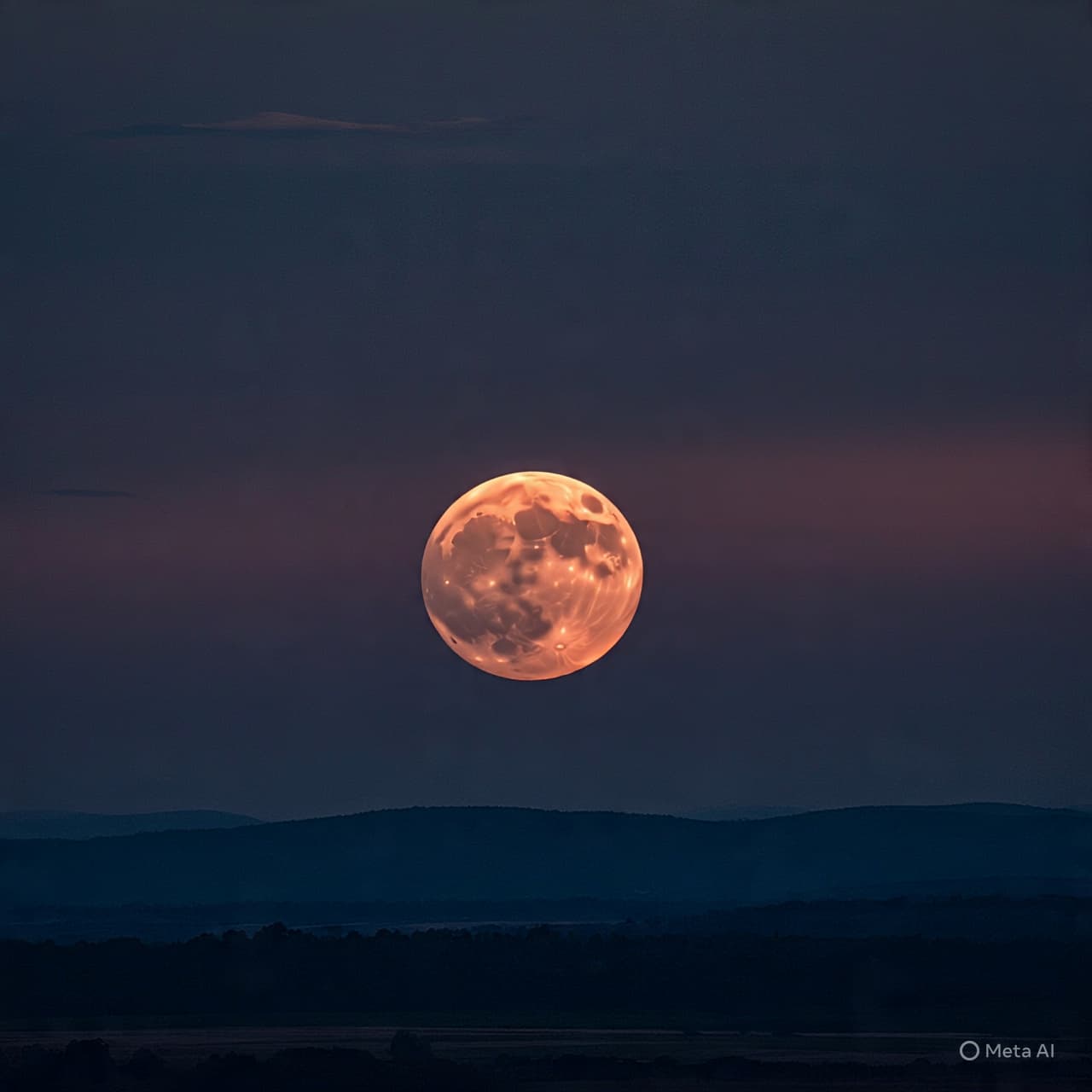
On the night when the world’s cycles seem to pause for a breath, the Moon — our constant celestial companion — will don a cloak of deep red, as though brushed by the lingering hues of sunset that circle the globe. Much like a storyteller at dusk weaving tales around a campfire, the sky invites us to look up, to pause, to witness a quiet transformation. On Tuesday, March 3, 2026, Earth, the Sun, and the Moon will align in a rare cosmic harmony, casting our planet’s shadow upon the full Moon and giving rise to what skywatchers affectionately call a “Blood Moon.”
The term itself evokes a poetic image — a Moon that seems to blush beneath the darkened sky, not in alarm but in gentle response to an invisible force of nature. This phenomenon, a total lunar eclipse, unfolds when Earth’s body blocks direct sunlight from reaching the lunar surface, allowing only light refracted through our atmosphere to illuminate it in reddish tones. For a brief hour or so, the Moon appears as if dipped in copper and wine, a reminder of the subtle beauty inherent in celestial mechanics.
In practical terms — grounded though our wonder may be — the eclipse will take place in the early morning hours of March 3. For observers in regions like North America, the peak of totality, when the Moon is fully enshrouded in Earth’s umbra and bathed in its warm shade, will arrive between 6:04 and 7:02 a.m. Eastern Time. Across different U.S. time zones, this window shifts: from 3:04 a.m. Pacific to 2:04 a.m. in Hawaii. Elsewhere across the globe — in Australia, New Zealand, and East Asia — the eclipse will grace the evening skies of March 3, welcoming stargazers with a spectacle just after sunset.
Beyond its colorful allure, this event carries a quiet significance: it’s the only total lunar eclipse of 2026 and the last such event visible anywhere on Earth until late 2028. For many, this sense of rarity deepens the urge to look upward and mark the moment, whether it be with a camera, a telescope, or simply the naked eye. Unlike solar eclipses, lunar eclipses require no special filters or glasses — safe and easy to watch as long as the sky is clear.
As Earth’s shadow begins to creep across the lunar disk, there’s a gentle reminder in the progression — that even in darkness, there can be warmth, color, and beauty. The “Blood Moon” is not a warning, but an invitation to reflect on the quiet rhythms of the cosmos and our own place among them.
In more grounded terms, the full eclipse — from the penumbral dimming of the Moon through the partial phases and finally the totality — will span several hours, offering ample time for observers to follow the Moon’s slow passage through Earth’s shadow, capturing the moment and contemplating the cycles of sky and life alike.
AI Image Disclaimer *Images in this article are AI-generated illustrations, meant for concept only.*
🌕 Source Check Here are credible sources confirming the details of the upcoming total lunar eclipse (Blood Moon) on March 3, 2026:
Sources (media names only):
Forbes Space.com Associated Press (AP) Times of India Economic Times
Published by Banx Network. This article is part of the Banx decentralized media programme, powered by the BXE token on the XRP Ledger.