In the quiet moments before dawn in Florida, when the sky still holds its deepest blue, engineers and mission planners at NASA’s Kennedy Space Center are tracing arcs not just across charts and calendars, but across human longing. It is in this space — between present preparation and future achievement — that a story of fragile hope and careful calculation unfolds. We trace our cosmic siblings’ return with patience, like a gentle tide that ebbs and flows, offering signs of the next great journey beyond our familiar horizon.
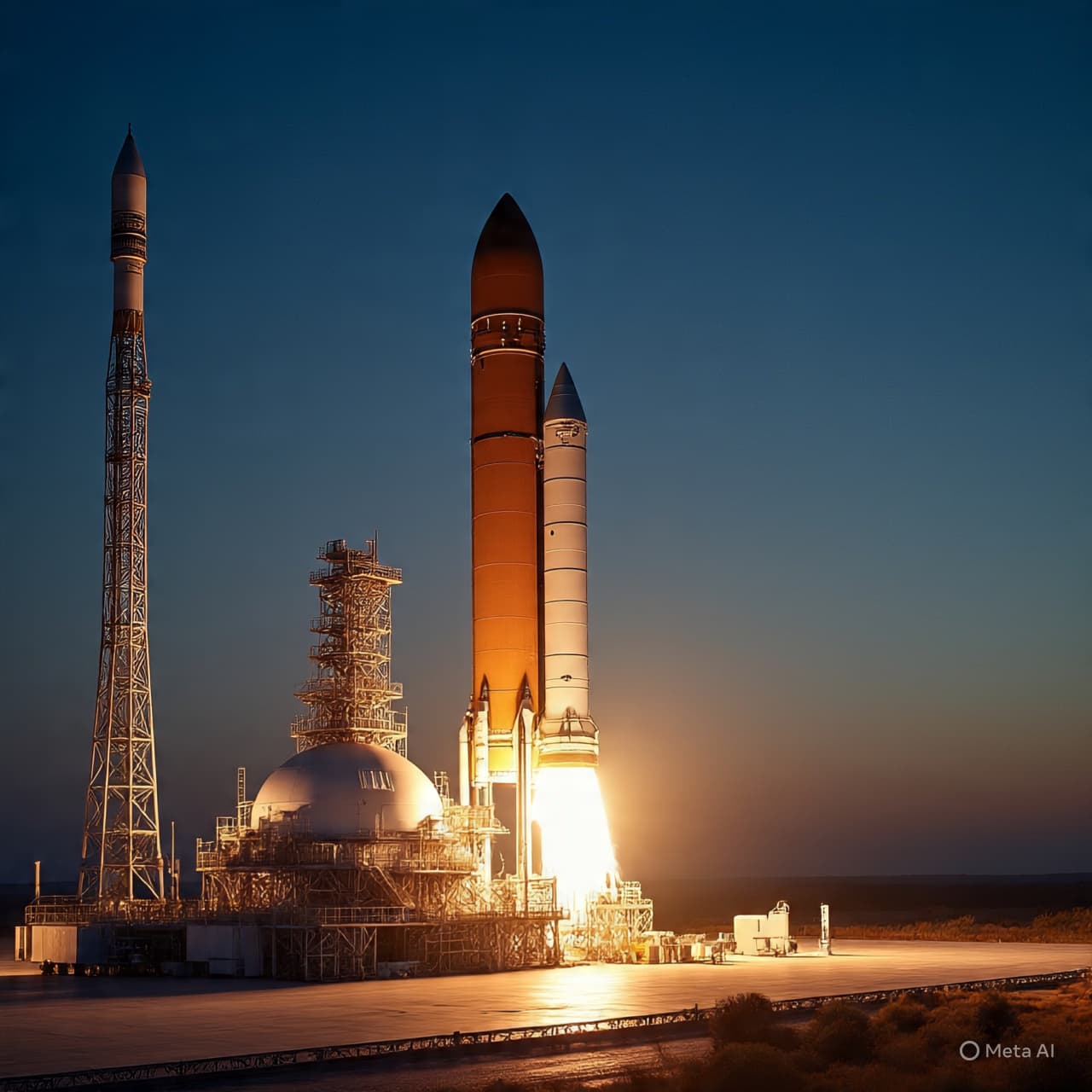
In the months ahead, NASA’s Artemis II mission — the first crewed spacecraft bound for the Moon’s vicinity in more than half a century — stands poised at the brink of possibility. Engineers have mapped out multiple launch windows that stretch from early February through April 2026, each one a narrow corridor of celestial mechanics, human readiness, weather conditions, and range scheduling. Within these windows, specific dates such as February 6, March 6, and early April opportunities are viable moments when the stars and spacecraft align for flight. Flight planners have also ruled out other days that would send the Orion capsule into unwanted eclipses, preserving both safety and mission integrity. Together, these windows form arcs of potential like the soft trails of comets across the night sky, each a reminder of progress that weaves science and serendipity.
Even as Artemis II carries the weight of history — the first time astronauts will leave low Earth orbit since Apollo — it carries within it a gentle spirit of exploration. The mission is planned as a ten-day journey that will fly four astronauts farther than humans have been in decades, circling toward the Moon and back aboard the Orion spacecraft atop the Space Launch System rocket. Their passage doesn’t yet aim for lunar landing, but it does mark a threshold, a turning of time’s great page.
Behind the scenes, teams of technicians and specialists are guiding the rollout of hardware for testing, conducting rehearsals like rehearsed breaths before performance, and adjusting readiness timelines with care. The choices of dates — while tethered to physics — brim with human sensitivity toward safety, reliability, and the unpredictable rhythms of technological systems and weather. The windows open and close like chapters in a novel we are all learning to read together.
In this dance of dates and diagrams, time’s slow arcs remind us that spaceflight is not merely measured in days and hours, but in patience, readiness, and the careful balance between aspiration and caution.
When the final choice of a launch day is made and the deep silence of a Florida morning is broken by human flight toward the Moon, the moment will carry a quiet weight — not a roar of certainty, but a soft herald of what may come next.
AI Image Disclaimer (Rotated Wording) “Visuals are created with AI tools and are not real photographs.” Sources Identified (5 Media / Credible Outlets): NASA LiveNow FOX Space.com Planetary Society European Space Agency (ESA)
Published by Banx Network. This article is part of the Banx decentralized media programme, powered by the BXE token on the XRP Ledger.