There are protections we recognize and others we only discover when we begin to leave them behind. Earth’s magnetic field has long been one such quiet guardian—an invisible shield deflecting radiation, shaping the conditions that make life possible. But as human attention turns again toward the Moon, it seems this protection does not end as cleanly as once imagined.
New findings suggest that Earth’s magnetic influence may extend farther than expected, creating a temporary “pocket” of reduced radiation on parts of the Moon. It is not constant, nor evenly spread, but rather a shifting refuge—appearing as the Moon passes through Earth’s magnetotail, the elongated region of magnetic field stretched out behind our planet by the solar wind.
In this region, charged particles from the Sun are partially deflected, lowering radiation exposure on the lunar surface for limited periods. The effect is subtle, but measurable—an unexpected softening of an otherwise harsh environment. For a place long defined by its exposure, even a brief reduction carries significance.
The discovery reshapes how scientists think about the Moon’s relationship with Earth. Rather than existing entirely outside our planet’s protective reach, the Moon appears to move in and out of it—crossing boundaries that are not fixed, but fluid. During these intervals, the lunar surface experiences conditions that are, in a narrow sense, closer to those near Earth than to deep space.
This has practical implications for future missions. As space agencies plan longer stays on the Moon, understanding when and where radiation levels may drop could help inform scheduling, habitat placement, and astronaut safety strategies. The protective “pocket” is not strong enough to replace shielding technologies, but it may offer windows of relative safety that can be integrated into mission design.
At the same time, researchers caution against overinterpretation. The effect is temporary and dependent on orbital dynamics, solar activity, and the structure of Earth’s magnetic field. It does not transform the Moon into a low-radiation environment, nor eliminate the need for robust protection systems. Instead, it adds nuance—another variable in an already complex equation.
Beyond its immediate applications, the finding carries a quieter scientific value. It highlights how interconnected planetary systems can be, even across the vacuum of space. Earth and the Moon, often considered separately in terms of environment, remain linked by forces that extend beyond what is visible.
For now, the Moon remains a challenging destination—exposed, demanding, and largely unshielded. But within that exposure, there are moments, brief and shifting, where protection lingers just a little longer than expected.
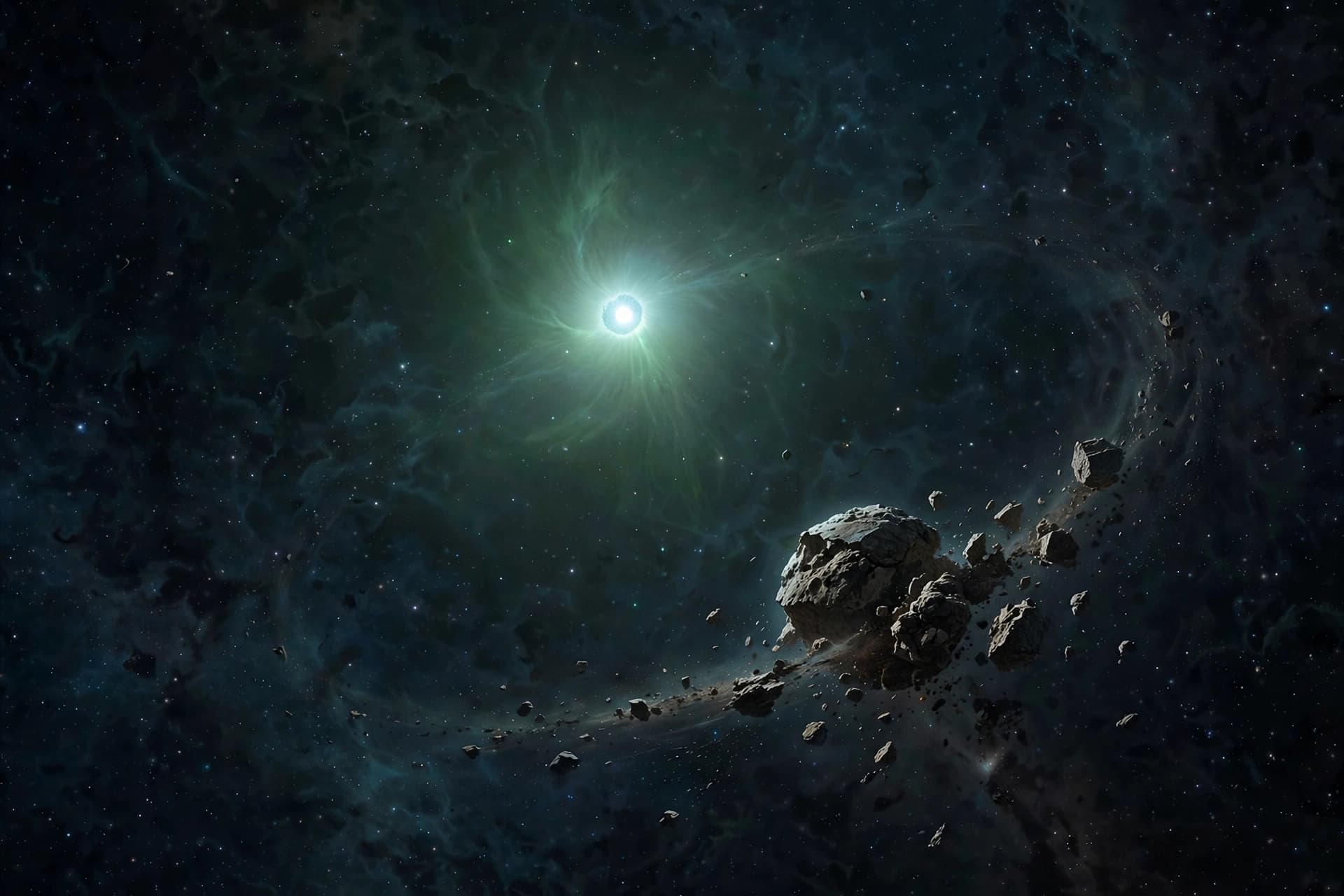
AI Image Disclaimer Illustrations were produced with AI and serve as conceptual depictions.
Source Check Credible coverage exists from:
NASA Nature Science Magazine Space.com New Scientist
Published by Banx Network. This article is part of the Banx decentralized media programme, powered by the BXE token on the XRP Ledger.