In late winter’s hush, when the air is crisp and the nights linger long, the heavens seem to offer a kind of quiet invitation: look upward, and wonder. February, poised between the long shadows of January and the pale promise of spring, has always been a storyteller’s month for skywatchers. The sky hangs like an open book, its verses written in stars and planets, lunar phases, and the promise of journeys beyond our pale blue home. In this canvas of night, every glimmer feels like a sentence, and every movement feels like an echo of deeper mysteries.
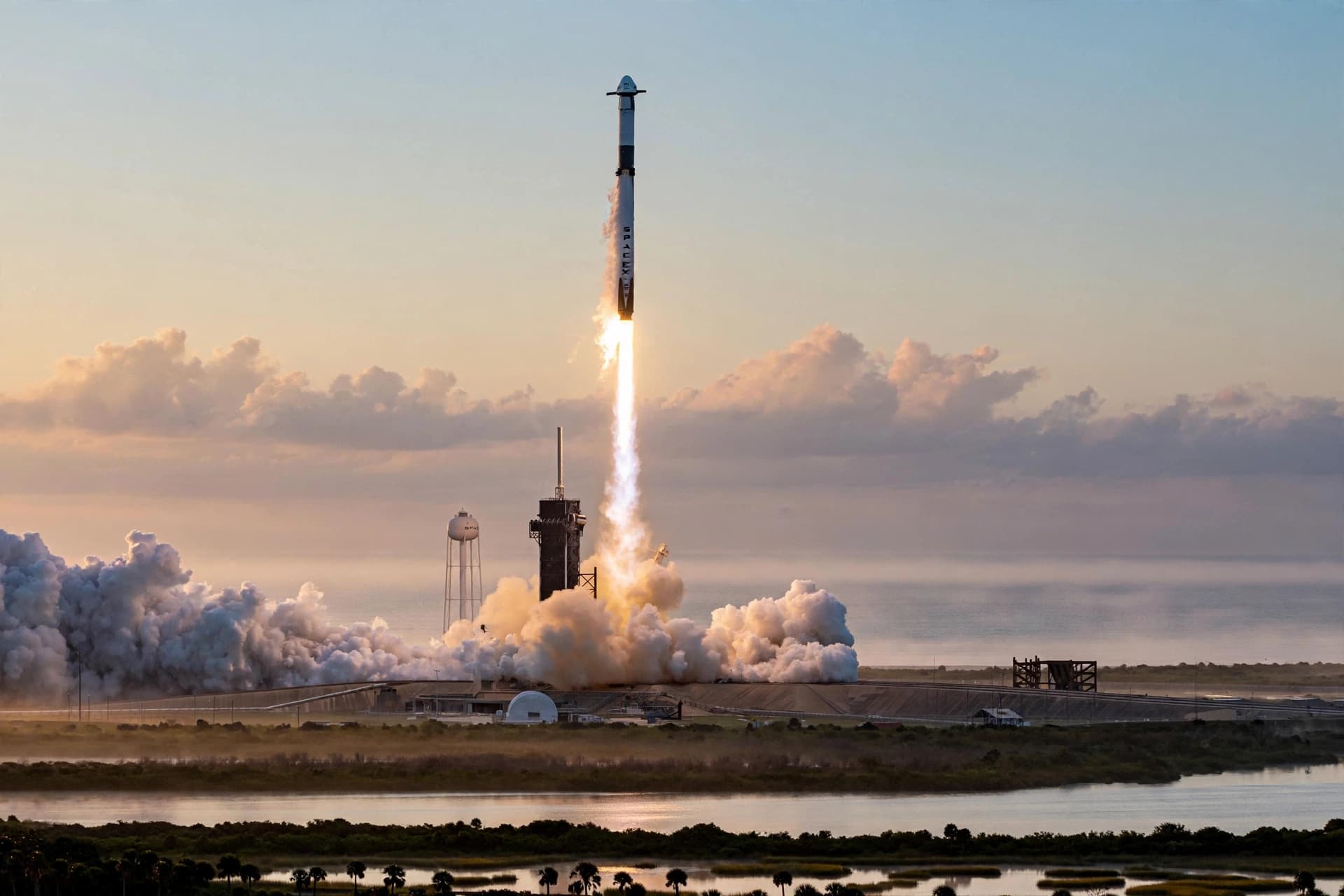
In the days ahead, eyes around the world are being drawn upward for a rich tapestry of celestial events. Space agencies and launch teams are preparing hardware to test the limits of human ingenuity, while nature arranges its own spectacles for all to behold. In Florida, the spaceport at Kennedy stands ready for a mission that many have dreamed about for decades: the Artemis II crewed lunar flyby, potentially lifting off this month aboard NASA’s Space Launch System. This mission will carry four astronauts toward the Moon and back, building on the legacy of exploration that has defined spaceflight for generations. The precise date can shift, but the earliest opportunity this month centers around mid-February, weather and readiness permitting.
Closer to home in the night sky, familiar companions greet stargazers. The Snow Moon, a bright, luminous orb that rises at the outset of February, will dominate the evening early in the month, glowing against the winter gloom with a gentle radiance. The great Hunter constellation, Orion, still stands sentinel in the southern heavens, its three-star belt guiding eyes toward the spiral arms of our own Milky Way — a reminder of how deeply connected we are to the cosmos even when standing on a cold patch of Earth.
February also brings moments of subtle celestial choreography. On the eighth, the Alpha Centaurid meteor shower is expected to peak, offering a modest but elegant display of fleeting light as meteors trace silent arcs across dark skies. Later, on the seventeenth, a ring-of-fire annular solar eclipse will occur, where the Moon will appear slightly smaller than the Sun and leave a brilliant ring of light — though its full spectacle will be visible primarily from the southernmost reaches of our planet.
Throughout the month, the inner planets, too, join the cosmic dance. Mercury and Venus will rise near each other in the west after sunset, while Jupiter shines high in the night sky. Toward the end of the month, six planets — Mercury, Venus, Saturn, Jupiter, Uranus, and Neptune — could form what has been popularly called a planet parade, an alignment that thrills both amateur stargazers and seasoned astronomers alike.
The sky serves not only as a backdrop for human achievement but as a companion to our daily lives — a mirror of time’s passage and nature’s rhythm. Whether it’s the dream of astronauts propelled toward lunar orbit or the quiet glow of a winter moon illuminating a frosty field, each moment this February invites us to look skyward. And as we do, we are reminded that our place under the stars is both humble and immeasurably rich with stories to tell.
In summary, this month brings a dynamic blend of human-made launches and natural sky events: from possible rocket liftoff opportunities and bright planetary alignments to meteor activity, lunar phases, and an annular eclipse. Together, they create a lively calendar of sights for anyone who turns their gaze upward in the chilly evenings ahead.
AI Image Disclaimer (Rotated Wording)
“Visuals are created with AI tools and are not real photographs, intended for conceptual depiction only.”
Sources:
• WTOP’s The Space Place
• National Geographic
• Space.com (Space Calendar)
• NASA (What’s Up: February skywatching tips)
• Moneycontrol science
Published by Banx Network. This article is part of the Banx decentralized media programme, powered by the BXE token on the XRP Ledger.