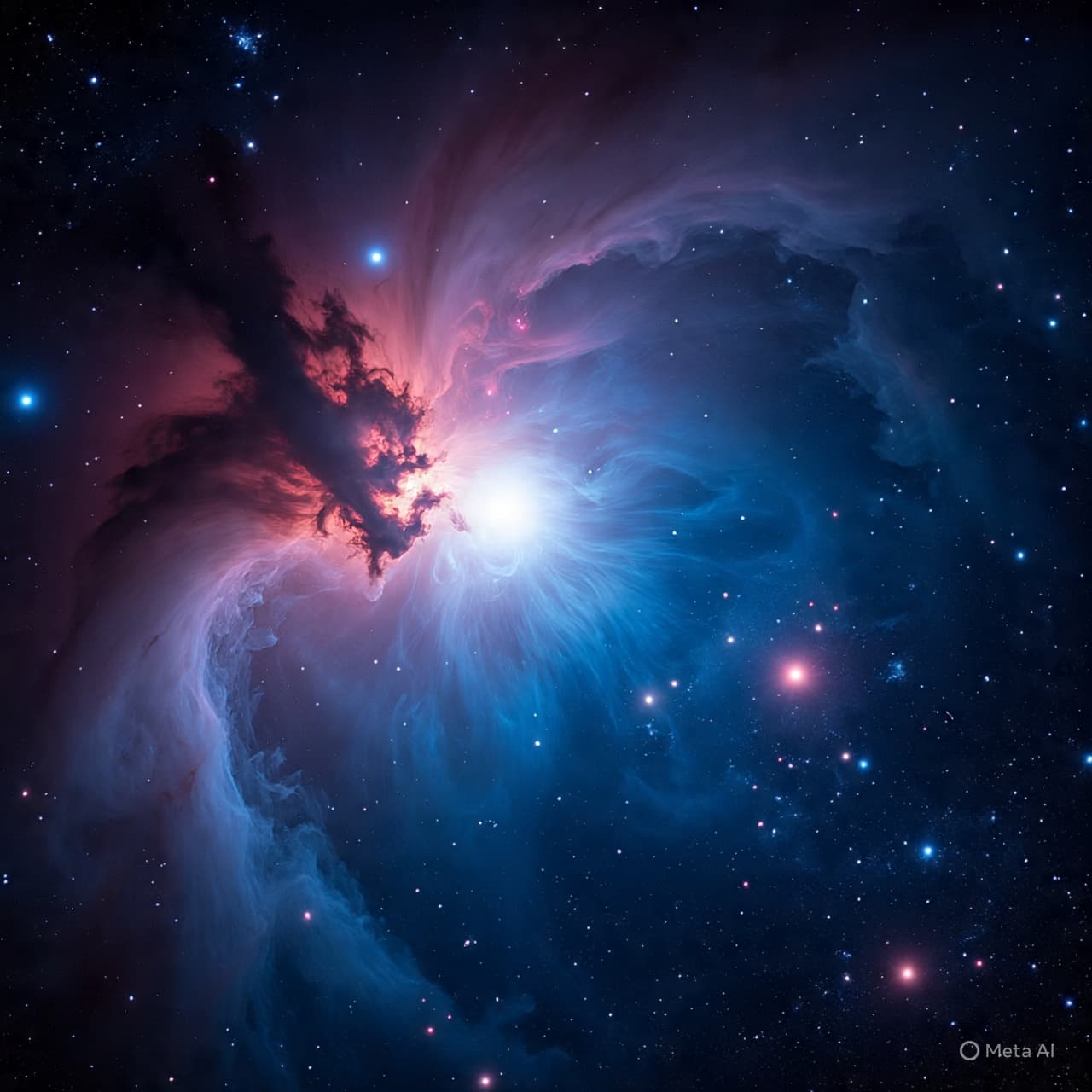
In the winter night sky, one celestial jewel has always captured the imagination of stargazers — and a newly shared photograph of that object may inspire you to step outside with binoculars or a telescope tonight. Astrophotographer Joel Martin has captured a radiant image of the Orion Nebula, the vast stellar nursery lying roughly 1,500 light‑years from Earth, revealing striking detail in its swirling clouds of gas and dust.
The Orion Nebula (Messier 42) sits just below the familiar belt of the constellation Orion the Hunter. From a dark sky, it is one of the few deep‑sky objects visible to the unaided eye — appearing as a fuzzy patch of light — but its true complexity comes alive through long‑exposure photography or modest amateur telescopes.
In Martin’s December 2025 image, captured with a 6‑inch Newtonian reflector and narrow‑band filters, the nebula’s chaotic structures — carved by energetic young stars — emerge in vivid detail. The resulting photo highlights luminous filaments and contrasts shaped by ultraviolet radiation from young stars embedded within the cloud, giving a sense of the dynamic processes within this stellar nursery.
These kinds of images not only delight photographers and hobbyists, they also encapsulate what makes the Orion Nebula such a compelling target for observation: it is both close enough (astronomically speaking) and bright enough to be seen through small telescopes or even binoculars under good skies. In fact, the nebula has been studied by major observatories such as the Hubble Space Telescope, which revealed thousands of individual stars within the region in dramatic detail.
Astronomers and skygazers alike often point to the Orion Nebula as a gateway object — a deep‑sky target that can be appreciated with modest equipment but also rewards more advanced observing and imaging efforts. Its brightness and structure make it ideal for wintertime viewing in the Northern Hemisphere, when Orion wheels high in the evening sky.
So, if you’re itching to look skyward this week, consider seeking out Orion. With nothing more than a pair of binoculars — and certainly with a small telescope — you can pick out this cosmic cloud of stellar birth, a reminder of both the beauty and the scale of our universe.
AI Image Disclaimer Visuals are created with AI tools and intended for conceptual representation, not actual photographs.
Sources Space.com — This stunning Orion Nebula photo will make you want to grab a telescope this week (astrophoto by Joel Martin). ESA/Hubble — Hubble’s sharpest view of the Orion Nebula and star formation details. Space.com — general visibility and celestial guide to Orion Nebula viewing.
Published by Banx Network. This article is part of the Banx decentralized media programme, powered by the BXE token on the XRP Ledger.


.jpg&w=3840&q=75 "September 2026 Was the Second-Warmest on Record, With Global Temperatures Above 1.5°C for a Second Month")