
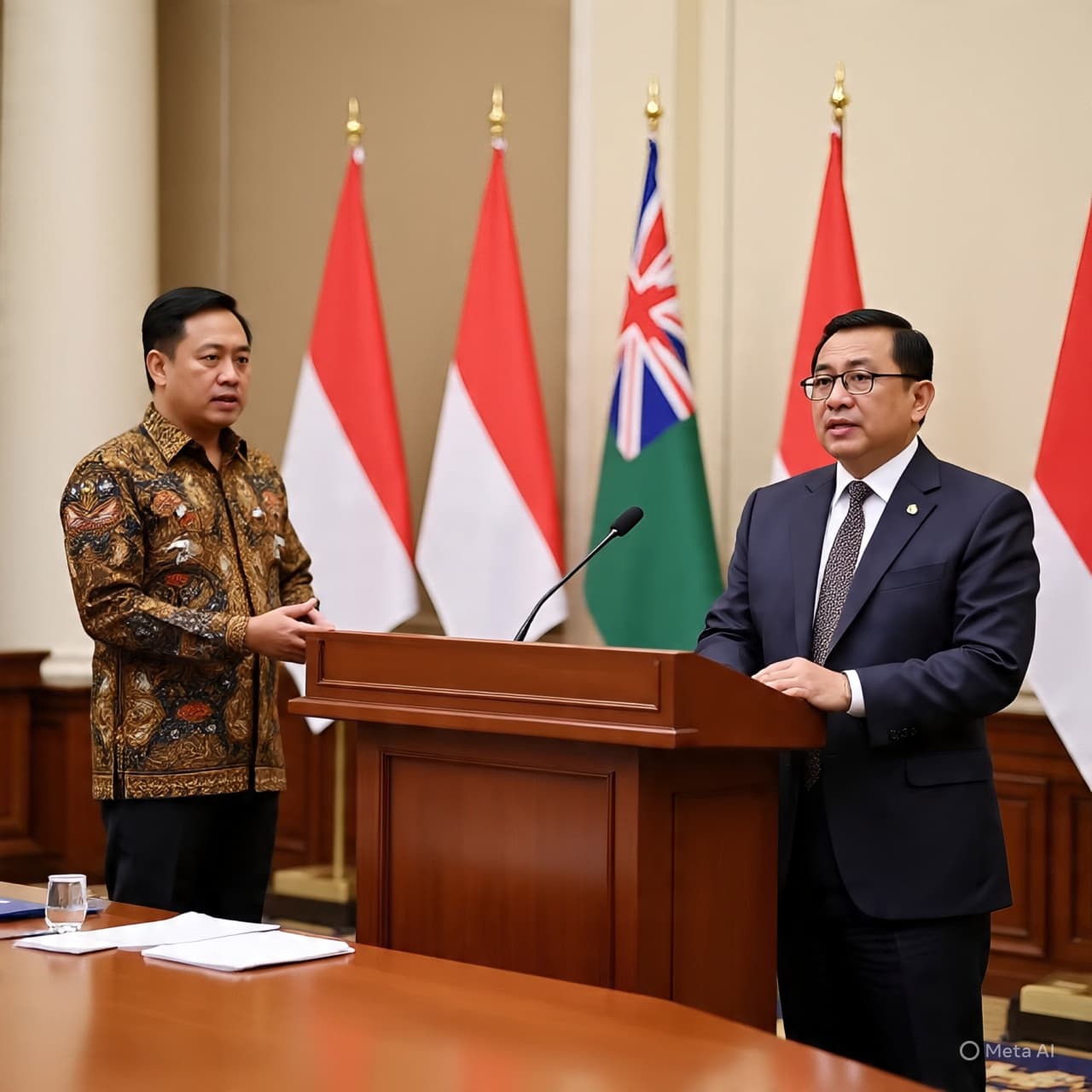
Key Highlights
- Indonesia condemns violence in Lebanon, emphasizing humanitarian concerns.
- The nation calls for restraint and accountability amid escalating tensions.
- Indonesia's response reflects its commitment to international law and peace.
Indonesia's response to the recent escalation of violence in Lebanon highlights a delicate balance between moral clarity and diplomatic restraint. As the world watches the turmoil unfold, Indonesia has chosen to articulate its stance firmly yet measuredly, condemning the brutal attacks while emphasizing the humanitarian implications of the conflict. This approach reflects Indonesia's long-standing commitment to international law and humanitarian principles, which are often tested in times of crisis.
The situation in Lebanon has been exacerbated by reports of civilian casualties and significant infrastructure damage, raising alarms within the international community. Indonesia's Ministry of Foreign Affairs has expressed deep concern over these developments, shifting the focus from mere geopolitical strategies to the human lives affected by the violence. This emphasis serves as a poignant reminder that beyond political maneuvering, there are ordinary people facing extraordinary fear and uncertainty.
As the world's largest Muslim-majority nation, Indonesia's voice carries both symbolic and diplomatic weight in the context of Middle Eastern humanitarian issues. However, its response avoids confrontational rhetoric, opting instead for a call to uphold international norms. By urging restraint and accountability, Indonesia seeks to protect civilians and foster a dialogue centered on humanitarian concerns, rather than escalating tensions further.
The broader implications of Indonesia's stance reflect a shared anxiety among nations regarding the potential for further escalation in Lebanon. The country has long been described as a fragile balance, with any new conflict risking a wider circle of instability. Indonesia's call for restraint is not merely a reaction to current events but a quiet appeal to the international community to step back from the brink of further violence.
International responses to the situation have varied, with some nations echoing Indonesia's condemnation while others frame their statements within different strategic contexts. In this fractured landscape, Indonesia's voice stands out, advocating for a humanitarian perspective even as political realities complicate unified action.
Moreover, Indonesia's statement carries an undercurrent of reflection on the cyclical nature of conflict and the often-repeated script of condemnation followed by recurrence. This raises an important question: how many times can the same narrative unfold before it loses its impact? Yet, the act of speaking out remains crucial, reaffirming that silence is not an option in the face of violence against civilians.
Indonesia's diplomatic tradition emphasizes peaceful resolution and multilateral engagement, and this instance is no different. The nation continues to articulate its message steadily, underscoring that violence against civilians is unacceptable and that international law must be upheld. As the situation evolves, the weight of such statements may not immediately change realities on the ground, but they contribute to a larger narrative about who speaks out and how they choose to do so when it matters most.
Ultimately, Indonesia's condemnation serves not to close the conversation but to keep it alive, anchored in principles that remain essential despite the challenges they face. The hope is that amid the noise of conflict, such voices will continue to resonate and be heard, fostering a dialogue that prioritizes humanity over politics.
Published by Banx Network. This article is part of the Banx decentralized media programme, powered by the BXE token on the XRP Ledger.



