
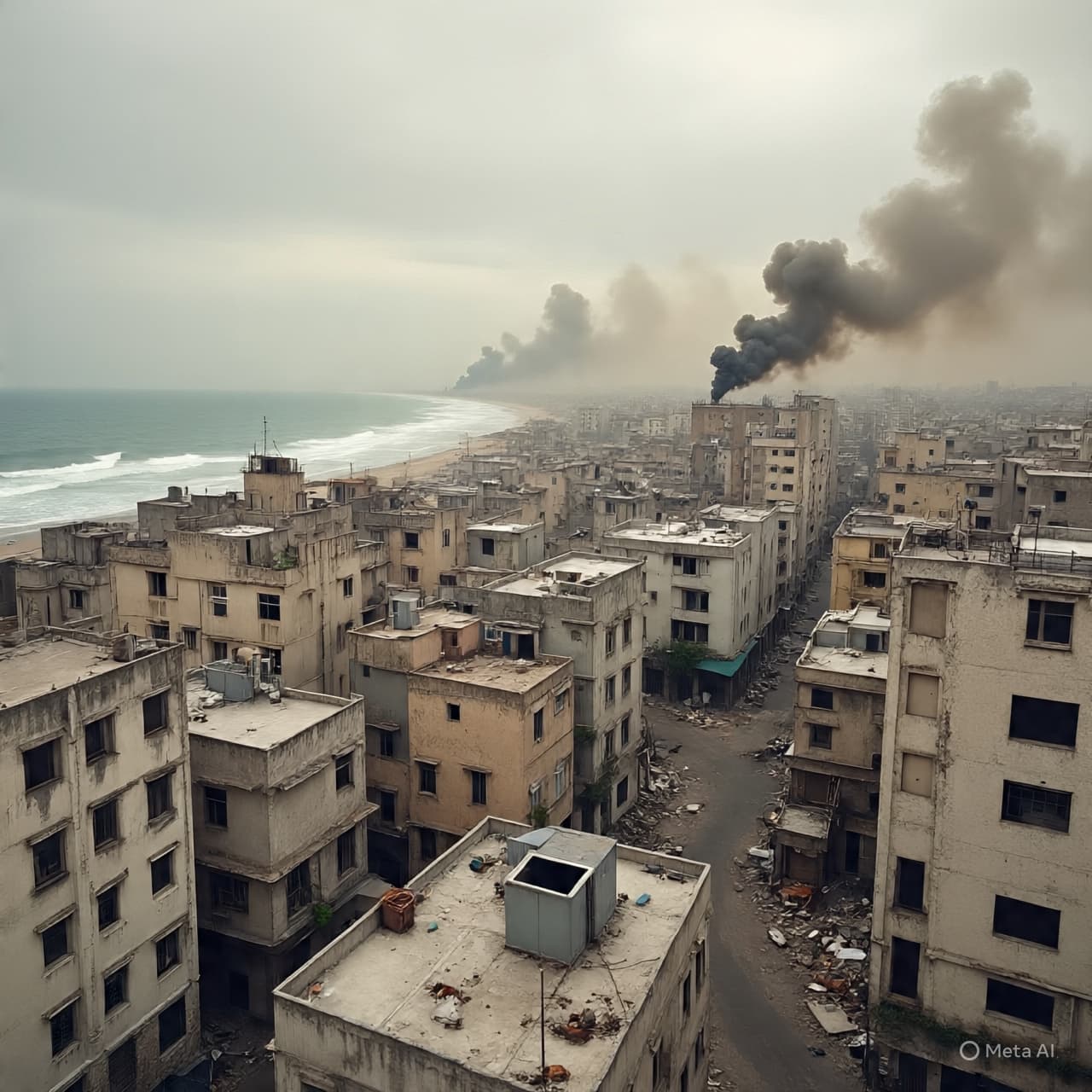
Key Highlights
- Iranian military actions have reportedly targeted Israeli positions in Gaza.
- The strikes may have impacted Israel's military command structure.
- International calls for de-escalation are emerging amid rising tensions.
Recent military actions linked to Iran have escalated tensions in the Gaza Strip, with reports indicating that Israeli military positions were targeted. These developments not only highlight the ongoing conflict but also suggest a significant shift in the regional balance of power. The implications of these strikes are profound, as they may have affected elements of Israel's military command structure, raising concerns about operational continuity and the potential for further escalation.
The situation in Gaza is complex, shaped by a history of conflict and a web of alliances that extend beyond the immediate actors involved. Observers note that Iranian involvement in military actions against Israel is not an isolated incident but part of a broader narrative of regional entanglement. This interconnectedness complicates the landscape, as actions taken by one party can have ripple effects across borders, influencing the strategies and responses of others.
In the wake of these strikes, the language used in official statements has been notably restrained. This suggests an awareness of the delicate balance that must be maintained to avoid further escalation. Each word appears to be chosen with care, reflecting the high stakes involved in the current situation. As the conflict unfolds, the potential for misinterpretation or miscalculation looms large, particularly in a region where tensions can ignite rapidly.
For civilians in Gaza, the impact of military actions is immediate and profound. Daily life is already fraught with uncertainty, and the presence of military activity—whether direct or indirect—adds another layer of complexity to their existence. The decisions made by leaders far from the battlefield have tangible consequences for those living in the midst of conflict, underscoring the human cost of geopolitical maneuvers.
International responses to the situation have been measured, with calls for de-escalation emerging from various global actors. Diplomacy in this context resembles a quiet conversation amid a cacophony of voices, often drowned out by the urgency of military actions. The involvement of Iran in the conflict adds a broader regional dimension, extending the conversation beyond Gaza and Israel to encompass a wider geopolitical stage.
As the situation continues to evolve, clarity may come slowly, shaped by official confirmations and independent reporting. For now, the narrative remains fluid, suspended between action and interpretation. Each development carries both immediate consequences and longer-term implications, contributing to a story that is still being written.
In conclusion, while headlines may focus on strikes and military command structures, the underlying narrative is one of uncertainty and resilience. The hope remains that even in the most tangled of situations, a path toward peace and stability can eventually be found.
Published by Banx Network. This article is part of the Banx decentralized media programme, powered by the BXE token on the XRP Ledger.



