In a quiet but significant stride for space science, researchers have taken a step beyond simply discovering planets outside our solar system—they have begun to trace the weather patterns that may exist on them. This emerging field of exoplanet climatology is reshaping how humanity understands distant worlds, moving from detection toward interpretation of atmospheric behavior.
The study of exoplanets has expanded rapidly since the first confirmed discovery of a planet orbiting another star in the 1990s. Today, thousands of such worlds are known, each with unique orbital paths, sizes, and likely atmospheric compositions. Scientists have long sought not only to identify these planets but to understand what conditions might exist on their surfaces or within their skies.
Using advanced space telescopes and spectroscopy, researchers analyze the light passing through or reflecting off exoplanet atmospheres. Subtle variations in this light reveal clues about temperature shifts, chemical composition, and even possible cloud structures. These observations allow scientists to construct early models of alien climate systems.
Some of the most promising data comes from hot gas giants known as “hot Jupiters,” which orbit extremely close to their stars. These planets are tidally locked, meaning one side constantly faces the star while the other remains in darkness, creating extreme temperature gradients that drive violent atmospheric winds.
More recently, attention has shifted toward smaller, rocky planets that may more closely resemble Earth. While still difficult to study in detail, these worlds offer the possibility—however distant—of climates that could support liquid water or stable atmospheric cycles.
The process remains highly interpretive. Unlike Earth, where weather can be directly measured, exoplanet climates are reconstructed through indirect signals. This makes every model an evolving hypothesis rather than a complete picture, shaped by increasingly refined observational tools.
As technology improves, these early climate maps of distant worlds may become more detailed, offering a quiet reminder that Earth’s atmosphere is just one variation among countless possibilities scattered across the cosmos.
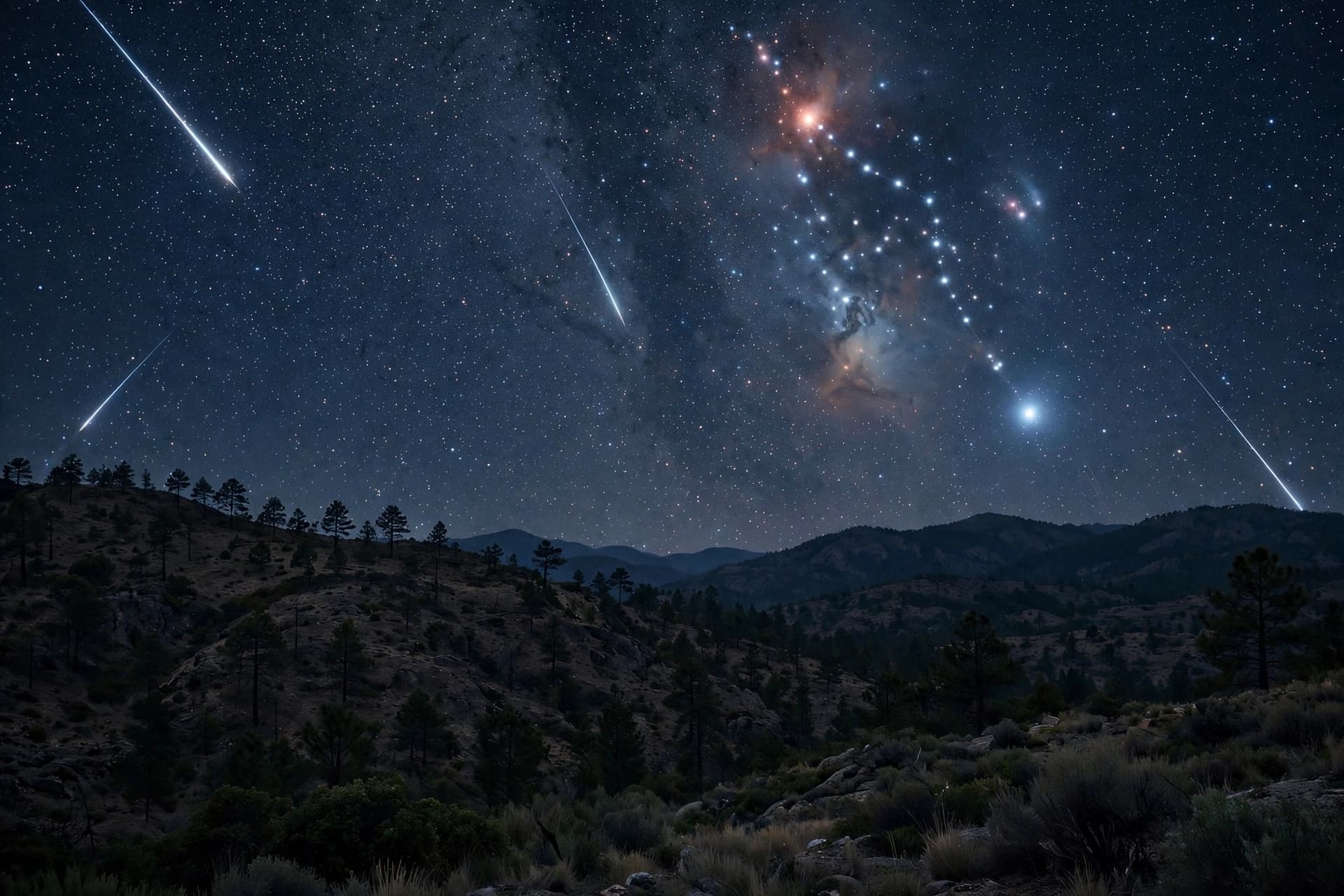
AI Image Disclaimer: Images described above are AI-generated visual interpretations created for illustrative purposes and may not represent actual astronomical observations.
Sources (verification check): NASA, ESA, Nature Astronomy, Science Journal
Published by Banx Network. This article is part of the Banx decentralized media programme, powered by the BXE token on the XRP Ledger.