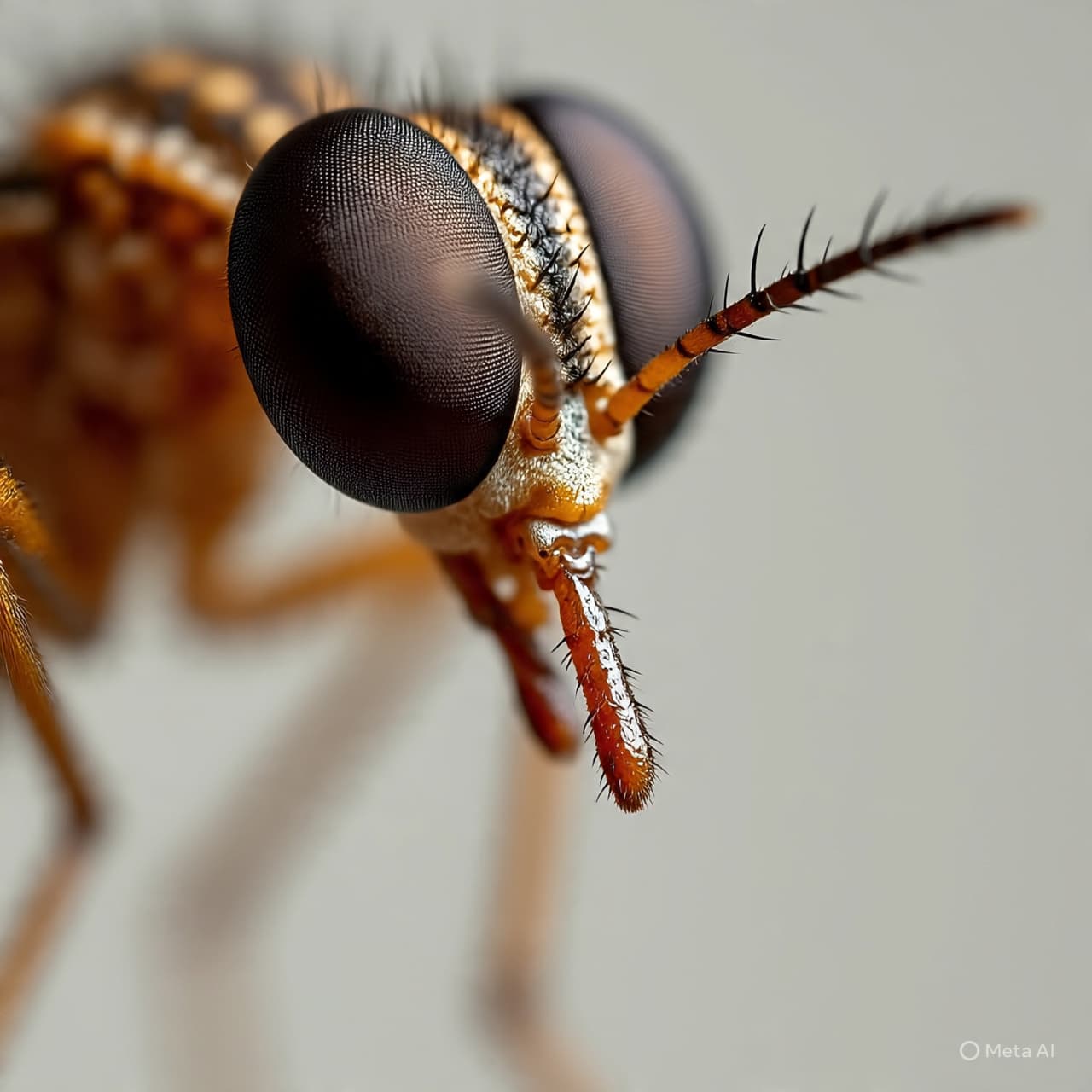
There are histories written in stone, and others carried on fragile wings. Long before the first villages gathered around rivers, before language shaped memory into story, there was already a quiet exchange taking place at dusk. In the tall grasses of ancient Africa, as early hominins moved across open savannas, something small and persistent was learning their scent. Evolution, patient and unseen, was drawing two species into a subtle and enduring relationship.
New research suggests that certain mosquito lineages developed a preference for feeding on early hominins far earlier than scientists once assumed. By examining genetic adaptations in modern mosquito populations and tracing their evolutionary timelines, researchers have uncovered evidence that these insects began specializing in human ancestors hundreds of thousands — possibly millions — of years ago. The findings suggest that the bond between mosquitoes and humans predates agriculture, cities, and even the earliest permanent settlements.
Mosquitoes, particularly females, rely on blood to nourish their eggs. Their search is guided not by sight alone, but by a finely tuned sensory system capable of detecting carbon dioxide, body heat, and specific chemical compounds emitted through skin. Scientists have identified changes in olfactory receptor genes that appear to have sharpened sensitivity to human-associated odors. These genetic adjustments suggest that early hominins became reliable and attractive hosts in the distant past.
The evolutionary shift may have coincided with behavioral changes among hominin groups. As early humans gathered in clusters, lingered near water sources, and established repeated pathways across landscapes, they may have inadvertently created stable feeding opportunities. Pools of standing water near campsites could have provided breeding grounds, while consistent human presence offered dependable blood meals. Over generations, mosquitoes that were better adapted to tracking hominin scent would have thrived.
Researchers used molecular clock analysis to estimate when these sensory adaptations emerged. By comparing mutation rates across mosquito species and aligning them with paleoclimate and fossil records, they reconstructed a timeline that places this host preference well before the rise of farming societies. The study challenges the long-held assumption that mosquito specialization toward humans intensified only after dense agricultural communities formed.
There is a quiet symmetry in this narrative. As early hominins learned to control fire, shape tools, and adapt to shifting climates, mosquitoes were evolving too — refining their sensory apparatus and narrowing their ecological focus. Neither species planned this proximity. It arose gradually, shaped by environment and opportunity, through countless generations of interaction.
The implications extend beyond evolutionary curiosity. Mosquitoes are vectors for diseases such as malaria and other parasitic infections. Understanding when and how they developed a taste for human ancestors may help researchers trace the deeper origins of mosquito-borne illnesses. It also offers insight into the long-standing biological pressures that may have influenced human immune responses over millennia.
At the same time, scientists emphasize that this research does not suggest a dramatic moment of change, but rather a slow alignment between species. Evolution rarely moves in sudden leaps; more often, it unfolds in subtle recalibrations. In this case, the recalibration may have begun far earlier than previously recognized.
Today, as genomic technologies grow more precise, researchers continue to refine their understanding of mosquito evolution and host selection. The new findings indicate that the relationship between mosquitoes and early hominins stretches deep into prehistory, adding another layer to the complex story of human origins.
AI Image Disclaimer Graphics are AI-generated and intended for representation, not reality.
SOURCE CHECK
Credible mainstream / niche sources covering this topic include:
BBC News CNN Reuters The Guardian Live Science
Published by Banx Network. This article is part of the Banx decentralized media programme, powered by the BXE token on the XRP Ledger.