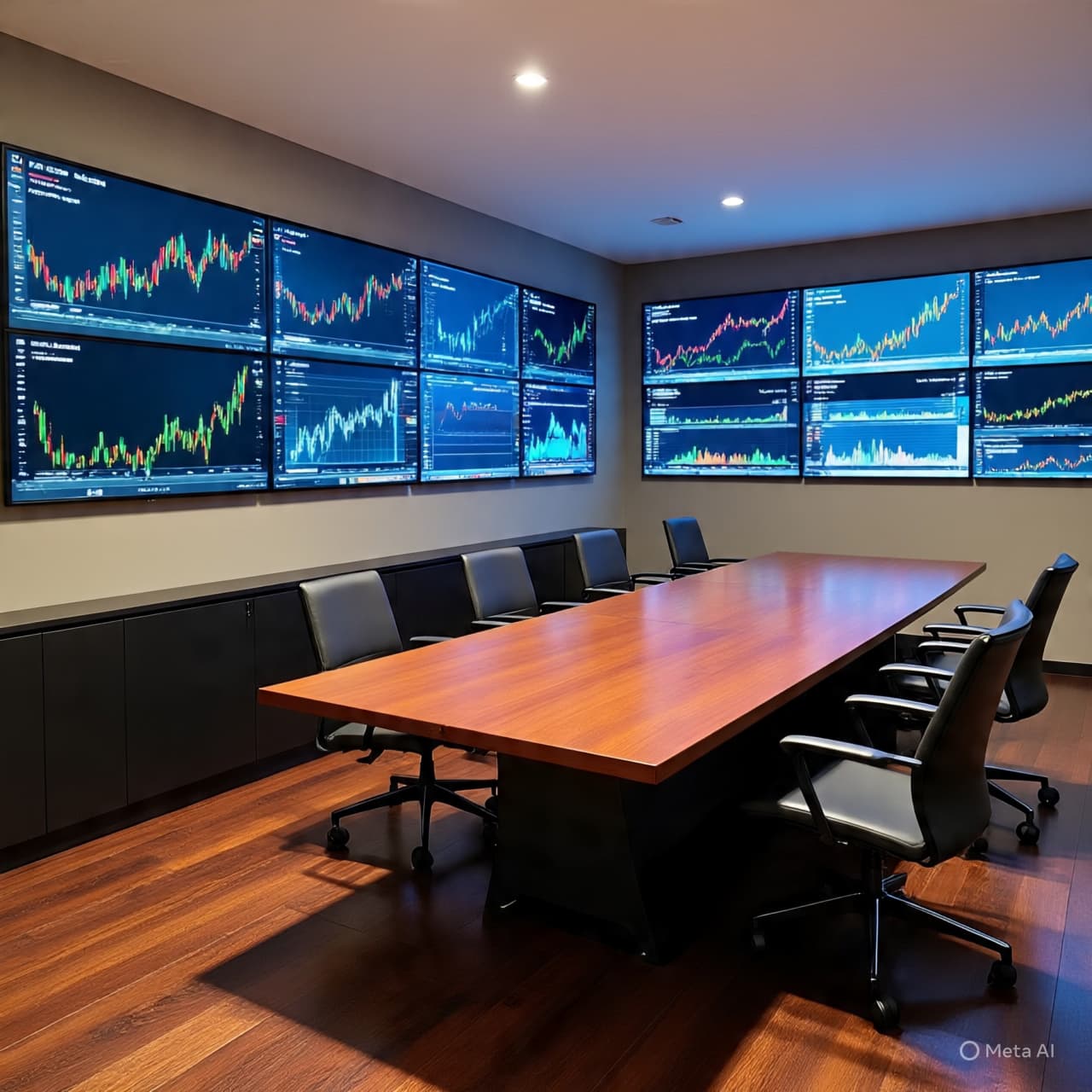
In the quiet dawn of a market stirred by whispers of uncertainty, there are moments that feel like choirs tuning their instruments before a symphony begins. On Monday afternoon, in a virtual room of global capital whispers and financial frameworks, Indonesia’s financial steward extended a hand in dialogue with one of the world’s most influential index providers — Morgan Stanley Capital International, or MSCI. It was a meeting that carried hopes not as fanfare, but as careful calibrations of trust and transparency.
When the afternoon sun edged toward evening, the Otoritas Jasa Keuangan (OJK) emerged from its conversation with MSCI with a reflective composure. Hasan Fawzi, the acting head of the capital markets supervisory board, spoke of the encounter with a tone that suggested not triumph, but orchestration — the careful tuning of policy strings and disclosure harmonics. The discourse, he said, was constructive — a phrase that in regulatory circles suggests not certainty, but mutual interest and continued engagement.
At issue were concerns that had reverberated through Jakarta’s trading floors in recent weeks: questions from MSCI about market transparency, shareholding visibility, and the broader criteria that determine how Indonesia’s stocks are woven into global index fabrics. These concerns had already stirred volatility in local indices, prompting intense scrutiny and government focus.
But in this latest dialogue, the narrative turned to tangible steps. OJK outlined proposals that included broader disclosure of share ownership — lowering the reporting threshold to cover stakes above 1% — and refining the classification of investor types to foster clearer market perspective. Such measures are intended to present a more open and navigable landscape for both domestic investors and the international eyes that track emerging markets.
Another note in the meeting was the idea of increasing the free float — the proportion of publicly tradable shares — a move that may, in time, nurture greater liquidity and align Indonesian practices with globally recognized benchmarks. MSCI, according to OJK, not only welcomed the discussions but also offered to provide guidance on its methodologies, a subtle but meaningful step toward common ground in analytical approach.
Yet, even as these points were shared with measured optimism, the market’s body language had been restless. Earlier in the day, the Jakarta Composite Index had been down, a reflection of investor apprehension as the dialogue unfolded and as capital flows responded to news and sentiment that had been building for weeks.
There was no fireworks, no declaration of victory. Instead, there was a shared acknowledgment that the work of aligning regulatory reform with global expectations is gradual, like a sunrise that intensifies in warmth over time. The OJK expressed intent to continue updates and engagements as part of its commitment to transparency — an invitation to investors, local and abroad, to watch not just what was discussed, but how it unfolds in practice.
In the end, while market indicators may oscillate and global lenses may stay keen, the meeting’s outcome was portrayed by the regulator not as a conclusion, but as a chapter — another page in an ongoing dialogue intended to strengthen confidence in Indonesia’s capital markets.
🖼️ AI Image Disclaimer
Visuals are created with AI tools and are not real photographs, meant for conceptual illustration.
Sources Identified (Mainstream / Credible): 1. Reuters — reporting on market reaction and OJK–MSCI dialogue. 2. CNBC Indonesia — direct coverage of OJK remarks about the meeting outcomes. 3. Antara News (via ANTARA) — mention of OJK and MSCI meeting preparations. 4. Suara.com business section — detailed statements from OJK after the meeting. 5. IDN Times — coverage of the meeting and participant roles.
Published by Banx Network. This article is part of the Banx decentralized media programme, powered by the BXE token on the XRP Ledger.

.jpg&w=3840&q=75 "The Artemis Revolution: How NASA Plans to Build Humanity's Future on the Moon")