In the soft gray of an early morning, just as dawn begins to gild the Persian Gulf with a touch of warmth, a distant explosion can feel like a crack in the calm of everyday life. For generations, the Ras Tanura facility on Saudi Arabia’s eastern coast has been more than just steel and pipelines; it has been a steady heartbeat in the world’s energy grid. When that heartbeat faltered recently — however briefly — it sent an echo far beyond the sands and sea that cradle it.
Across the region, clouds of smoke rose from one of the globe’s largest oil refining complexes, a place where the sun’s reflection on metal and tank farms usually signals commerce and continuity. On Monday, however, drones approached the Saudi Aramco Ras Tanura refinery, prompting air defenses to engage and intercept them. Though few details have been confirmed publicly, falling debris ignited a limited fire that was quickly brought under control, according to official statements.
For locals and workers at the sprawling site, the day began like any other — hard hats, early shifts, and the routine rhythms of industrial life. Then came the interruption: alerts, the distant thrum of defense systems, and the unsettling sight of smoke rising where it was least expected. In a region long familiar with intermittent tensions, the emotional weight of such an attack still carries a gravity that’s difficult to measure.
Saudi authorities and state news agencies were swift to reassure residents and markets alike that no injuries were reported and that precautionary measures, including the temporary shutdown of some units, limited any broader disruption to local fuel supplies. Their message was one of control — that even in moments of uncertainty, systems of safety and protection remain firmly in place.
Yet, beyond the immediate perimeter of fence lines and flare stacks, the event rippled through global perceptions of stability. Ras Tanura, capable of processing hundreds of thousands of barrels of crude a day, sits at the intersection of regional strategy and global demand. Its presence on the world stage is as much symbolic as operational: a reminder that energy infrastructure, even when fortified, can feel vulnerable in times of heightened geopolitical tension.
Market watchers, stock traders, and policy analysts alike responded promptly. Oil prices in international benchmarks climbed as traders factored in the possibility of tighter supply, mindful that even short-lived interruptions at a hub like Ras Tanura can influence futures contracts and shipping patterns weeks ahead. That cautious shift in valuation speaks to a broader theme in global economics — how quickly distant events can fold into local costs for consumers everywhere.
In capitals from Riyadh to Washington and beyond, the attack has been framed within the broader arc of rising hostilities across the Middle East. What began as a series of strikes and counterstrikes between military forces has now brushed against energy assets that serve as anchors for both regional economies and the world’s energy needs.
For many observers, the focus now turns to response and resilience: how quickly can operations fully resume, what additional protections will be put in place, and how will neighboring countries coordinate to safeguard critical infrastructure? These questions loom in boardrooms and government offices long after the smoke has cleared.
In the quiet that follows such a moment, there is often a collective search for calm — a desire for reassurance that systems built to endure can indeed withstand disruption. In this case, officials have emphasized that local markets remain supplied and that emergency protocols worked as designed. Whether these systems will be tested again remains the subject of vigilant watchfulness.
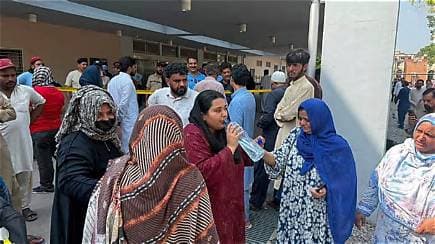
AI Image Disclaimer “Visuals are created with AI tools and are not real photographs.”
Sources Reuters, Associated Press (AP News), Washington Post, The Guardian, Economic Times/AFP.
Published by Banx Network. This article is part of the Banx decentralized media programme, powered by the BXE token on the XRP Ledger.