
Dawn arrives slowly across the plains of Ukraine, where the first light often spreads quietly over wheat fields, rail lines, and apartment balconies. In many cities, the earliest hours belong to small rituals—the opening of bakeries, the hum of buses warming their engines, the soft movement of people stepping into another day.
But sometimes the morning begins differently.
Before the sun fully lifts above the rooftops, the sky itself seems to carry a restless echo. Sirens rise through the stillness, and somewhere in the distance, the mechanical breath of engines cuts through the air. It is in these suspended moments—between darkness and daylight—that the war often returns most visibly.
Ukrainian officials said that at least six people were killed during a wave of Russian missile and drone attacks that struck several areas across the country. The overnight barrage, launched by forces from Russia, combined aerial drones with missile strikes in what authorities described as a broad assault targeting different regions.
Across cities and towns, air defense units scanned the sky, intercepting many incoming threats. Still, some weapons reached their targets, damaging residential areas and infrastructure and leaving rescue teams to navigate the aftermath.
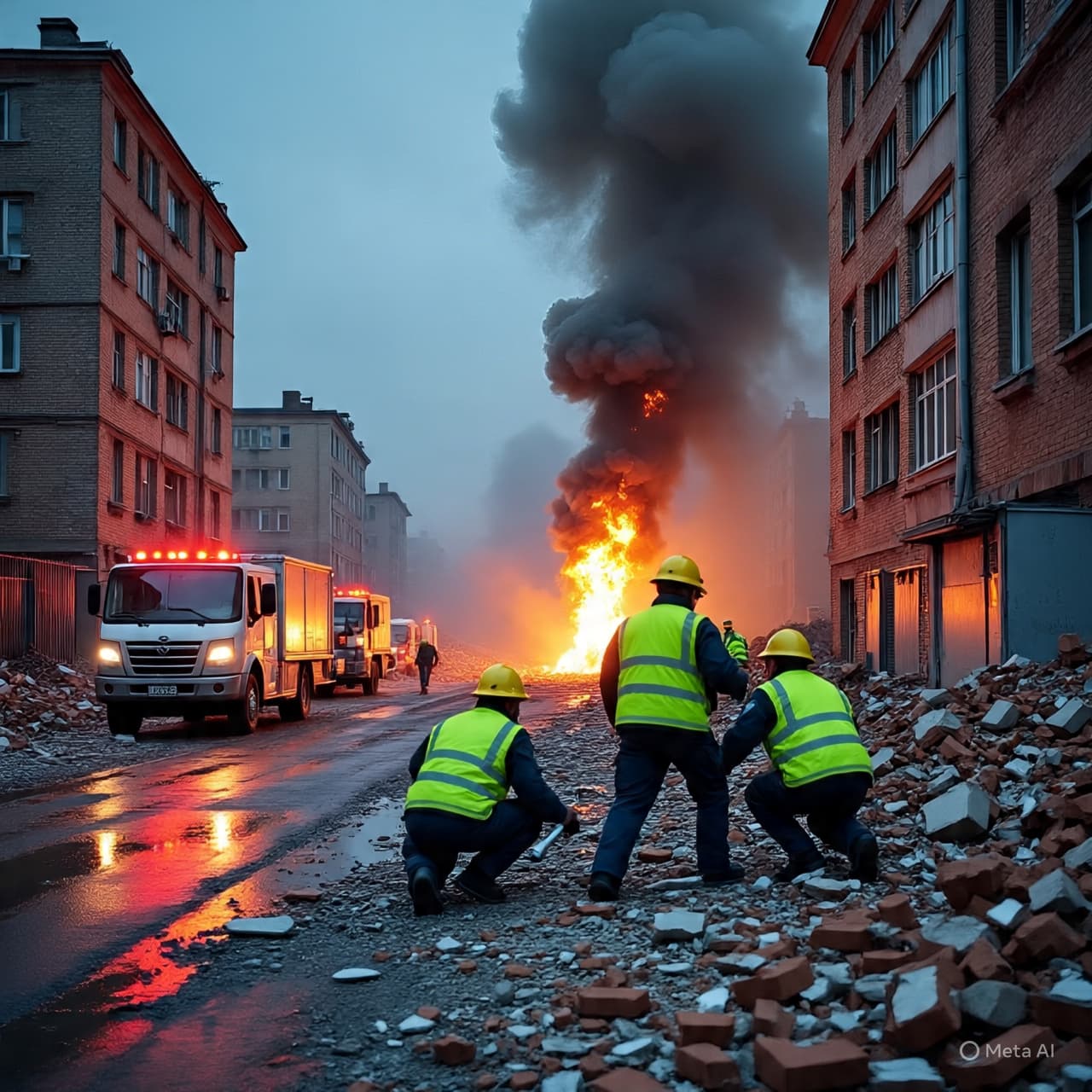
Emergency workers moved through broken streets and damaged buildings, searching for survivors beneath debris and assisting the injured. In places where the blasts struck, the quiet geometry of everyday life—balconies, stairwells, parked cars—was interrupted by shattered glass and smoke drifting upward into the early morning air.
Since the full-scale invasion began in 2022, Ukraine has lived with the steady rhythm of aerial warfare. Drone swarms and missile barrages often arrive at night, when cities are dim and streets are nearly empty. Air raid sirens, once unfamiliar, now form a somber soundtrack to the conflict, guiding residents toward shelters and safer spaces.
In recent months, both sides have continued to rely heavily on long-range weapons. Drones travel silently across great distances before descending toward their targets, while missiles move with speed that leaves only moments for defense systems to respond. Ukrainian air defense networks, built from a mix of domestic and Western-supplied systems, have intercepted many incoming projectiles, though the risk remains constant.
For communities across Ukraine, each attack is both immediate and cumulative. The damage from one night joins the memory of countless others—sirens in the dark, the distant thud of explosions, and the slow return of quiet once the danger passes.
Yet the morning always follows.
When daylight spreads across the streets, people step outside to assess the night’s impact. Workers sweep glass from sidewalks. Residents gather near damaged buildings, speaking in low voices while emergency crews continue their work. Even in cities that have endured repeated attacks, life resumes with a quiet persistence.
Officials said the latest wave of missile and drone strikes killed at least six people and injured others, though the full extent of damage was still being assessed. Investigations into the specific targets and impact zones were continuing as rescue teams worked through affected neighborhoods.
For those living beneath these contested skies, the war often feels like a shifting horizon—sometimes distant, sometimes suddenly close. And as another day unfolds across Ukraine, the country continues to move between those two realities: the fragile calm of morning, and the enduring uncertainty carried by the night.
AI Image Disclaimer Visuals are AI-generated and serve as conceptual representations.
Sources Reuters BBC News The Guardian Associated Press Ukrainian Air Force
Published by Banx Network. This article is part of the Banx decentralized media programme, powered by the BXE token on the XRP Ledger.


.jpg&w=3840&q=75 "US Declares Drought Disaster for Parts of Puerto Rico as Dry Conditions Persist")