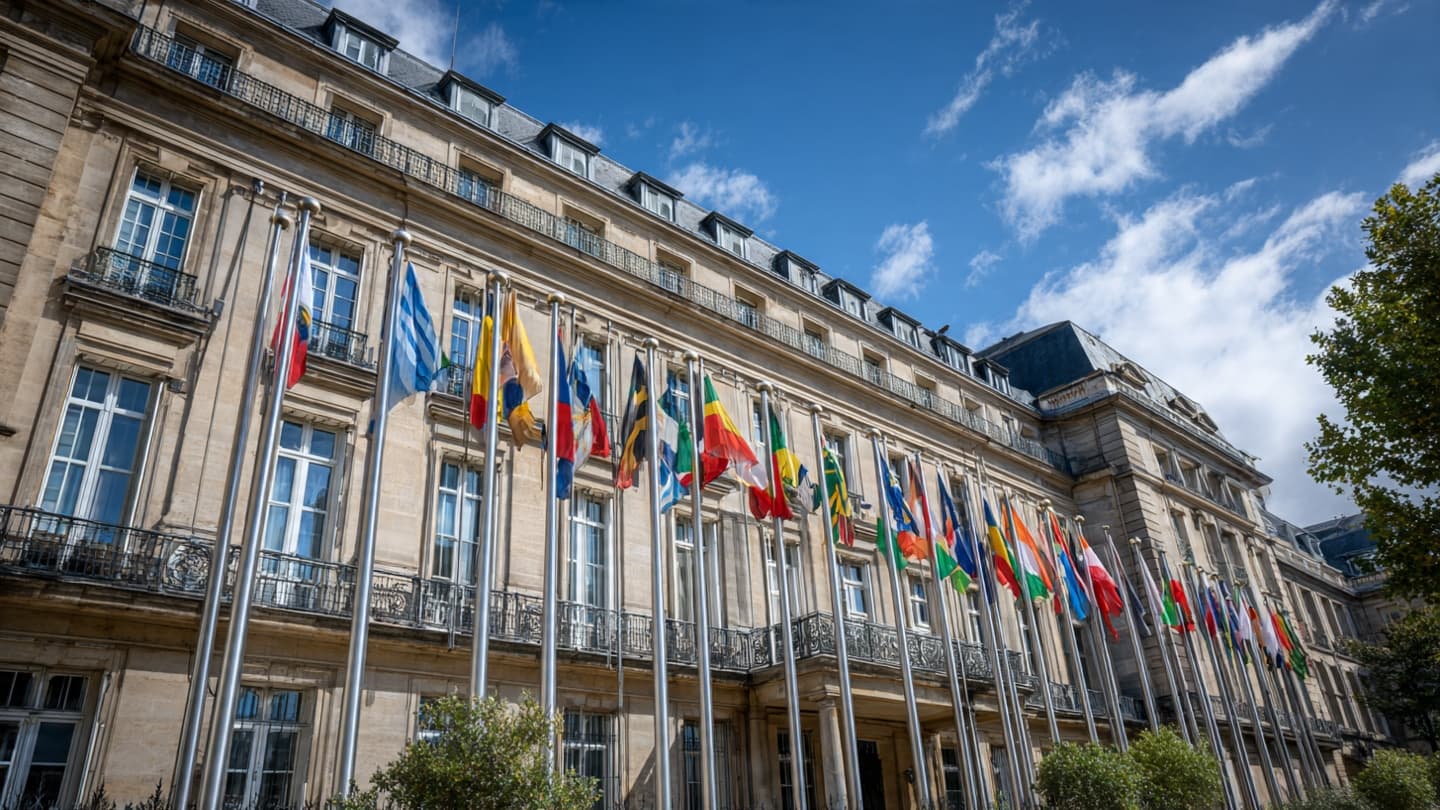
Paris has always carried the weight of memory gracefully. Its museums, libraries, and historic streets seem to whisper that civilization survives through what it chooses to preserve. Yet inside one of the world’s most recognizable institutions dedicated to culture and education, another story is quietly unfolding — one shaped not by celebration, but by financial uncertainty.
UNESCO, headquartered in Paris, now faces mounting concern after significant reductions tied to U.S. funding commitments. The organization, long regarded as a guardian of world heritage, educational cooperation, and cultural dialogue, suddenly finds itself confronting difficult questions about sustainability in an increasingly fragmented global environment.
For decades, UNESCO has operated as more than a bureaucratic institution. It has symbolized the belief that humanity shares responsibility for protecting knowledge, history, language, and cultural identity. From ancient archaeological sites to educational access programs, its work stretches far beyond conference rooms in Paris. Yet organizations built on international cooperation often remain deeply vulnerable to political and economic shifts beyond their control.
Officials close to the organization reportedly acknowledged that budget pressures could affect future projects, staffing decisions, and operational priorities. Although UNESCO continues functioning normally, concerns have emerged regarding long-term financing stability if additional support is not secured from member states or international partners.
The situation has also reopened wider conversations about the global value placed on cultural preservation itself. In moments of economic pressure, governments frequently prioritize infrastructure, defense, or domestic social needs before international cultural programs. Yet historians and educators warn that neglecting institutions like UNESCO carries invisible long-term consequences for future generations.
Across Europe, cultural leaders expressed concern that shrinking resources could slow preservation efforts for endangered heritage sites already threatened by climate change, urban expansion, and armed conflict. UNESCO’s influence often extends into regions where local preservation systems lack adequate funding or technical expertise. Without international coordination, vulnerable historical sites may face deeper risk.
Inside Paris, the atmosphere surrounding UNESCO remains calm but reflective. Diplomats, academics, and cultural representatives continue attending meetings beneath the institution’s modernist architecture, aware that the mission itself remains larger than temporary financial setbacks. Still, uncertainty inevitably changes the tone of conversations. Planning for ambitious global projects becomes harder when budgets grow unpredictable.
Observers note that UNESCO’s challenges also reflect a broader transformation in international cooperation. Global institutions increasingly operate within a world shaped by economic nationalism, shifting alliances, and domestic political pressures. In such an environment, organizations focused on education and culture sometimes struggle to compete for attention against more immediate geopolitical concerns.
Yet supporters argue that culture and education should never be treated as secondary priorities. Preserving manuscripts, protecting historic cities, promoting scientific collaboration, and expanding educational access are not symbolic luxuries, they say, but investments in long-term human stability. Civilizations endure not only because of military or economic power, but because their stories, ideas, and identities survive across generations.
Meanwhile, UNESCO leadership is expected to intensify fundraising efforts and encourage broader participation from member nations. Some analysts believe the organization may also pursue partnerships with philanthropic foundations and private cultural institutions to reduce dependence on a limited number of major contributors.
For now, the halls of UNESCO remain active, carrying the quiet rhythm of translators, researchers, and diplomats continuing their work beneath the Paris skyline. The institution still stands as a reminder that humanity’s shared heritage cannot belong to one nation alone. Yet the financial pressures surrounding it reveal an uncomfortable truth: even the guardians of memory must constantly fight to preserve their own future.
AI Image Disclaimer Images in this article are AI-generated illustrations, meant for concept only.
Sources Check Reuters UNESCO News Associated Press Le Monde BBC
Published by Banx Network. This article is part of the Banx decentralized media programme, powered by the BXE token on the XRP Ledger.