

Key Highlights
- Incident:A toddler's distress caused a significant flight delay.
- Public Reaction:A passenger criticized the parents on social media, sparking debate.
- Expert Insight:Parenting experts highlight the challenges of air travel with young children.
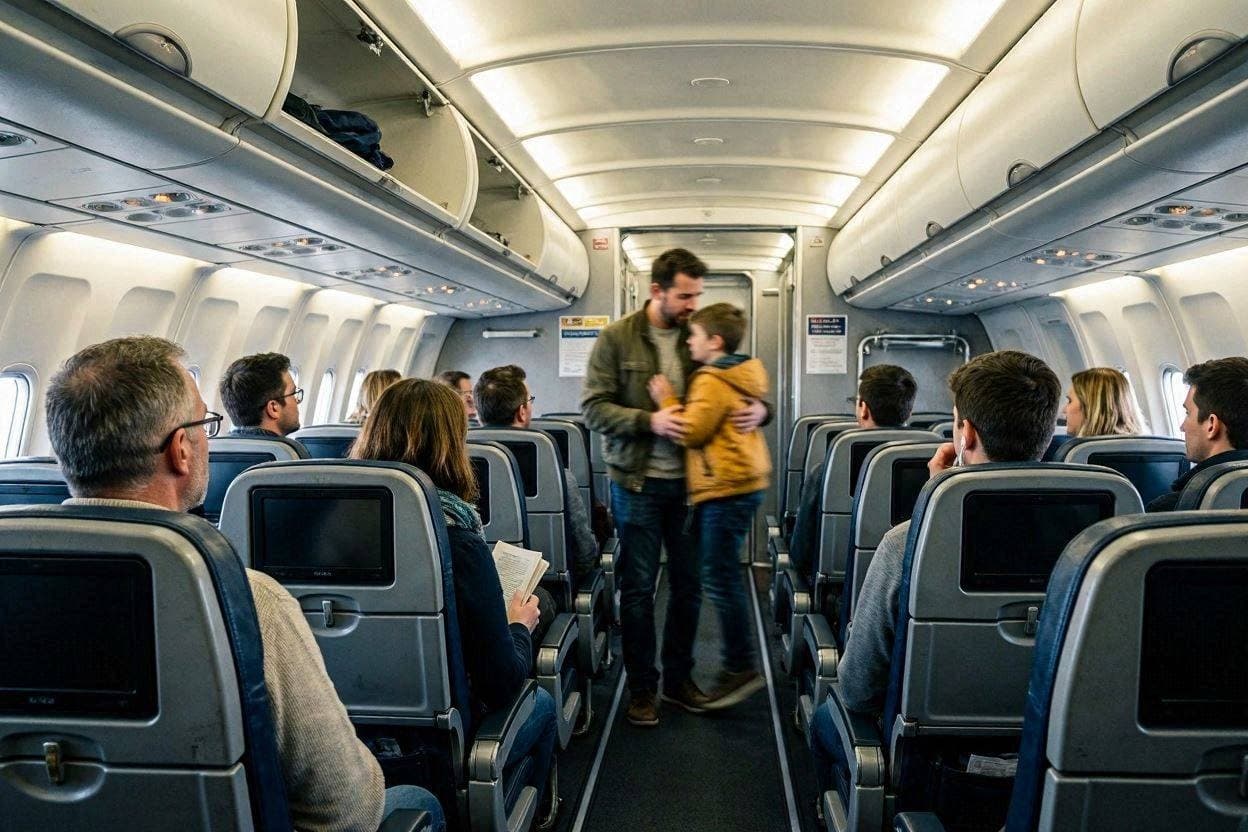
The confined space of an airplane cabin creates a unique social contract, where strangers share proximity and patience for hours. When this delicate balance is disrupted, tensions can rise quickly. A recent incident on a commercial flight illustrates this point, as a toddler's distress led to a significant delay before takeoff. Reports indicate that the child's crying prompted the crew to address the situation, resulting in an hour-long wait. One frustrated passenger took to social media to express their anger, labeling the parents as "incompetent" for failing to control their child. This post quickly gained traction, drawing hundreds of comments from users who either sympathized with the traveler or defended the family.
Parenting experts note that young children often struggle with the pressure changes and confined environment of air travel, making outbursts common and difficult to manage. For parents, these moments can be deeply stressful, compounded by the judgmental stares of fellow passengers. The public criticism faced by the family highlights the lack of societal support for caregivers in high-pressure situations, where quick fixes are expected but rarely possible. The incident serves as a reminder of the complexities of modern travel.
On the other hand, travelers who have paid for a seamless experience often feel entitled to a quiet journey. Delays caused by behavioral issues can disrupt connections, work schedules, and rest, leading to genuine inconvenience. The frustration expressed by the complaining passenger reflects a common sentiment among frequent flyers who view such incidents as preventable failures of parental responsibility. This perspective emphasizes the need for mutual respect and preparation when entering shared public spaces.
Social media has become a battleground for these differing viewpoints, with debates often becoming polarized. Some argue that children should be welcome everywhere, while others suggest that certain environments, like long-haul flights, may not be suitable for very young toddlers without strict behavioral expectations. The digital amplification of private conflicts turns individual grievances into public discourse, shaping norms and expectations for future interactions.
Airlines typically have policies in place to handle disruptive passengers, whether adults or children, but enforcement can be inconsistent. Crew members are trained to de-escalate situations, but they must balance the needs of all passengers, which can be a challenging task. In this case, the delay was a result of ensuring safety and comfort for everyone on board, a decision that ultimately prioritized collective well-being over individual convenience.
The incident underscores the importance of empathy from both sides: parents striving to manage their children’s behavior and passengers recognizing the difficulties inherent in caregiving. Building a culture of patience and assistance, rather than judgment, could lead to more harmonious travel experiences for all.
The debate over the unruly child and the delayed flight highlights the tensions inherent in shared public spaces. While frustrations are understandable, responding with compassion rather than condemnation fosters a more supportive community. As travel continues to evolve, so too must our approach to handling these inevitable human moments.
Published by Banx Network. This article is part of the Banx decentralized media programme, powered by the BXE token on the XRP Ledger.




