Key Highlights
- Supreme Court Ruling:The U.S. Supreme Court invalidated tariffs imposed during Trump's presidency.
- Financial Opportunity:Investors are exploring trades based on potential tariff refunds.
- Market Dynamics:Claims are being sold at discounts, reflecting both risk and opportunity.
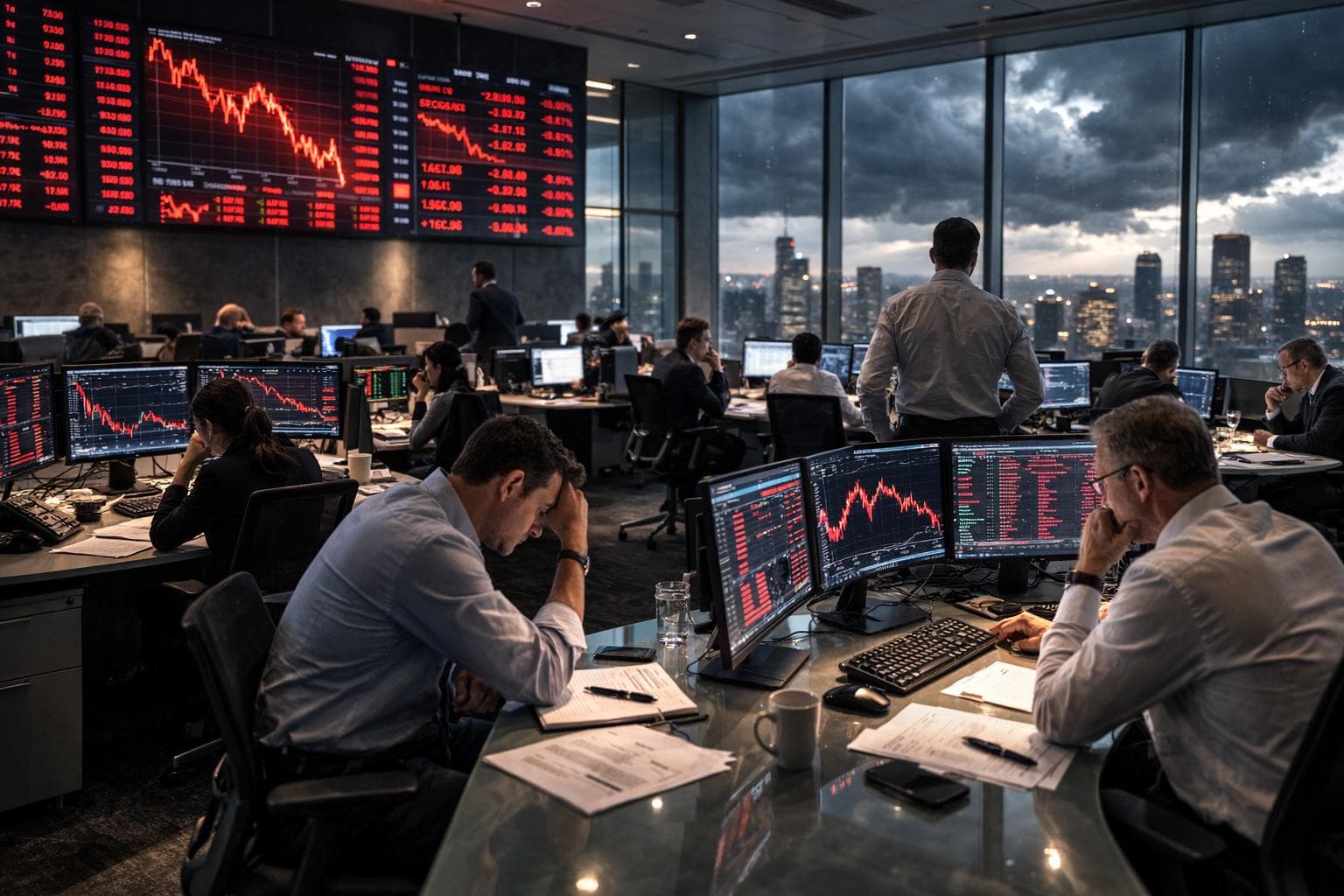
The world of finance often moves like a tide — quietly at first, then suddenly revealing patterns that were already forming beneath the surface. A court ruling may appear to belong purely to the language of law, yet on Wall Street, it can ripple outward, turning legal decisions into financial possibilities.
Such a ripple has begun to move through financial markets following a recent decision by the U.S. Supreme Court involving tariffs imposed during the presidency of Donald Trump. The ruling, which invalidated a large portion of those tariffs, has opened the door to a complex question: what happens to the billions of dollars businesses already paid?
For investors and financial firms, the uncertainty itself has become an opportunity. Across Wall Street, hedge funds and investment firms have begun exploring trades built around the possibility that companies may eventually receive refunds for tariffs previously collected by the U.S. government. The sums involved are substantial. Analysts estimate that importers may have paid well over $130 billion to $180 billion under the now-invalidated tariffs.
The Supreme Court’s decision struck down tariffs implemented under the International Emergency Economic Powers Act, concluding that the legal basis used to impose them was invalid. While the ruling addressed the legality of the tariffs themselves, it left open the complicated question of how — or when — refunds might be processed. That uncertainty has created a new financial niche.
Some importers, unsure how long it may take to recover their money, are choosing to sell their potential refund claims to investors. In these arrangements, companies receive immediate cash — typically at a discount — while hedge funds assume the risk and potential reward of collecting the full refund later if courts ultimately authorize it. Recent deals in this emerging market have reportedly valued claims at roughly 40 to 45 cents for every dollar of potential refund, reflecting both optimism about eventual payouts and caution about the legal hurdles still ahead.
For businesses, the appeal can be practical. Litigation surrounding tariffs may take years, and the administrative process of reviewing millions of import entries could be slow. Selling a claim now provides immediate liquidity, particularly for smaller companies that may not have the resources to pursue lengthy legal battles. For investors, however, the calculation is different. If the government ultimately pays full refunds — potentially with interest — the discounted claims could deliver substantial returns.
Meanwhile, the legal landscape continues to evolve. A federal trade court judge recently directed U.S. Customs and Border Protection to begin processing refunds connected to the invalidated tariffs, potentially affecting thousands of importers. The administrative challenge is enormous. Officials have noted that reviewing tariff payments could require examining tens of millions of import records, raising questions about how quickly any repayment process could realistically unfold.
At the same time, lawmakers and regulators are watching closely. Some policymakers have raised concerns that financial firms may profit from delays in the refund process, while smaller businesses — needing cash sooner — may feel pressured to sell their claims at steep discounts. Economists say the outcome could have broader fiscal implications as well. If refunds ultimately total more than $100 billion, the payments could affect government finances and alter projections for federal deficits in the coming years.
For now, the story remains unfinished. Courts continue to weigh procedural questions, companies are deciding whether to hold or sell their claims, and financial markets are adjusting to a new kind of trade born from legal uncertainty. On Wall Street, this moment reflects a familiar instinct: where others see ambiguity, investors often see possibility. And while the final chapter of the tariff refund debate may still lie years away, the market has already begun writing its own early footnotes in the margins.
Published by Banx Network. This article is part of the Banx decentralized media programme, powered by the BXE token on the XRP Ledger.