

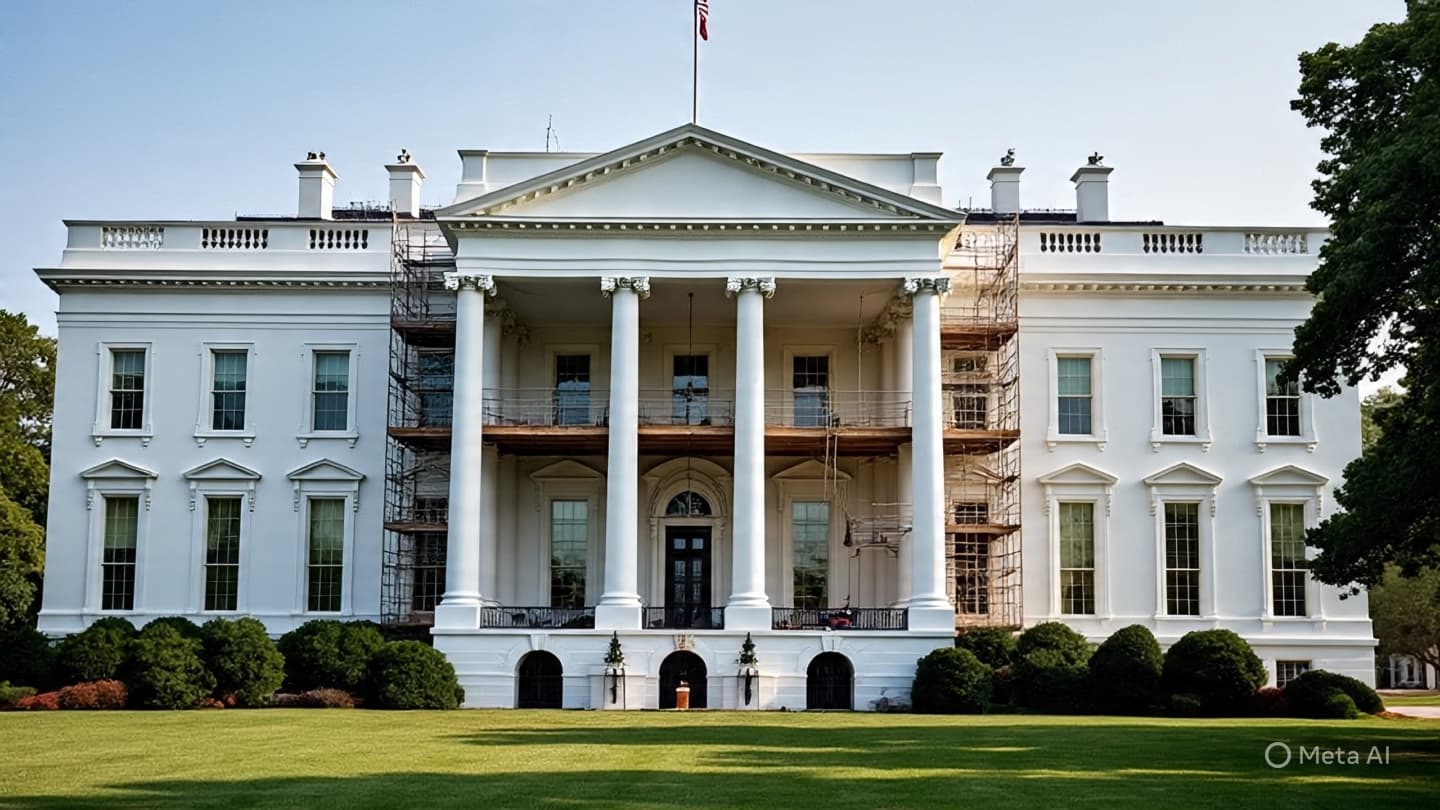
Key Highlights
- Court Ruling:A recent court decision permits the continuation of a White House ballroom construction project.
- Legal Challenges:The ruling addresses procedural challenges that had temporarily halted the project.
- Public Interest:The decision raises broader questions about transparency and oversight in government construction projects.
The recent court ruling has paved the way for the continuation of construction work on a White House ballroom project associated with the Trump administration. This decision marks a significant development in a process that has garnered both legal scrutiny and public interest. By removing an immediate legal barrier, the ruling allows the project to proceed while broader questions regarding oversight and planning remain at the forefront of public discussion.
The court's decision reflects a careful judicial consideration of the procedural challenges raised against the construction. These challenges had previously placed certain aspects of the project under review, creating uncertainty about its future. The ruling signals that the project may now advance under existing approvals, even as legal objections continue to be addressed.
Construction projects linked to major government facilities often navigate complex layers of regulatory scrutiny. This case has followed a similar trajectory, moving through various legal channels before reaching this decisive ruling. The ballroom project has been framed within discussions about modernization, functional expansion, and the ceremonial capacity of the White House, intersecting with both administrative planning and public interest considerations.
Supporters of the project emphasize the operational and representational benefits it could bring. They view the addition as a necessary adaptation of infrastructure to accommodate official events and diplomatic functions. Conversely, critics focus on the importance of transparency and procedural rigor, arguing that modifications to historically significant government spaces must adhere to established review standards.
While the ruling itself does not resolve the broader debates surrounding the project, it does determine its immediate legal status, allowing construction activities to move forward under judicial clearance. As is often the case with public infrastructure projects tied to symbolic national spaces, the discussion extends beyond mere architecture into deeper questions of governance, institutional processes, and public accountability.
With the legal pathway now open, attention is likely to shift from courtroom proceedings back to the construction progress and oversight mechanisms. The project will continue within the framework established by the ruling, and stakeholders will be watching closely as developments unfold.
As the construction progresses, the implications of this ruling may resonate beyond the immediate project, influencing future discussions about the intersection of architecture, law, and public interest in government spaces.
Published by Banx Network. This article is part of the Banx decentralized media programme, powered by the BXE token on the XRP Ledger.




