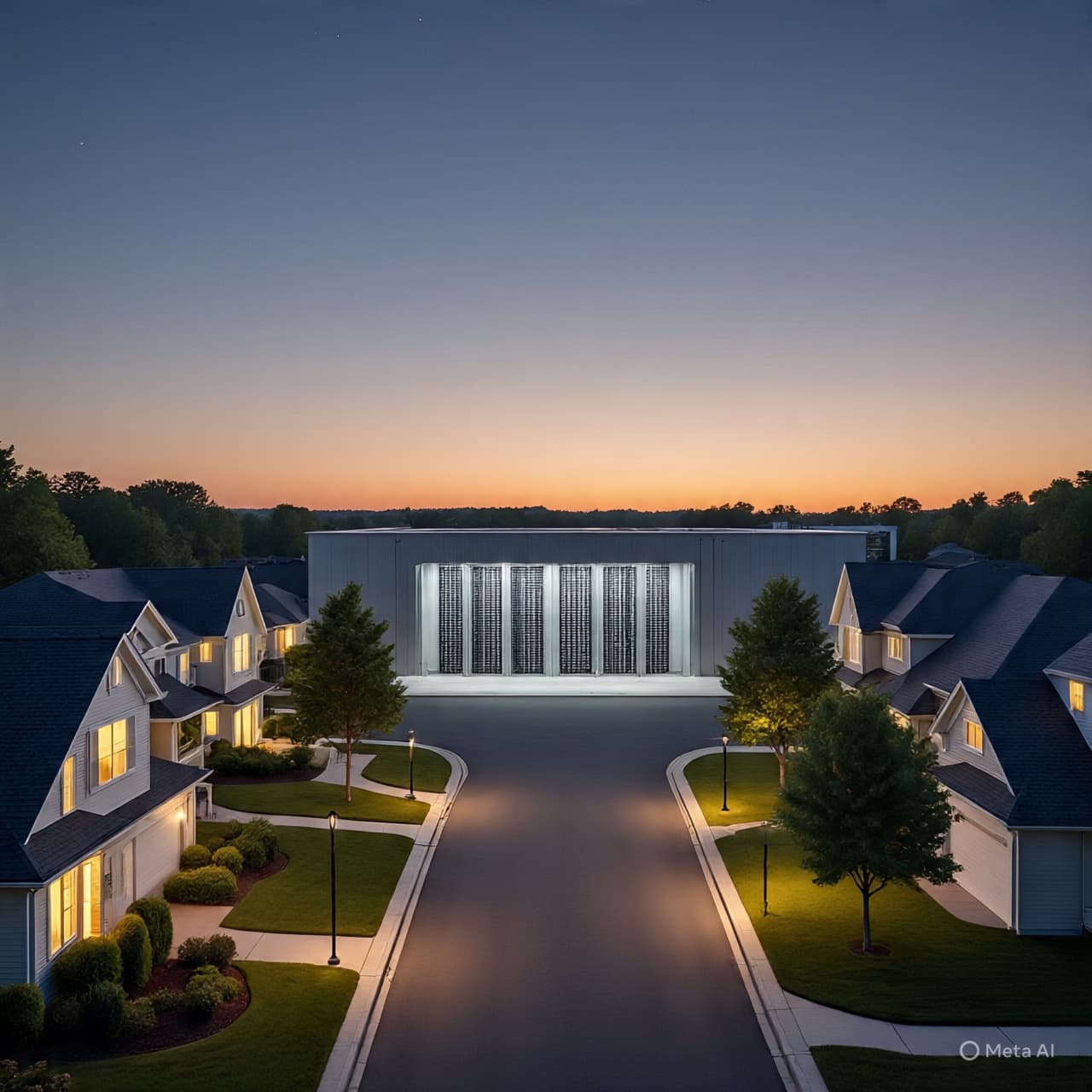
On summer evenings, when the sun’s last warmth lingers on sidewalks and windows glow behind curtains, there is a subtle change in the air. A low, steady hum begins to settle into the background, not quite loud enough to command attention, yet persistent enough to be noticed. It comes from buildings designed for no human gathering — long, windowless structures filled with servers and cooling systems, quietly sustaining the digital lives that unfold elsewhere. These are the data centers, increasingly present across towns and counties, reshaping landscapes even as they remain largely unseen.
For many residents, the arrival of such facilities is felt less as innovation and more as interruption. In communities from Virginia to rural stretches of the Northeast and Midwest, neighbors have gathered in town halls and council chambers, speaking carefully about noise that never quite fades, water drawn steadily from local supplies, and power demands that strain existing infrastructure. The objections are rarely framed as hostility toward technology itself. Instead, they emerge as questions of proximity and scale — why this place, why so close, and why now.
As artificial intelligence and cloud computing accelerate, so too does the demand for physical space to house the machinery behind them. What often appears weightless on screens requires substantial land, energy, and cooling on the ground. Supporters of new data centers point to jobs, tax revenue, and the necessity of expanding digital infrastructure. Yet the facilities themselves employ relatively few people once operational, leaving some communities uncertain about the trade being offered: enduring constant industrial presence in exchange for benefits that feel distant or abstract.
This growing resistance has prompted a wider conversation about alternatives. If no neighborhood wishes to host these structures, some ask whether they belong somewhere else entirely. In that questioning, attention has drifted upward, toward the vastness beyond Earth’s atmosphere. The idea of space-based data centers — orbiting platforms powered by uninterrupted sunlight, shedding heat into the vacuum — carries a certain poetic appeal. In theory, such systems could reduce strain on terrestrial grids and sidestep local opposition altogether.
Yet the calm of that vision is tempered by reality. Engineers and researchers note that the challenges are formidable: the cost of launches, exposure to radiation, the difficulty of repairs, and the limits of current technology. Cooling, so central to data-center operation on Earth, becomes an entirely different problem in orbit. For now, space remains a conceptual refuge rather than a practical solution, a symbol of distance more than a destination.
What this debate reveals is not simply a question of location, but of responsibility. Data centers serve a global public while drawing on local resources, and the tension lies in how that imbalance is managed. Communities are increasingly asserting their right to weigh in on developments that reshape their surroundings, even as national and global pressures push infrastructure outward into new regions.
In recent years, several proposed projects have been delayed, revised, or halted altogether following public opposition. At the same time, industry forecasts suggest continued growth in data-center construction as digital demand shows no sign of slowing. Space-based concepts remain speculative, discussed more as long-term possibilities than imminent plans.
For now, the conversation stays grounded. It unfolds in zoning meetings, in environmental reviews, and in the quiet persistence of residents listening to the hum outside their homes. The question is no longer whether data centers are necessary, but where they belong — and how closely the future of technology must press against the rhythms of everyday life.
AI Image Disclaimer
Visuals are AI-generated and serve as conceptual representations.
Sources (Media Names Only)
WTOP News North Country Public Radio Associated Press The Washington Post
Published by Banx Network. This article is part of the Banx decentralized media programme, powered by the BXE token on the XRP Ledger.