Some public movements unfold through speeches, while others are carried by silence. A hunger strike transforms the absence of words into a message of determination, inviting both supporters and authorities to weigh conviction against responsibility. In New Delhi, that balance shifted after weeks of peaceful protest as concerns over an activist's health prompted official intervention.
Police in India's capital transferred climate activist and education reformer Sonam Wangchuk to Safdarjung Hospital after he had spent 20 days on a hunger strike at Jantar Mantar. Authorities said the decision followed expert medical advice and directions from the Delhi High Court as his condition continued to deteriorate.
Wangchuk, 59, began his fast on June 28 in support of protesters demanding accountability over alleged irregularities in India's medical entrance examination system. The movement has called for the resignation of Education Minister Dharmendra Pradhan, arguing that examination failures have undermined public confidence in the country's education system.
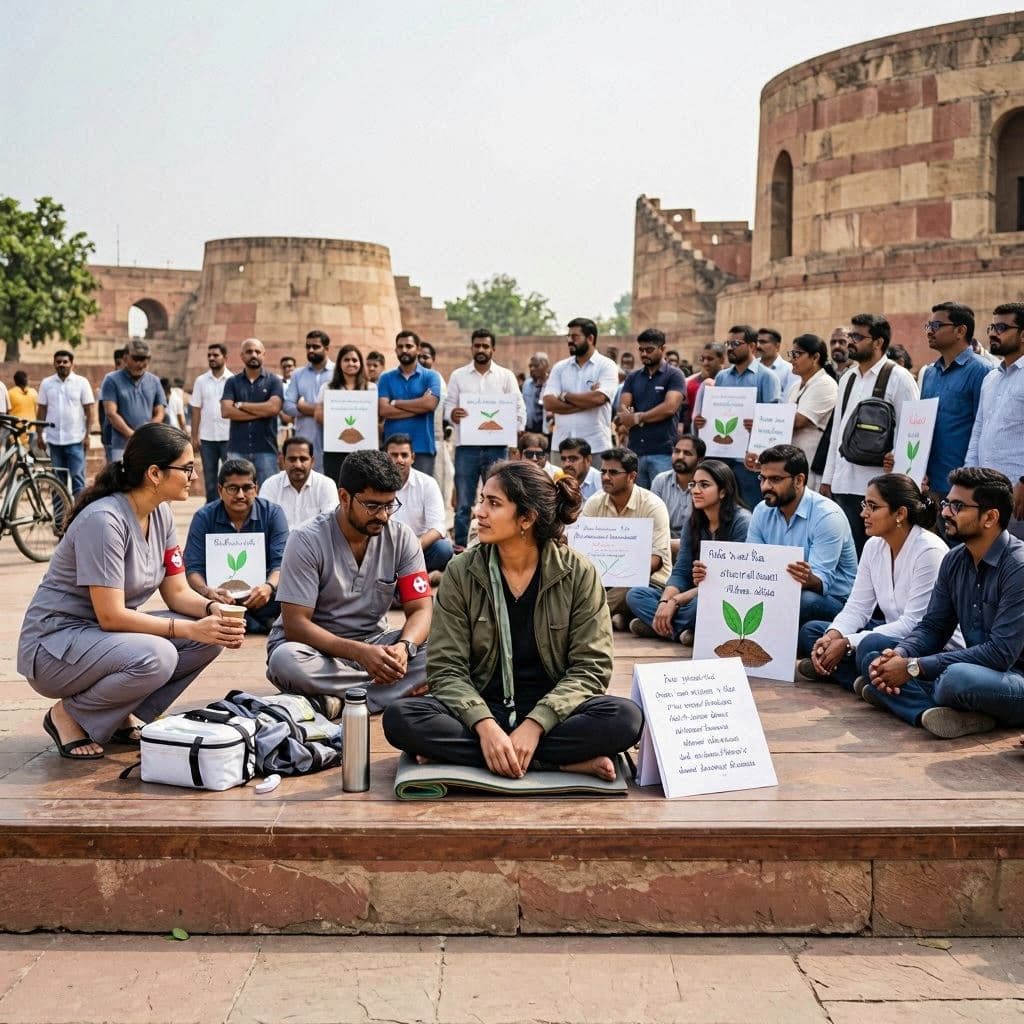
Video from the protest site showed police officers removing Wangchuk early in the morning while supporters attempted to resist the operation. Protest organizers described the action as forcible and criticized the authorities, while Delhi Police maintained that officers acted in compliance with court orders intended to protect the activist's health.
Medical professionals monitoring Wangchuk had warned that prolonged fasting had resulted in significant weight loss, dehydration, and potentially dangerous electrolyte imbalances. Hospital officials later said he was stable but remained weak and required continuous medical observation.
The incident has drawn widespread public attention across India. Supporters have continued gathering in solidarity, while organizers announced that planned demonstrations, including a march toward Parliament, would proceed despite Wangchuk's hospitalization.
The Delhi High Court had previously instructed authorities to ensure Wangchuk received regular medical examinations and necessary treatment if doctors determined his condition had become critical. Officials said the hospitalization reflected that legal obligation as well as medical recommendations.
Wangchuk remains under medical supervision as discussions surrounding education reform and the handling of public protests continue. Authorities and protest organizers have maintained differing views on the circumstances of his hospitalization, while attention remains focused on his recovery and the broader issues raised by the demonstration.
AI Image Disclaimer: The accompanying visuals are AI-generated illustrations intended to represent the reported event and should not be viewed as authentic photographs.
Sources (source verification completed): Reuters, Associated Press, Deutsche Welle (DW), India Today
Published by Banx Network. This article is part of the Banx decentralized media programme, powered by the BXE token on the XRP Ledger.