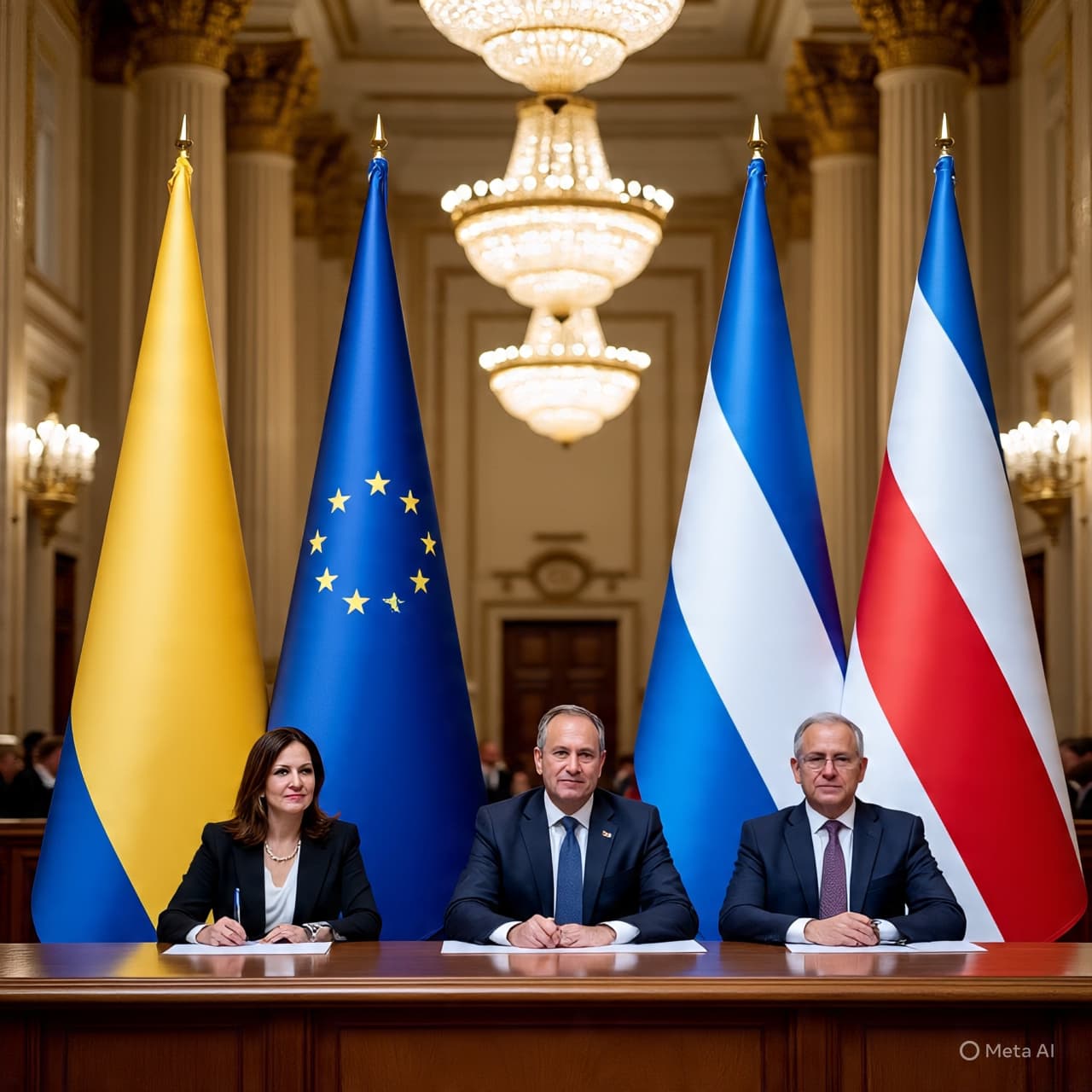
There are moments in history that feel like the slow turning of a great sail — years of wind and tide gathered before the fabric catches just right. On a warm January afternoon in Asunción, Paraguay, such a moment was quietly sealed. After a quarter-century of intricate discussions, delays, doubts, and diplomatic patience, the European Union and South America’s Mercosur bloc placed ink to paper on a sweeping free trade agreement. In the year 2026, an idea first dreamed in 1999 finally found its formal shape, like an old seed at last breaking through the earth.
For many, this deal represents not just economics but connection — an Atlantic bridge linking continents through commerce rather than conflict. The ceremony was attended by European Commission President Ursula von der Leyen and European Council President António Costa, alongside the leaders of Argentina, Paraguay, and Uruguay. Brazil’s president, Luiz Inácio Lula da Silva, was represented by his foreign minister, a subtle reminder that even historic moments can carry the quiet imprints of political nuance.
The agreement itself, if ratified by the European Parliament and the national legislatures of Argentina, Brazil, Paraguay, and Uruguay, could create one of the world’s largest free trade areas. Together, the EU and Mercosur account for more than 700 million people and a significant portion of global GDP — a tapestry of consumers, farmers, workers, producers, and traders whose patterns will be woven ever more closely through this pact.
In its promise lies a poetic symmetry: tariffs dissolved like morning mist as machinery from Europe and agricultural produce from South America flow more freely across borders. The deal aims to lower trade barriers and increase the movement of goods — from cars and wine to sugar and rice. Yet for all its promise, it also stirs reflection and caution among those whose lives are tied to land and livelihood.
Farmers in France, Ireland, and elsewhere have voiced their concerns, worried that cheaper imports could unsettle local markets. Environmental advocates have drawn attention to sustainability, particularly in regions where forests and ecosystems must be protected even as fields are cultivated and roads built. The agreement does include provisions to address some of these worries, but its success will depend on how trust and accountability are nurtured in the years to come.
In the gentle ebb of global trade tensions, this pact stands as both response and reflection. Nations that once moved cautiously toward one another now step forward with an accord that seeks balance — between open markets and local resilience, between shared prosperity and environmental stewardship. If history has shown anything about great endeavors, it is that they are never truly finished; they grow and evolve as those who live with them learn to shape them.
In the end, what was signed in Paraguay is not simply a document of rates and quotas, but a story of decades. It is the record of patient voices around conference tables, the attentive eyes of negotiators watching world currents shift, and the quiet hope that, even in complexity, there can be connection.
In straightforward terms, the European Union and Mercosur formally signed a landmark free trade agreement on January 17, 2026, after 25 years of negotiations. The pact aims to reduce tariffs and boost commerce between the two regions and must still be ratified by legislative bodies before it can take effect. Farmers and environmental groups have raised concerns about possible market and ecological impacts, but leaders from both sides have praised the deal’s potential to deepen economic ties and foster shared growth.
AI Image Disclaimer Graphics are AI-generated and intended for representation, not reality.
Sources
• Reuters
• Al Jazeera
• France 24
• Los Angeles Times
• AP News (via Washington Post)
Published by Banx Network. This article is part of the Banx decentralized media programme, powered by the BXE token on the XRP Ledger.